The immover observatory

Property Prices in Bagneux, Hauts-de-Seine2026 property valuation

Updated: January 2026 Sources: DVF · Notaires de France · INSEE · Immover January 2026 · DVF, Notaires de France, INSEE, Immover
In brief

The average price per m² in Bagneux is 5 061 €/m² for an apartment, based on actual notarised (DVF) sales. For a house or villa, it is 6 918 €/m². About 172 transactions are recorded each year.

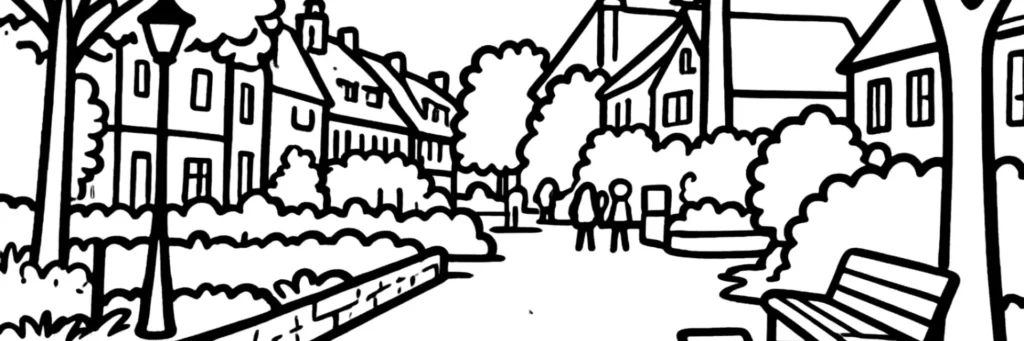
Line drawing of Bagneux: the entrance to a metro line 4 station

Atmospheric illustration of Bagneux, in the southern inner suburbs of Paris, in the Hauts-de-Seine.

Property Prices in Bagneux

The 2026 figures· Indicative data
5 061€/m²

The average price recorded in Bagneux, in the Hauts-de-Seine, stands at 5 061 €/m². That average covers a stock overwhelmingly made of apartments: according to INSEE, the French national statistics office, flats account for about 90 % of the dwellings, with many post-war buildings and large housing complexes built between the 1950s and the 1980s. Houses, rarer and often set in the older residential streets, come out at a higher level, around 6 918 €/m². The condition of the property, the floor level, closeness to the new metro stations and energy performance explain most of the gaps. The figures come from the DVF database, which records transactions actually registered before notaries.

House : 6 918 €/m²

Apartment transactions / year
172
Median price per m²
5 012 €

Prices from the DVF file (Demandes de valeurs foncières, published by the DGFiP), transactions actually recorded at the notary at municipality level. Cross-referenced with the Notaires de France - INSEE indices. Learn more about our methodology.

Market trends and analysis for Bagneux

The Bagneux market is read above all through its transport service. The arrival of line 4 in January 2022, then the prospect of line 15 of the Grand Paris Express, have changed a municipality long regarded as an affordable part of the southern suburbs. Demand comes mainly from first-time buyers and working people of the Paris region who find here more contained prices than in the neighbouring towns of the Hauts-de-Seine, while gaining access to the metro. The population, rising over several censuses, sustains that pressure on a stock where apartments very largely dominate.

New supply is driven by the development schemes around the stations, such as the ZAC Victor-Hugo, which deliver new housing and renovate the existing fabric. That urban reshaping creates a two-speed market: on one side recent or refurbished dwellings close to the stations, on the other a social housing stock and older buildings whose energy performance weighs more and more in negotiations. The classification of three districts as priority areas is a reminder that the town is still in full transformation, which explains marked price gaps from one area to another.

Bagneux in the southern inner suburbs, in the Hauts-de-Seine

average €/m²

Backing onto the boundary of Paris, Bagneux sits rather at the lower end of the range of the neighbouring municipalities selected here: it remains more affordable than Montrouge, much sought after, and comes close to Bourg-la-Reine, while staying above Cachan, its neighbour in the Val-de-Marne.

MunicipalityTierPrice /m²Gap
Montrouge7 010 €+39 %
Bourg-la-Reine5 266 €+4 %
Bagneux5 061 €ref.
Cachan4 998 €-1 %

The history of Bagneux

The name Bagneux derives from the Latin Baniolum, attested in a charter of Charles the Bald in the ninth century, and not from the word for baths as a widespread belief has it. The village keeps a church whose crypt is among the oldest in the region. In the Middle Ages, the land came under the chapter of Notre-Dame de Paris and the abbey of Saint-Germain-des-Prés. From the thirteenth century, the working of gypsum and stone quarries lastingly marked the territory: the materials taken from the subsoil of Bagneux and the neighbouring municipalities served major Paris building sites, from the Panthéon to the Louvre.

Long rural and given to market gardening, Bagneux moved into the orbit of Paris at the turn of the twentieth century. A tramway line linked the municipality to the Champ-de-Mars as early as 1900, and the Montrouge-Bagneux marshalling yard anchored railway activity in the north of the territory. The Paris cemetery of Bagneux, opened in 1886 to relieve the capital, takes up a wide area and remains one of the landmarks of the town. After the Second World War, the municipality filled with large social housing complexes to house the working population of the southern suburbs: some twenty social housing estates still shape part of the urban landscape.

The 2010s and 2020s opened a phase of deep transformation. On 13 January 2022, metro line 4 reached Bagneux with the stations Barbara, on the boundary with Montrouge, and Bagneux-Lucie Aubrac, the new southern terminus. Line 15 of the Grand Paris Express, connecting with line 4, is set to strengthen the service further. Around those stations, development schemes such as the ZAC Victor-Hugo are reshaping whole districts, with new housing, public facilities and renovation of the existing fabric. Three districts remain classified as priority areas under urban policy.
Who buys in Bagneux

According to INSEE, Bagneux has 44 572 inhabitants, a population up about 9 % since 2017, on a territory of a little over 4 km². The stock is almost entirely made of apartments: flats account for around 90 % of dwellings and houses less than 10 %. Main residences clearly dominate, with very few second homes. Among households, tenants are largely in the majority and owner-occupiers account for a little more than a fifth of the stock, which reflects the historic weight of social housing. Two buyer profiles now cross paths. On one side, first-time buyers and working people employed in Paris, drawn by prices more affordable than in the neighbouring municipalities and by the arrival of the metro. On the other, households already settled locally looking to buy one of the rare houses in the older streets.

Frequently asked questions

The average price recorded is 5 061 €/m², calculated from transactions registered before notaries and published in the DVF database. It is a municipal average, mixing the small apartment in a housing complex and the renovated flat close to the metro. The average price recorded for houses reaches 6 918 €/m². The floor level, the condition of the property, closeness to the new line 4 stations and the energy performance certificate explain most of the gaps. A serious valuation rests on comparable sales, not on the average alone.

The municipality mixes districts of large housing complexes, such as the Cité des Musiciens or the Abbé-Grégoire area, older residential streets, and areas being fully reshaped around the two line 4 stations. The north, close to Montrouge and the Barbara station, benefits from the momentum of the inner suburbs. The south, around Bagneux-Lucie Aubrac and the future line 15, concentrates the recent development schemes. These different housing logics do not sell at the same level.

Since 13 January 2022, Bagneux has been served by metro line 4, with the stations Barbara and Bagneux-Lucie Aubrac, which reach the centre of Paris directly without changing. The municipality is also close to the RER B through the neighbouring stations and served by several bus routes. The planned arrival of line 15 of the Grand Paris Express, connecting with line 4, should further cut journey times to the employment centres of the southern Paris region.

Supply is unbalanced. According to INSEE, houses account for less than 10 % of dwellings, against about 90 % apartments. They are concentrated in the older residential streets and rarely come onto the market, which explains a price per square metre above that of apartments. Sale references there are few, and valuing a house depends heavily on its condition, its plot and its location rather than on the municipal average.

The opening of line 4 in 2022 and the prospect of line 15 have strengthened the appeal of the municipality, long seen as out of the way. Properties close to the new stations and the renovated districts benefit from that momentum, while the oldest and most energy-hungry dwellings remain more dependent on their condition. For a seller, the precise location relative to the stations and the energy rating have become decisive bargaining points.

Value your property in Bagneux

Free valuation in under 2 minutes

Value my property

This analysis is published by Immover, an independent observatory founded by . Data sourced from official sources (DVF, INSEE, Notaries of France).

Estimer mon bien