The average price per m² in Besse-et-Saint-Anastaise is 2 766 €/m² for an apartment, based on actual notarised (DVF) sales. About 86 transactions are recorded each year.

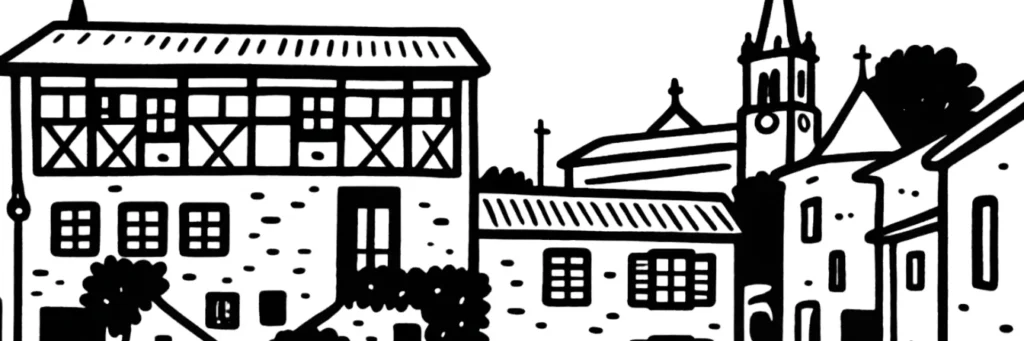
Ambience illustration of Besse-et-Saint-Anastaise, a lava-stone village of the Sancy, in the Puy-de-Dôme.
The average price for apartments in Besse-et-Saint-Anastaise stands at 2 766 €/m², according to the DVF database, which records sales actually registered before notaries. For a mountain village in the Puy-de-Dôme, that level is high and owes to the tourist role of the municipality, which takes in the Super-Besse ski resort and its stock of leisure dwellings. The market is very different from that of Clermont-Ferrand or of the lowland municipalities, because demand for second homes and for ski-side properties pulls values upwards. Altitude, closeness to the slopes, the aspect and the condition of the property explain most of the gaps, as does energy performance on a stock exposed to harsh winters. These benchmarks, drawn from sales signed before notaries, give a reliable municipal base; a precise valuation then rests on comparable sales, examined property by property.
Prices from the DVF file (Demandes de valeurs foncières, published by the DGFiP), transactions actually recorded at the notary at municipality level. Cross-referenced with the Notaires de France - INSEE indices. Learn more about our methodology.
The market in Besse-et-Saint-Anastaise depends closely on its tourist economy. Demand for second homes, fed by the Super-Besse ski resort and the appeal of the Massif du Sancy, supports the prices of leisure properties. The scarcity of building land in a mountain zone and the protection of natural areas limit new supply, which sustains the value of existing dwellings, in particular the village houses in lava stone, much sought after.
For a seller, the location and the use of the property make the difference: an apartment close to the slopes or a house of character in the town finds a buyer more easily than an energy-hungry dwelling far from the points of interest. The energy transition calls for close attention to the DPE energy rating, the French energy performance certificate, which counts for a great deal in a high-altitude municipality. A property correctly valued and correctly presented sells, while a price out of step with actual sales lingers on the market.
Besse-et-Saint-Anastaise follows the logic of a mountain resort, very different from the lowland towns such as Clermont-Ferrand, Chamalières or Montbrison, where the market answers residential rather than tourist demand.
Besse-et-Saint-Anastaise stretches over a vast upland territory in the Massif du Sancy, within the Parc naturel régional des Volcans d'Auvergne. The historic town of Besse was granted municipal liberties as early as the 13th century and grew as a market place. Its old centre, remarkably well preserved, is built in dark lava stone, with ramparts, a town gate, a Romanesque church and Renaissance houses that give the village its very distinctive unity of colour.
The present municipality was born of successive mergers: Besse was renamed Besse-en-Chandesse, then merged with Saint-Anastaise in the 1970s to form the name it carries today. The village keeps lively traditions, among them the procession of the Black Virgin, carried up to and back down from the chapel of Vassivière, a seasonal event that marks the calendar of the summer grazing season.
In the 20th century, the municipality turned towards mountain tourism. The Super-Besse ski resort, created in the 1960s on the slopes of the Sancy, made Besse a destination for winter sports and summer activities, close to the lac Pavin, one of the best known crater lakes in Auvergne. That double identity, a village of character and a mountain resort, still shapes local life and the local economy.
Besse-et-Saint-Anastaise has around 1 400 year-round inhabitants, a population that multiplies during the tourist seasons. The property market is dominated by demand for second homes: resort apartments at Super-Besse, chalets and village houses in lava stone sought after for holidays. Buyers often come from Clermont-Ferrand and its conurbation, but also from further afield, drawn by skiing, walking and the protected setting of the Sancy. A more modest local population holds on in the town and the hamlets. This prevalence of the leisure property clearly sets Besse apart from the neighbouring rural municipalities with no tourist role.
The average price for apartments in Besse-et-Saint-Anastaise is 2 766 €/m², based on the DVF transactions completed before notaries. That average covers very varied properties, from the studio in the Super-Besse resort to the village apartment. Closeness to the slopes, altitude, the aspect and the condition of the property explain the gaps. A reliable valuation rests on comparable sales of the same type rather than on the municipal average alone.
Besse owes its price level to its tourist role. The municipality takes in the Super-Besse ski resort and a large stock of leisure dwellings, which draws demand for second homes far wider than the local population. The scarcity of properties of character in lava stone and the appeal of the Sancy add to that tightness, on a scale unknown to rural villages without a resort.
Super-Besse gathers mainly apartments and tourist residences close to the slopes, prized for seasonal letting and for holiday use. The town of Besse offers village houses and apartments in the old lava-stone fabric, with more heritage character. The two markets answer distinct expectations, and their prices are formed on different logics.
Yes, seasonality bears directly on demand. Ski-side properties and well located dwellings gain value from the winter and summer visitor numbers of the Sancy and of the lac Pavin. Energy performance counts in particular in a high-altitude municipality with long winters, where heating costs weigh on negotiation. A property with a good rating and a good location stands out on this market.
This analysis is published by Immover, an independent observatory founded by Antony Barbier. Data sourced from official sources (DVF, INSEE, Notaries of France).