The immover observatory

Property Prices in Béthune2026 property valuation

Updated: January 2026 Sources: DVF · Notaires de France · INSEE · Immover January 2026 · DVF, Notaires de France, INSEE, Immover
In brief

The average price per m² in Béthune is 1 738 €/m² for an apartment, based on actual notarised (DVF) sales. About 125 transactions are recorded each year.

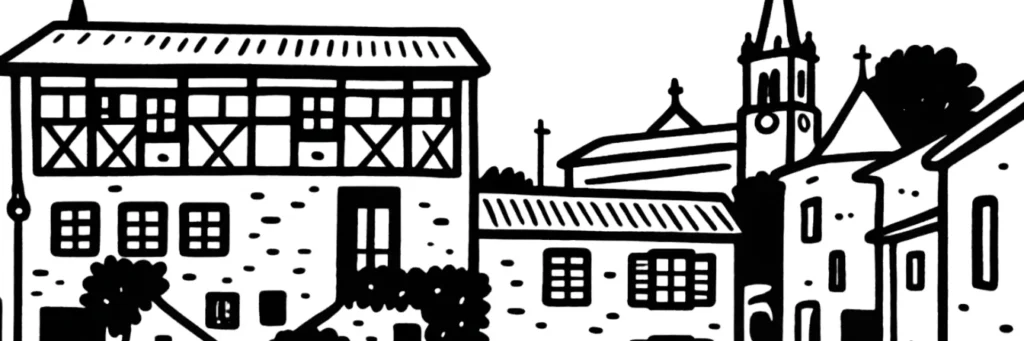
Line drawing of Béthune: the Grand-Place and its Art Deco frontages

Ambience illustration of Béthune, around its Grand-Place and its belfry, in the Pas-de-Calais.

Property Prices in Béthune

The 2026 figures· Indicative data
1 738€/m²

The average price recorded in Béthune stands at 1 738 €/m² for an apartment. That average bears on a varied stock, inherited from a town rebuilt after 1918 and from a ring shaped by mining history: blocks of flats on the Grand-Place and around it, brick town houses, former workers' dwellings and a few more recent developments. Detached houses, numerous in the outlying districts, trade at a level close to that of apartments, the gap staying limited on this market. The figures come from the DVF database, which records the sales actually registered before notaries, and serve as a benchmark rather than as a fixed price for a given property.

Apartment transactions / year
125
Median price per m²
1 696 €

Prices from the DVF file (Demandes de valeurs foncières, published by the DGFiP), transactions actually recorded at the notary at municipality level. Cross-referenced with the Notaires de France - INSEE indices. Learn more about our methodology.

Market trends and analysis for Béthune

The market in Béthune rests on its role as a central town and on its rail links. It captures buying demand from local households and from working people commuting towards Lille or Lens, drawn by prices more measured than in the Lille metropolitan area. The rebuilt centre and the station district, carried by their location and by the character of the Grand-Place, remain the most closely followed sectors, while the residential districts feed a steady flow of family house sales.

Supply is uneven, between a heritage centre, brick town houses and older housing left by industrial history. That diversity keeps price gaps marked according to the district and to the condition of the property. As across the north of France, the energy performance certificate has become a criterion of negotiation, in particular on older buildings in need of renovation. The closeness of more expensive towns such as Arras or Lille places Béthune in an intermediate band of the Pas-de-Calais market, affordable but supported by its role as a centre of jobs and services.

Béthune, between Lens and Arras in the Pas-de-Calais

average €/m²

The central town of the coalfield in the west of the department, Béthune sits at a level close to that of Lens, its neighbour, above Douai and clearly below Arras, the neighbouring sub-prefecture town with a tighter market.

MunicipalityTierPrice /m²Gap
Arras2 537 €+46 %
Lens1 742 €0 %
Béthune1 738 €ref.
Douai1 668 €-4 %

The history of Béthune

A sub-prefecture town of the Pas-de-Calais, Béthune holds a crossroads position between the farmland of the Artois and the former coalfield. The town grew around a medieval market square and a canal, before becoming in the 19th century one of the gateways to the largest coal basin in France, a band of municipalities running from Béthune as far as Valenciennes. Today it anchors a conurbation of some 200 000 inhabitants, about thirty kilometres from Lille.

Béthune paid a heavy price in the First World War: its centre was destroyed to nearly 90 %. The reconstruction, carried out between 1920 and 1927 by a team of architects gathered around Jacques Alleman, Léon Guthmann, Paul Degez and Louis-Marie Cordonnier, redrew the town centre in a style blending Art Deco and regionalist inspiration. The Grand-Place, with its brick and stone frontages rebuilt after the conflict, remains the most visible testimony to that effort, and gives the town an uncommon architectural unity.

In the middle of the square stands the belfry, spared by the bombing. The building goes back to the end of the 14th century, when it was raised again in local sandstone after a first authorisation granted to the inhabitants as early as 1346. A symbol of municipal liberties, it was listed in 2005 as UNESCO world heritage within the group of belfries of Belgium and France. The industrial memory of the region was recognised in turn in 2012, with the listing of the Bassin minier du Nord-Pas-de-Calais as a living cultural landscape, of which Béthune marks the western end.
Who buys in Béthune

Béthune has about 25 224 inhabitants and acts as the central town for a much wider living area. Its housing stock is balanced between apartments, concentrated in the rebuilt centre and its surroundings, and detached houses, very present in the outlying districts inherited from workers' and low-rise housing schemes. Buyers are mainly local households, first-time buyers and working people employed in Béthune, in Lens or towards Lille, who value a market more affordable than the Lille metropolitan area. Demand bears both on the apartments close to the Grand-Place and to the station and on the family houses of the residential districts.

Frequently asked questions

The average price of an apartment comes out at 1 738 €/m², from the sales registered before notaries and published in the DVF database. It is a municipal average, which covers both an older dwelling in the rebuilt centre and a more recent property. The address, the storey, the general condition, the year of construction and the energy performance certificate explain most of the gaps from one property to another. For a reliable valuation, it is better to rely on comparable sales than on the town average alone.

The town centre, around the Grand-Place and the belfry, concentrates the apartment supply and benefits from its architectural character. The station district is also closely followed, since it gives easy access to Lille, Lens and Arras. The residential districts, such as the Mont-Liébaut sector, offer more houses. Some districts classed as priority areas, on the other hand, see weaker demand: price levels there are noticeably different from the rest of the town.

The station of Béthune runs regular TER regional trains towards Lille, which can be reached in about thirty minutes, as well as towards Lens and Arras. That rail service makes the town a base valued by working people employed in the metropolitan area while looking for more affordable housing. For car journeys, the A26 motorway serves the town directly and completes the road network of the Artois.

Both markets coexist in Béthune. Apartments are found above all in the rebuilt centre and near the station, while brick town houses and detached houses dominate the outlying districts. The price gap between houses and apartments stays contained, which is not the case in the large neighbouring metropolitan areas. The choice therefore depends mainly on your plans and on your renovation budget, energy performance weighing more and more in negotiation.

As everywhere, letting a furnished tourist rental is regulated and calls for enquiries at the town hall. The area lies within the former coalfield: depending on the sector, a hazard linked to past coal working may exist and is then set out in the planning documents and in the statement of risks, to be consulted before any purchase. It is also useful to check the nature of the district and how it has changed recently, since situations differ greatly from one sector of the town to another.

Value your property in Béthune

Free valuation in under 2 minutes

Value my property

This analysis is published by Immover, an independent observatory founded by . Data sourced from official sources (DVF, INSEE, Notaries of France).

Estimer mon bien