The immover observatory

Property Prices in Bruay-la-Buissière2026 property valuation

Updated: January 2026 Sources: DVF · Notaires de France · INSEE · Immover January 2026 · DVF, Notaires de France, INSEE, Immover
In brief

The average price per m² in Bruay-la-Buissière is 1 265 €/m² for an apartment, based on actual notarised (DVF) sales. About 17 transactions are recorded each year.

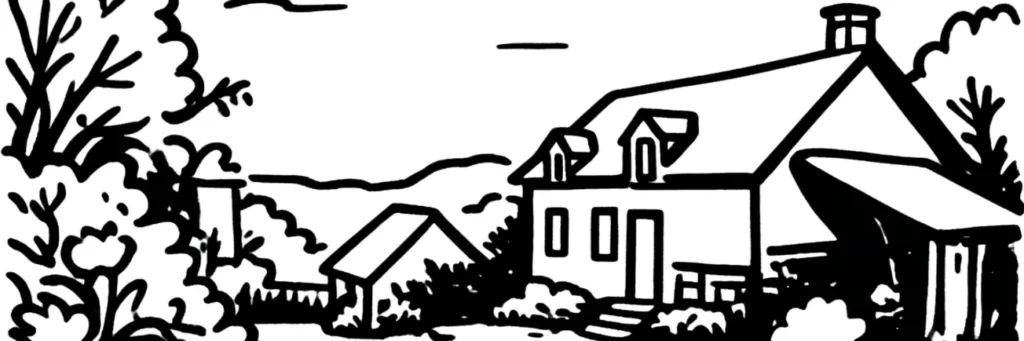
Line drawing of Bruay-la-Buissière, a mining town of the Pas-de-Calais, rows of brick miners' housing and the Art Deco swimming pool of the Stade-Parc

Atmospheric illustration of Bruay-la-Buissière, a former mining town of the coalfield, in the Pas-de-Calais.

Property Prices in Bruay-la-Buissière

The 2026 figures· Indicative data
1 265€/m²

The average price of apartments in Bruay-la-Buissière stands at 1 265 €/m², based on DVF data, the French notarised sales database, which records transactions registered with notaries. A former mining town of the Nord-Pas-de-Calais coalfield, the municipality has a stock dominated by miners' houses and corons, the long rows of terraced miners' housing, where apartments remain a minority. This price level is among the most affordable in the Béthune-Bruay conurbation. The value of a property depends on the area, between the centre of the former Bruay-en-Artois and Labuissière, on the often old condition of the dwelling, on its type and on the presence of a garden.

Apartment transactions / year
17
Median price per m²
1 253 €

Prices from the DVF file (Demandes de valeurs foncières, published by the DGFiP), transactions actually recorded at the notary at municipality level. Cross-referenced with the Notaires de France - INSEE indices. Learn more about our methodology.

Market trends and analysis for Bruay-la-Buissière

The Bruay-la-Buissière market remains driven by local demand for affordable housing and by membership of the Béthune-Bruay conurbation, whose employment area and services shape daily life. The conversion of the mining territory, with the tourism and cultural development of sites such as the Cité des Électriciens, has changed the image of the municipality without deeply transforming its property market. The closeness of Béthune, less than ten kilometres away, and road links towards the rest of the coalfield sustain steady demand for town houses.

The strength of Bruay-la-Buissière lies in an entry cost among the lowest in the conurbation and in a stock of detached houses that meets family demand. The limit lies in an often old building stock, inherited from the mining era, which frequently calls for renovation and energy improvement work. The weight of social housing and the thinness of the apartment segment reduce the depth of the private rental market. The value of a property therefore depends closely on its condition, its location and the presence of outdoor space.

Bruay-la-Buissière in the Béthune-Bruay coalfield

average €/m²

Bruay-la-Buissière shows prices more affordable than Béthune and Lens, and close to those of Liévin, another town of the coalfield.

MunicipalityTierPrice /m²Gap
Lens1 742 €+38 %
Béthune1 738 €+37 %
Liévin1 384 €+9 %
Bruay-la-Buissière1 265 €ref.

The history of Bruay-la-Buissière

The history of Bruay-la-Buissière is the history of coal. The Compagnie des mines de Bruay, founded in 1852, opened its first pits there in the middle of the 19th century and worked up to eighteen shafts, employing thousands of miners until the years that preceded the Second World War. Around the pits were built corons and workers' estates that gave the town its present shape, spread out and made up of long rows of brick houses. This coal-mining past shaped the urban landscape, the social fabric and the identity of the municipality, today part of the Nord-Pas-de-Calais coalfield inscribed on the UNESCO World Heritage list in 2012.

The Cité des Électriciens is its most remarkable witness. Built by the Compagnie des mines de Bruay between 1856 and 1861 to house the families of pit number 1, it is the oldest preserved mining estate in the Pas-de-Calais. Its streets bear the names of scientists of electricity, Ampère, Volta, Edison or Faraday, hence its name. Listed as a historic monument in 2009, it is among the five major sites selected when the coalfield was inscribed by UNESCO. Restored, it has reopened as a cultural and visitor site, combining refurbished dwellings, gardens and an exhibition space devoted to working-class memory.

The town also owes its appearance to the Stade-Parc and to its Art Deco swimming pool, opened on 1 August 1936, the year of the first paid holidays, and given by the municipality to working families. Designed by the architect Paul Hanote in a liner-inspired style, this sports and leisure complex has been listed in the inventory of historic monuments since 1997. The present municipality was born on 9 February 1987 from the merger of Bruay-en-Artois and Labuissière; by passing the threshold of twenty thousand inhabitants, it could compete with its neighbour Béthune and claim better public funding. This twofold heritage explains the town of today.
Who buys in Bruay-la-Buissière

Bruay-la-Buissière has 21 424 inhabitants and shows a market geared to main residences. According to INSEE, the French statistics institute, the stock is overwhelmingly made up of houses, around 80 %, apartments accounting for only about one dwelling in five. The municipality also stands out for a high share of tenants, close to 64 %, and for the weight of social housing. Buyers are mostly local households, first-time buyers and modest families, who are looking for an affordable town house. Demand rests on the closeness of Béthune, on the low entry cost of the coalfield and on the scope for renovating the older building stock.

Frequently asked questions

The average price of apartments in Bruay-la-Buissière is 1 265 €/m², based on DVF transactions registered with notaries. This level is among the most affordable in the Béthune-Bruay conurbation. It varies with the area, the condition of the property and its type; the local market, dominated by miners' houses, remains above all a market of main residences.

The municipality brings together two former towns merged in 1987, Bruay-en-Artois and Labuissière, around which the centre, the mining estates and the more recent residential neighbourhoods are organised. The corons and the rows of brick houses inherited from the mine sit alongside estates of detached houses. The value of a property varies from one area to another with the condition of the buildings and with closeness to shops and schools.

Yes. Bruay-la-Buissière lies less than ten kilometres south-west of Béthune and belongs to the Béthune-Bruay inter-municipal authority. It is served by the inter-municipal bus network and by the roads that link the coalfield to the rest of the region. This closeness to Béthune and to its employment area supports housing demand and weighs on the prices paid in the municipality.

The market is very largely dominated by the house. According to INSEE, close to 80 % of dwellings are houses, often town houses or former corons, while apartments remain a minority. The price shown of 1 265 €/m² relates to the apartment market; that of houses depends above all on floor area, plot and general condition. Most buyers are looking for a house with outdoor space.

The average price serves as a benchmark, but the condition, the type and the location of a property make a real difference in this market. A renovated coron house and a recent detached home do not have the same value. Immover draws on actual DVF sales registered with notaries to offer you a free valuation suited to your home, area by area.

Value your property in Bruay-la-Buissière

Free valuation in under 2 minutes

Value my property

This analysis is published by Immover, an independent observatory founded by . Data sourced from official sources (DVF, INSEE, Notaries of France).

Estimer mon bien