The immover observatory

Property Prices in Carbonne2026 property valuation

Updated: January 2026 Sources: DVF · Notaires de France · INSEE · Immover January 2026 · DVF, Notaires de France, INSEE, Immover
In brief

The average price per m² in Carbonne is 2 039 €/m² for an apartment, based on actual notarised (DVF) sales. About 12 transactions are recorded each year.

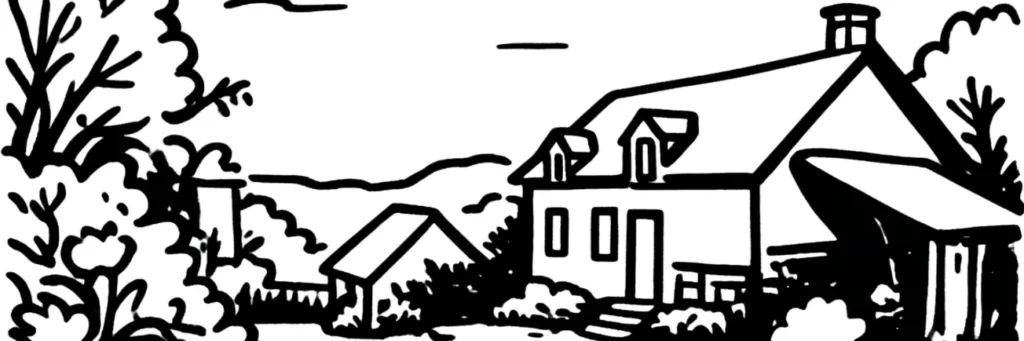
Line drawing of Carbonne, a brick bastide in a bend of the Garonne, bell tower and central market hall

Atmospheric illustration of Carbonne, a bastide of the Garonne valley south of Toulouse.

Property Prices in Carbonne

The 2026 figures· Indicative data
2 039€/m²

In Carbonne, the benchmark price stands at 2 039 €/m² for an apartment. The municipality lies some forty kilometres from Toulouse, at the edge of peri-urban spread: its prices remain clearly below those of the southern belt of the conurbation, while exceeding those of the more distant small towns of the Volvestre. These values come from DVF data, the French notarised sales database, that is the transactions actually registered with notaries. Flats are a minority in a stock that is 80 per cent detached housing, which makes the average sensitive to the nature and the condition of each property.

Apartment transactions / year
12
Median price per m²
2 100 €

Prices from the DVF file (Demandes de valeurs foncières, published by the DGFiP), transactions actually recorded at the notary at municipality level. Cross-referenced with the Notaires de France - INSEE indices. Learn more about our methodology.

Market trends and analysis for Carbonne

The Carbonne market is that of the southern fringe of the Toulouse area. Its momentum rests on the price gap with Muret and with the belt of the conurbation: as long as that gap stays wide, the municipality attracts the households that can no longer find a house with land closer to Toulouse. The station, on the Tarbes and Pau line, reinforces this position by offering an alternative to the car. The demographic decline of 2,6 per cent since 2017 nonetheless signals that the growth of the previous decades has come to a halt.

The path ahead will depend on the quality of the rail service and on the availability of building land. The constraints tied to flood risk in the bend of the Garonne and the protection of the farmland of the plain limit the spread of detached housing, which supports the value of existing properties. Conversely, the older stock of the bastide, brick-built and often poorly insulated, faces a growing discount linked to energy performance assessments, in a market where buyers now factor in the cost of the works.

Carbonne in the Volvestre south of Toulouse

average €/m²

The municipality holds an intermediate position: its prices exceed those of Nailloux, sit close to those of Muret and remain below those of Seysses, which is nearer the conurbation.

MunicipalityTierPrice /m²Gap
Seysses2 429 €+19 %
Muret2 196 €+8 %
Carbonne2 039 €ref.
Nailloux1 783 €-13 %

The history of Carbonne

The first mention of Carbonne dates back to 1145, when a baron gave land to the abbey of Bonnefont. The present town was born a century later: in 1256, Alphonse de Poitiers, brother of Saint Louis and count of Toulouse, had a bastide built there, a new town on the regular plan characteristic of the medieval South-West. The site was chosen in a bend of the Garonne, whose meander offered natural protection. That grid layout, organised around a central square, still structures the old centre and the plot pattern of the municipality today.

The bastide came through the medieval wars, the plague epidemics and several destructions, before settling in the modern era as the market town of the valley. Its protected heritage includes the church of Saint-Laurent, from the 14th century, and the Grilhon dovecote, dated to the 16th and 17th centuries. The economy long rested on farming the alluvial plain, supplemented by the extraction of aggregates from the Garonne. The Mancies dam, a hydroelectric structure built on the river, is the most striking industrial facility on municipal land.

From 1975 onwards, Carbonne moved into the orbit of Toulouse. The railway line from Toulouse to Tarbes and Pau serves the municipality, and the A64 motorway completes road access, placing the conurbation some forty kilometres away. The population grew strongly over three decades before levelling off: the municipality had 5 563 inhabitants in 2023, down 2,6 per cent since 2017. It acts as the service hub of the Volvestre, with shops, a secondary school and public facilities, which sets it apart from the surrounding farming villages.
Who buys in Carbonne

According to INSEE, the French statistics institute, Carbonne has 5 563 inhabitants and 91,9 per cent of its stock is occupied as a main residence. Houses account for 80,5 per cent of dwellings and apartments 19,1 per cent, with 64,1 per cent owner-occupiers among the occupants of main residences. The market is aimed first at working families employed in Toulouse, in Muret or in the Volvestre, who accept a daily commute in exchange for a house with land at a price out of reach closer to the conurbation. The apartment segment, which is narrower, serves as an entry point for first-time buyers and single-person households.

Frequently asked questions

The benchmark price stands at 2 039 €/m² for an apartment. This figure comes from DVF data, the sales actually signed before notaries. It is an average: a recent dwelling close to the centre and the station, and an older apartment in the bastide in need of renovation, sit either side of this base, depending on the floor area, the condition and the energy performance of the property.

The municipality lies about forty kilometres from Toulouse. It has a station on the line linking Toulouse to Tarbes and Pau, served by regional trains, and access to the A64 motorway. This twofold link, by rail and by motorway, is the main selling point of the local residential market and explains most of the growth of the municipality since the 1970s.

A bastide is a medieval new town on a regular plan. The one in Carbonne was founded in 1256 by Alphonse de Poitiers. In practice, the old centre has regular blocks, narrow and deep plots, and buildings that are often terraced and built of brick. These features imply constraints on renovation, parking and sometimes daylight, to be examined before any purchase in the historic core.

The bastide centre attracts buyers who want shops and services within walking distance, with an older brick-built stock. The housing estates developed since the 1980s on the outskirts concentrate the family offer, with houses on regular plots. The areas close to the Garonne, constrained by flood risk, are less densely built and are subject to specific planning rules.

The position of the municipality in a bend of the Garonne exposes several areas to flood risk, governed by a prevention plan available at the town hall. The extraction of aggregates and the Mancies hydroelectric dam are other features of the local context. Finally, the older building stock of the bastide, often terraced and built of brick, calls for particular attention to insulation and damp.

Value your property in Carbonne

Free valuation in under 2 minutes

Value my property

This analysis is published by Immover, an independent observatory founded by . Data sourced from official sources (DVF, INSEE, Notaries of France).

Estimer mon bien