The immover observatory

Property Prices in Chatou2026 property valuation

Updated: January 2026 Sources: DVF · Notaires de France · INSEE · Immover January 2026 · DVF, Notaires de France, INSEE, Immover
In brief

The average price per m² in Chatou is 4 862 €/m² for an apartment, based on actual notarised (DVF) sales. For a house or villa, it is 7 743 €/m². About 241 transactions are recorded each year.

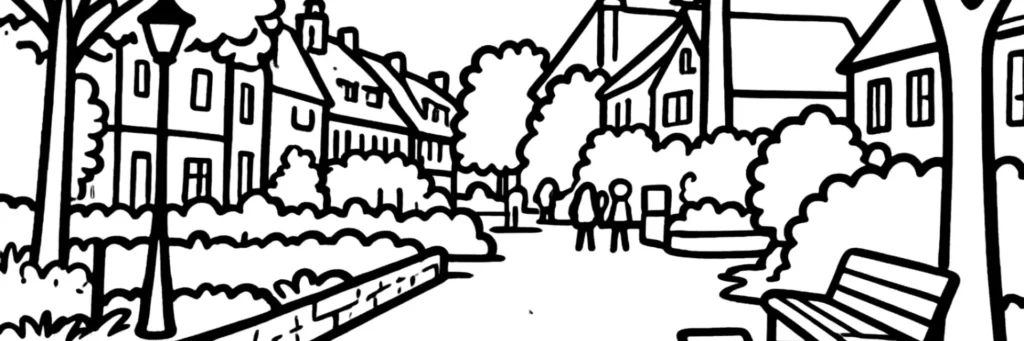
Line drawing of the banks of the Seine at Chatou, a riverside guinguette on the island and the bridge towards the town centre

Ambience illustration of Chatou and its banks of the Seine.

Property Prices in Chatou

The 2026 figures· Indicative data
4 862€/m²

The average price recorded in Chatou stands at 4 862 €/m² for an apartment. That average covers a highly contrasting stock. According to INSEE, the French national statistics institute, apartments account for 71,4 % of the commune's dwellings, largely from the urban renewal schemes of the 1960s and 1970s around the centre and the Landes district. The town houses and villas inherited from the Belle Époque, close to the quays, the park and the Notre-Dame church, sit clearly above, around 7 743 €/m². These values come from the DVF data, which lists sales actually registered before notaries, not asking prices in listings.

House : 7 743 €/m²

Apartment transactions / year
241
Median price per m²
4 692 €

Prices from the DVF file (Demandes de valeurs foncières, published by the DGFiP), transactions actually recorded at the notary at municipality level. Cross-referenced with the Notaires de France - INSEE indices. Learn more about our methodology.

Market trends and analysis for Chatou

The market in Chatou is held first of all by its position in the Seine loop and by the RER A. The commune offers a cheaper alternative to Le Vésinet or Croissy-sur-Seine for a comparable journey time to La Défense, which keeps a steady flow of buyers coming from Paris and the Hauts-de-Seine. Population density, close to 6 000 inhabitants per square kilometre, leaves little free land: new supply comes mainly from the renewal of already built plots, which limits swings in volume from one year to the next.

The make-up of the stock explains the second part of the movement. A large share of apartments dates from the schemes of the 1960s and 1970s and is reaching the age of major works, in particular on energy: renovated properties stand apart from those that are not, and that gap has widened with the tightening of rules on the least efficient homes. Conversely, the house segment, rare and concentrated in the south of the commune, stays little affected by swings in volume and acts as the ceiling of the local market.

Chatou in the Seine loop, in the east of the Yvelines

average €/m²

Chatou sits behind the most sought-after communes of the loop, while staying above some of its neighbours on the left bank. The three communes below frame its price level.

MunicipalityTierPrice /m²Gap
Croissy-sur-Seine5 659 €+16 %
Le Vésinet5 579 €+15 %
Chatou4 862 €ref.
Bougival4 298 €-12 %

The history of Chatou

The site was occupied as early as Gallo-Roman times, around a villa whose owner's name, Cattus, is thought to have given Chatou. In the Middle Ages, the village lived on fishing in the Seine and on vines, before being hard hit by the Hundred Years' War. Made a lordship, it passed in the 18th century to Henri Bertin, minister to Louis XV and Louis XVI, who had its park laid out by Jacques-Germain Soufflot, the architect of the Panthéon. From that ensemble survives the Nymphée of 1777, a shell of millstone and glass built to shelter a spring. The château itself was demolished in 1912.

The 19th century turned on access to Paris. The abolition of the bridge toll in 1834, the building of the stone bridge in 1836 and then the arrival of the railway in 1837 put the commune within immediate reach of the capital. Industrialists and well-off Parisians had villas built there, while the island became a high place of rowing. Renoir painted the Luncheon of the Boating Party there in 1880, on the terrace of the Maison Fournaise. Twenty years later, André Derain and Maurice de Vlaminck shared a studio on the island and formed what would be called the Chatou school, the matrix of Fauvism revealed at the Salon d'automne of 1905.

The 20th century redrew the town more than any other period. In the mid-1960s, a vast urban renewal scheme swept away the old core between rue du Docteur Rochefort and avenue du Maréchal Foch, replaced by apartment blocks. The Landes district was built at the same time to the west. The national antiques and ham fair, come from Paris, settled on the island in 1970 and has been held there twice a year since. The town bought back the Maison Fournaise in 1979, had it listed as a historic monument in 1982 and began its restoration from 1984, before opening a museum there.
Who buys in Chatou

Chatou has 30 598 inhabitants for around 13 200 households, in a densely built commune on the right bank of the Seine. According to INSEE, 90,5 % of dwellings are main residences and only 2,2 % second homes: the market is carried by buyers who come to live here, not by holiday buyers. Again according to INSEE, 61,1 % of main residences are lived in by their owners and 37,4 % by tenants. The dominant profile remains the working family employed in Paris or at La Défense, choosing between a family apartment of three to four rooms and a house, rarer and clearly more expensive.

Frequently asked questions

The average price in Chatou comes out at 4 862 €/m² for an apartment, based on DVF sales registered before notaries. That figure is a town-wide average: it aggregates blocks from the 1960s and 1970s, more recent developments and a few older addresses close to the quays. For a given property, the gap with that average depends above all on the floor level, the general condition and the distance to the station.

The highest values are concentrated to the south, between the Seine quays, the parc de Chatou, the Villa Lambert and the town hall sector, where the Belle Époque villas and town houses survive. The western district, around the Landes and the Sablons, built for the most part in the 1960s, sits below the town-wide average. The centre rebuilt in the 1960s holds an intermediate position.

The two markets are clearly separate. The apartment dominates the stock, at 71,4 % of dwellings according to INSEE, and accounts for most sales. The house stays in the minority and trades around 7 743 €/m², a gap of about 60 % with the apartment. A budget for a house in Chatou therefore compares more with the neighbouring communes of the loop than with the local apartment market.

Yes, it is the main driver of the local market. The Chatou-Croissy station puts La Défense and central Paris within direct reach, which explains the steady demand from working households. Immediate closeness to the station comes at a price: blocks within a few minutes' walk sell above the town-wide average, while the western sectors, further away, stay more affordable.

The island is an asset of reputation more than a residential sector: it holds the Maison Fournaise, its museum and the national antiques and ham fair, twice a year since 1970. It offers virtually no homes for sale. Its effect on the market is indirect: it feeds the image of the commune and supports the value of addresses looking out over the Seine, on the quay side.

Value your property in Chatou

Free valuation in under 2 minutes

Value my property

This analysis is published by Immover, an independent observatory founded by . Data sourced from official sources (DVF, INSEE, Notaries of France).

Estimer mon bien