The immover observatory

Property Prices in Guichen2026 property valuation

Updated: January 2026 Sources: DVF · Notaires de France · INSEE · Immover January 2026 · DVF, Notaires de France, INSEE, Immover
In brief

The average price per m² in Guichen is 2 610 €/m² for an apartment, based on actual notarised (DVF) sales. About 51 transactions are recorded each year.

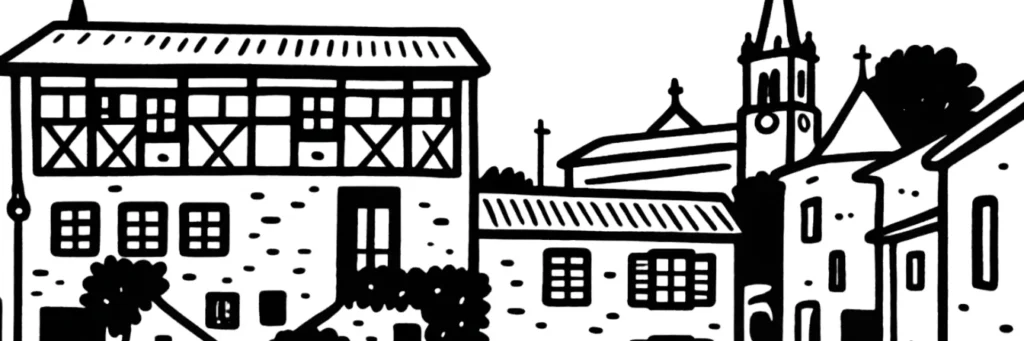
Line illustration of Guichen, the village centre, the Vilaine and the moulin du Boël amid the schist ridges

Mood illustration of Guichen, in the valley of the Vilaine, south of Rennes.

Property Prices in Guichen

The 2026 figures· Indicative data
2 610€/m²

The average price for apartments in Guichen stands at 2 610 €/m², based on the DVF transactions actually registered before notaries. That average covers a stock made up above all of houses, spread between the village centre of Guichen, the Pont-Réan sector on the banks of the Vilaine and more scattered housing. Apartments, fewer in number, are concentrated in the centre and in the recent developments tied to the spreading out of the Rennes conurbation. The size of the plot, the condition of the property and closeness to the routes towards Rennes make values vary. Guichen remains a periurban municipality turned towards the Rennes metropolitan area, some twenty kilometres to the south.

Apartment transactions / year
51
Median price per m²
2 633 €

Prices from the DVF file (Demandes de valeurs foncières, published by the DGFiP), transactions actually recorded at the notary at municipality level. Cross-referenced with the Notaires de France - INSEE indices. Learn more about our methodology.

Market trends and analysis for Guichen

The Guichen market is carried by the appeal of the Rennes conurbation, one of the most dynamic in the west of France. The rise in prices in the core of Rennes and in the municipalities immediately next to it shifts part of the demand towards towns a little further out such as Guichen, where houses are found at more affordable values. That demand, mainly from families and carried by working people employed in the metropolitan area, keeps a firm market, centred on houses with gardens, the dominant segment of the municipal stock.

Several factors frame that momentum. New building, in the form of estates and small developments, follows the growth of the population, but remains subject to the rules controlling urban sprawl that apply around Rennes. The setting of the valley of the Vilaine, with Pont-Réan and the site of the Boël, adds an amenity value that sets Guichen apart from other periurban municipalities. The pace of transactions, some fifty apartment sales a year in the DVF data, reflects an active market for a municipality of this size.

Guichen south of Rennes, in the valley of the Vilaine

average €/m²

Guichen shows prices below those of Rennes and of its closest municipalities, such as Bruz. The most telling comparison is with medium-sized towns of the department such as Vitré, at a similar level.

MunicipalityTierPrice /m²Gap
Rennes3 755 €+44 %
Bruz3 283 €+26 %
Vitré2 802 €+7 %
Guichen2 610 €ref.

The history of Guichen

Guichen takes its name from a Celtic root, Gwik-Ec-Hen, translated as the village of the springs. Settlement of the site goes back to Gallo-Roman times, with the arrival of the first clearers of land in the valley of the Vilaine. The village centre itself took shape at the start of the twelfth century, and its church was given in 1122 to the abbey of Sainte-Mélaine in Rennes, which drew revenue from it throughout the Middle Ages. That religious dependence lastingly anchored Guichen in the orbit of Rennes, only some twenty kilometres away, a closeness that still weighs on its development.

The river long shaped the life of the municipality. In the sixteenth century, the work to make the Vilaine navigable, undertaken under François Ier, made Pont-Réan an unavoidable crossing point: the toll held travellers there and encouraged the rise of inns and lodging houses. Downstream, the site of the Boël, with its mill of violet schist built in 1652, harnessed the power of the water and the nearby quarries. The schist quarried there served to build Rennes and travelled by boat. That river heritage, valued today for walking, recalls the economic role held by the Vilaine.

Long rural, Guichen changed in scale with the expansion of the Rennes conurbation. The closeness of Rennes, some twenty kilometres away, attracts working households looking for a quieter setting and for houses more affordable than in the metropolitan core. The population is growing steadily and now passes nine thousand inhabitants. For the census, INSEE, the French national statistics institute, distinguishes three sectors: the village centre of Guichen, the scattered housing, and the sector of Pont-Réan and the Boël. That arrangement reflects a wide municipality, between a lively village centre, farming hamlets and a residential bank of the Vilaine.
Who buys in Guichen

Guichen has 9 412 inhabitants, known as Guichenais. According to INSEE, the municipality covers about forty-three square kilometres and its population is rising steadily, carried by the spreading out of the Rennes conurbation. The housing stock is very largely made up of houses, and residents are most often owners of their dwelling. It is a relatively recent stock: a large share of the dwellings was built after 1970, which reflects the low-rise development of the last few decades. Buyers are mainly families and working people employed in Rennes, looking for a house with a garden at a reasonable distance from the metropolitan area.

Frequently asked questions

The average price for apartments in Guichen is 2 610 €/m², based on the DVF transactions actually completed before notaries. That average varies with closeness to the village centre or to Pont-Réan, the condition of the property, the floor area and the presence of outdoor space. As the stock is made up above all of houses, values also differ clearly between the village centre, the recent estates and the banks of the Vilaine.

Pont-Réan is a village lying across the municipalities of Guichen and Bruz, on either side of the Vilaine. A former crossing point on the river, it now forms a residential sector valued for its riverside setting and its closeness to the site of the Boël. On Guichen land, it is one of the three sectors distinguished by INSEE, alongside the village centre and the scattered housing.

Guichen lies some twenty kilometres south of Rennes, linked by the departmental road and by the routes towards the Rennes ring road. The municipality is served by the departmental coach network, which runs links to Rennes and to its urban transport network. That access to the metropolitan area and to its employment base largely explains the residential appeal of Guichen.

The Guichen market is first of all a market of houses: according to INSEE, the stock is very largely low-rise and most of the demand is for houses with gardens. The benchmark price of 2 610 €/m² concerns apartments, fewer in number and concentrated in the village centre and in the recent developments. Houses are negotiated according to the size of the plot, the condition and closeness to the routes towards Rennes.

Guichen has the facilities of a municipality of nearly ten thousand inhabitants: primary schools, secondary schools, shops in the village centre, sports grounds and a lively voluntary sector. Its stock of houses with gardens, its prices below those of Rennes and of its neighbouring municipalities, and the closeness of the valley of the Vilaine make it a sought-after destination for families. Plans have to take account of the local planning rules, to be checked with the town hall.

Value your property in Guichen

Free valuation in under 2 minutes

Value my property

This analysis is published by Immover, an independent observatory founded by . Data sourced from official sources (DVF, INSEE, Notaries of France).

Estimer mon bien