The average price per m² in Le Rheu is 2 879 €/m² for an apartment, based on actual notarised (DVF) sales. About 72 transactions are recorded each year.

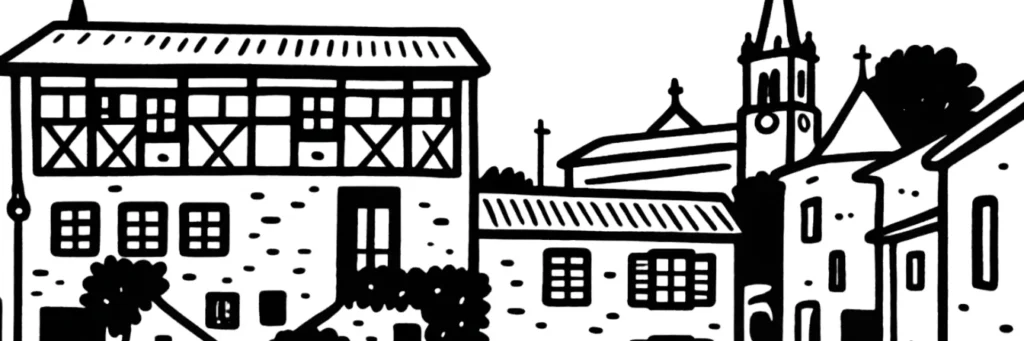
Atmospheric illustration of Le Rheu, a municipality west of Rennes Métropole, in Ille-et-Vilaine.
The average price of apartments in Le Rheu stands at 2 879 €/m², based on DVF transactions actually registered with notaries. This average covers a varied housing stock: estates of detached houses developed from the 1960s as the municipality grew, recent small apartment buildings around the village centre, older houses and new developments driven by the appeal of the Rennes metropolitan area. Proximity to Rennes, about ten kilometres away, the main road links and the presence of amenities and services all weigh on values. The age of a home, its energy performance, whether it has outdoor space and how far it is from the centre make prices vary noticeably from one area to another.
Prices from the DVF file (Demandes de valeurs foncières, published by the DGFiP), transactions actually recorded at the notary at municipality level. Cross-referenced with the Notaires de France - INSEE indices. Learn more about our methodology.
The Le Rheu market is part of the momentum of the western side of Rennes Métropole. The municipality benefits from the demographic and economic growth of the Rennes conurbation, which pushes some households to look for a home in the outlying municipalities, at more moderate price levels than the central city. Demand is split between detached houses from the successive estates and recent apartments around the village centre, with steady turnover linked to the housing paths of families.
Several factors support this price level. The immediate closeness of Rennes, the main road links and the metropolitan transport network, the presence of amenities, shops and the INRAE research site all sustain the appeal of the municipality. New supply comes mainly from recent developments and the densification of the village centre, within a fabric that keeps a large share of houses. The market remains tied to the overall health of the Rennes conurbation and to lending conditions.
Le Rheu sits below its neighbours in the Rennes metropolitan area. The municipality remains more affordable than Saint-Jacques-de-la-Lande, its neighbour close to the airport, and than Bruz, to the south. It stands clearly below Rennes, the central city, about ten kilometres away.
Le Rheu, Reuz in Breton, is a municipality in the west of Ille-et-Vilaine, about ten kilometres south-west of Rennes. The first traces of settlement in the area go back to the 13th century. The municipality long remained a rural parish, framed by farmland and by the watercourses that cross it, the Vilaine to the south and the Flume stream to the north.
The recent history of Le Rheu turns on its closeness to Rennes. From the 1960s, the municipality saw rapid population growth, driven by the spreading out of the Rennes conurbation and by newcomers settling in estates of detached houses. On 13 February 1965, the neighbouring municipality of Moigné was merged into Le Rheu. The municipality is now part of Rennes Métropole, which brings together the municipalities around the central city, and is one of the western municipalities of that area alongside L'Hermitage, Vezin-le-Coquet and Mordelles.
Le Rheu is home to an agricultural research site run by INRAE, successor to INRA, specialising in plant breeding and crop protection. This scientific presence, together with a carefully tended setting that has earned the municipality a distinction in the national towns and villages in bloom competition, feeds the image of a residential municipality close to Rennes while keeping a rural anchoring.
Le Rheu has 9 839 inhabitants according to the data used for this page. A residential municipality in the west of Rennes Métropole, it has seen its population rise sharply since the 1960s with the arrival of households working in the Rennes conurbation. The housing stock is dominated by the detached house, a legacy of successive waves of estates, complemented by more recent apartment developments around the village centre. Buyers are mainly families and first-time buyers looking for a quieter setting than Rennes while staying close to the employment areas, services and transport of the metropolitan area. Demand covers both houses with a garden and recent apartments close to the shops and amenities.
The average price of apartments in Le Rheu is 2 879 €/m², based on DVF transactions actually completed before notaries. This average covers differences by the age of the property, its energy performance, the floor, the presence of outdoor space and the distance to the village centre. A recent apartment close to the shops and an older home set apart do not trade at the same level.
Le Rheu lies about ten kilometres south-west of Rennes and stays connected to the metropolitan area by the main roads and public transport. The municipality offers a more residential setting, a large share of houses with gardens and prices generally below those of the central city, while giving access to the services, schools and employment areas of the Rennes conurbation. It is a compromise sought after by families and first-time buyers.
The Le Rheu housing stock is made up mainly of detached houses, a legacy of the estates developed since the 1960s. The reference price of 2 879 €/m² relates to apartments, which are more recent and concentrated around the village centre. Houses, which are more numerous, trade according to their floor area, their plot and their condition, often above the apartment level. The choice depends above all on budget, on the floor area sought and on the need for outdoor space.
Le Rheu is linked to Rennes by the roads in the west of the metropolitan area, the central city lying about ten kilometres away. The municipality is served by the Rennes Métropole transport network. Rennes station, on the high-speed line to Paris, and Rennes-Saint-Jacques airport, in the neighbouring municipality of Saint-Jacques-de-la-Lande, are the nearest access points for long-distance journeys.
Yes. The appeal of Rennes and the growth of its metropolitan area support demand in western municipalities such as Le Rheu. Proximity to employment areas, public transport links and the search for a residential setting with a garden feed an active market, driven by families and first-time buyers. The municipality remains dependent on the overall momentum of the conurbation, whose price movements it follows.
This analysis is published by Immover, an independent observatory founded by Antony Barbier. Data sourced from official sources (DVF, INSEE, Notaries of France).