The average price per m² in Lesneven is 1 820 €/m² for an apartment, based on actual notarised (DVF) sales. About 24 transactions are recorded each year.

Lesneven, former capital of the Léon, in Finistère.
In Lesneven, the average price of an apartment stands at around 1 820 €/m². This average covers both studios and small one-bedroom flats in the historic centre and more recent apartments built on the edge of the town. Demand comes mainly from working households in the Brest area and from families drawn by the setting of a busy small town in the Léon country, away from the land pressure of the nearby coast. Values vary sharply with how close a property is to the town-centre squares, brought to life every Monday by one of the largest markets in Brittany, and with the condition of the old granite buildings. Renovated properties, with parking and outdoor space, stand clearly apart from unmodernised homes in need of work.
Prices from the DVF file (Demandes de valeurs foncières, published by the DGFiP), transactions actually recorded at the notary at municipality level. Cross-referenced with the Notaires de France - INSEE indices. Learn more about our methodology.
The Lesneven market benefits from its position as a small central town within the Léon country, between Brest and the Abers coast, which gives it a relatively stable local clientele rather than swings tied to tourism. The headline price of 1 820 €/m² is therefore consistent with this profile of a busy market town, without the scarcity effect seen in the nearby coastal municipalities.
Demand nonetheless remains dependent on the strength of employment in the Brest area, of which Lesneven forms part of the second ring. The ageing of part of the older housing stock in the town centre can hold back some transactions, while renovated properties or more recent houses on the edge of town sell more easily.
Lesneven shows prices clearly more affordable than Landerneau or Brest, two denser urban centres less than thirty kilometres away. The municipality remains, on the other hand, fairly close to the level of Landivisiau, another market town of northern Finistère of comparable size.
Lesneven owes its name and its origin to a castle founded around the year 950 by a man named Neven, tasked by Duke Alain Barbetorte with driving out the Norse occupants settled on this part of the Léon plateau. A town grew at the foot of the fortress, giving rise to the present town, whose name literally means the castle of Neven.
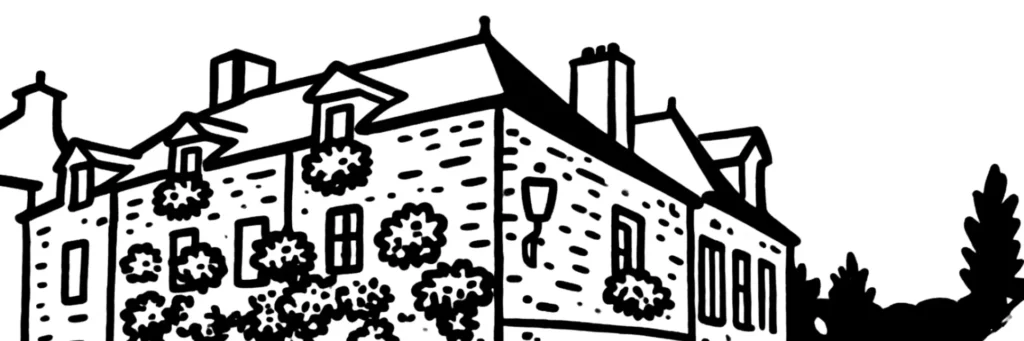
From the 15th to the 18th century, Lesneven held the status of royal town and seat of the sénéchaussée of Léon, a judicial function that made it the administrative capital of this part of northern Finistère. That period left an old centre organised around several squares lined with granite houses and blue shutters, characteristic of local Breton architecture.
Losing the court after the Revolution did not put an end to the commercial standing of the town: the Monday morning market, one of the largest in Brittany, still brings together close to 120 stalls in summer across the squares and streets of the centre. Lesneven lies about three kilometres from Le Folgoët, whose Gothic basilica belfry can be seen in the distance, and some thirty kilometres north-east of Brest.
Lesneven has 7 566 inhabitants. The municipality mainly attracts families and working households employed in the Brest area who are looking for a quieter way of life and prices more affordable than in the conurbation. Main residences largely dominate the market, in the form of town houses or detached homes with a garden, suited to families with children attending the many schools in the town. Some older buyers look for a single-storey house in the town centre, close to the market and the shops. Demand remains steady, driven by the setting of a busy small town rather than by an influx of second homes, unlike some municipalities on the nearby coast.
The average price recorded for an apartment in Lesneven is around 1 820 €/m². This figure brings together properties of very different sizes and conditions, from a studio in the town centre to a more recent apartment on the edge of town, which explains the gaps seen from one property to another.
Lesneven lies some thirty kilometres north-east of Brest, reached mainly by road since the town has no railway station. The municipality also benefits from being close to Landerneau and Landivisiau, two rail hubs less than twenty kilometres away, and to the Abers coast a few kilometres to the west.
Its status as a service centre for the northern Léon, with a dense fabric of schools and shops inherited from its past as a royal town, sustains steady demand from families and working households. The weekly Monday market, among the busiest in Brittany, also adds to the appeal and the life of the town centre all year round.
The old centre offers granite town houses, often terraced, with the blue shutters characteristic of the Léon. On the edge of town, the supply broadens with houses built between the 1970s and the 2000s on larger plots, along with a few more recent developments close to the schools.
In the old centre, the state of the roof, the insulation and the joinery deserves particular attention on houses that are sometimes several centuries old. It is also worth checking the aspect and vehicle access, as some streets in the historic core remain narrow and were laid out before the age of the car.
This analysis is published by Immover, an independent observatory founded by Antony Barbier. Data sourced from official sources (DVF, INSEE, Notaries of France).