The immover observatory

Property Prices in Melesse2026 property valuation

Updated: January 2026 Sources: DVF · Notaires de France · INSEE · Immover January 2026 · DVF, Notaires de France, INSEE, Immover
In brief

The average price per m² in Melesse is 3 047 €/m² for an apartment, based on actual notarised (DVF) sales. About 18 transactions are recorded each year.

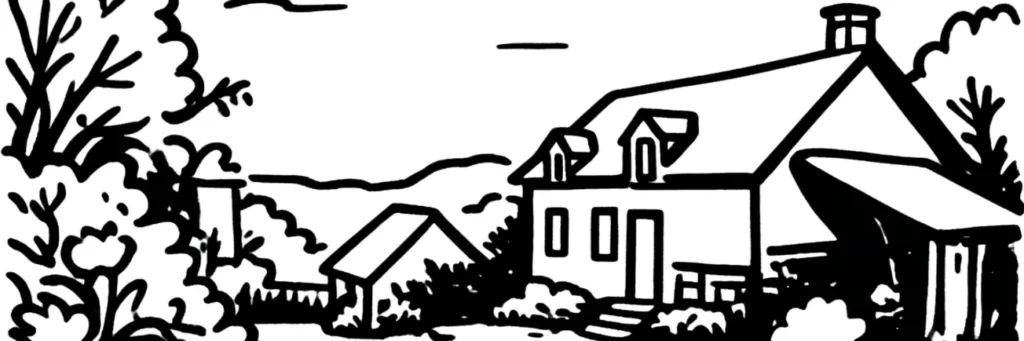
Line drawing of a Breton village surrounded by bocage hedgerows and cultivated fields, stone houses and a bell tower under a changing Ille-et-Vilaine sky

Atmospheric illustration of Melesse, in the bocage countryside north of Rennes.

Property Prices in Melesse

The 2026 figures· Indicative data
3 047€/m²

In Melesse, the benchmark price stands at 3 047 €/m² for an apartment. This level reflects a residential market north of Rennes, driven by the closeness of Rennes, where the detached house dominates and where the supply of apartments is growing in the centre and in recent developments. These values come from DVF data, the French notarised sales database, meaning transactions actually registered with notaries, not estimates based on listings. They give an order of magnitude: each property still needs to be assessed according to its condition, its location and its proximity to the roads towards Rennes.

Apartment transactions / year
18
Median price per m²
3 186 €

Prices from the DVF file (Demandes de valeurs foncières, published by the DGFiP), transactions actually recorded at the notary at municipality level. Cross-referenced with the Notaires de France - INSEE indices. Learn more about our methodology.

Market trends and analysis for Melesse

The Melesse market is driven by the appeal of the Rennes metropolitan area: the search for a greener setting and space, a short distance from Rennes, supports demand for family houses. The strong population growth of the municipality keeps the market tight for quality properties with land, while older homes to renovate also find buyers in a context of sustained demand. The annual volume of transactions makes each sale sensitive to the specific features of the property, its condition, location and proximity to the main roads, more than to a single market trend.

In the longer term, the price trajectory depends on two factors. On the one hand, residential pressure from the Rennes area and the relative scarcity of land in an agricultural territory support values over time. On the other, energy performance is becoming decisive: well-insulated properties gain value, while energy-inefficient homes sell at a discount. The demographic and economic dynamism of Rennes remains the underlying driver of demand in the municipalities north of the urban area.

Melesse north of Rennes, between Betton and La Mézière

average €/m²

Melesse sits in the middle of its area: its prices remain below those of Betton and Rennes, while standing above those of a municipality such as La Mézière.

MunicipalityTierPrice /m²Gap
Rennes3 755 €+23 %
Betton3 411 €+12 %
Melesse3 047 €ref.
La Mézière2 843 €-7 %

The history of Melesse

Melesse spreads across the bocage of Ille-et-Vilaine, around a dozen kilometres north of Rennes, on a rural territory marked by fields and hedgerows. The site has been occupied for a long time: traces of occupation go back to the Neolithic, then to Antiquity with the remains of a Roman villa. In the 12th century, the village developed around a Romanesque church and a Benedictine priory, in the hamlet of Mesnil, attached to the abbey of Saint-Melaine in Rennes.

The history of Melesse is first that of a farming village. For a long time, crop growing and livestock dominated here, supplemented in the 19th century by weaving and various craft activities. The territory remains largely rural and cultivated today, with a bocage landscape typical of the north of the Rennes area, even though the municipality later saw a residential boom linked to the pull of the metropolitan area.

Today, Melesse is a municipality of the Rennes commuter belt, part of the Val d'Ille-Aubigné inter-municipal authority. It offers the shops, schools and facilities of a lively small town, in a country setting a short distance from Rennes. Its position on the route linking Rennes to Saint-Malo makes it a sought-after base for households working in the urban area.
Who buys in Melesse

According to INSEE, the French statistics institute, Melesse has around 7 541 inhabitants, a population growing strongly on the back of the appeal of Rennes. The market is aimed first at working households: families and first-time buyers employed in the Rennes metropolitan area, looking for a greener setting with space, a short distance from the city. The housing stock consists mainly of detached houses with land, which steers demand towards buying a main residence rather than towards investment. The closeness of Rennes and the road links support sustained demand in this type of municipality north of Rennes.

Frequently asked questions

The benchmark price in Melesse stands at 3 047 €/m² for an apartment. This figure comes from DVF data, the sales actually signed with notaries. It is an average: depending on floor area, condition and location, a recent house with land or an older home to renovate can differ noticeably from this base.

The village centre concentrates shops, schools and part of the older buildings, appreciated for everyday life close at hand. Around it, housing estates and recent developments offer houses with gardens, sought by families for the space. Properties close to services and to the roads towards Rennes remain among the most in demand on the local market.

Melesse lies around a dozen kilometres north of Rennes, linked by the main road leading to Saint-Malo. This closeness to the metropolitan area and its employment pool, combined with a direct road link, explains the appeal of the municipality for people who work in Rennes while looking for a more rural setting.

The local market is above all a market of houses. The supply of apartments is growing in the centre and in recent developments, but remains a minority. For a buyer, the detached house with land is the dominant product, suited to family life in this bocage setting. An apartment can suit a first purchase or a limited budget, but most transactions involve detached homes.

The territory remains largely agricultural and bocage, which governs what can be built and steers urban development towards the areas planned by the municipality. The sustained demand linked to the closeness of Rennes can tighten the market on the most sought-after properties. Before any project, it is worth consulting the local urban plan (plan local d'urbanisme) at the town hall to check whether a plot can be built on and which rules apply.

Value your property in Melesse

Free valuation in under 2 minutes

Value my property

This analysis is published by Immover, an independent observatory founded by . Data sourced from official sources (DVF, INSEE, Notaries of France).

Estimer mon bien