The immover observatory

Property Prices in Montmorency2026 property valuation

Updated: January 2026 Sources: DVF · Notaires de France · INSEE · Immover January 2026 · DVF, Notaires de France, INSEE, Immover
In brief

The average price per m² in Montmorency is 3 724 €/m² for an apartment, based on actual notarised (DVF) sales. About 164 transactions are recorded each year.

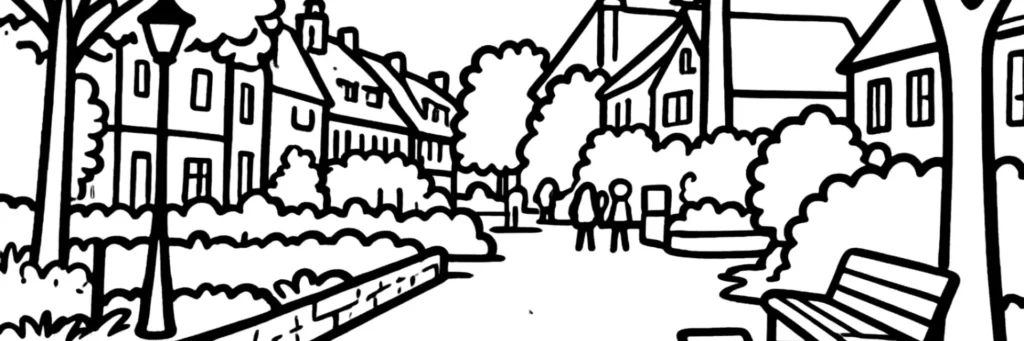
Line drawing of Montmorency: the Saint-Martin collegiate church on its promontory

Mood illustration of Montmorency, on the hillsides of the Val-d'Oise north of Paris.

Property Prices in Montmorency

The 2026 figures· Indicative data
3 724€/m²

The average price recorded in Montmorency stands at 3 724 €/m². That average covers a divided stock, where INSEE, the French national statistics institute, records 67,1 % apartments and 32,9 % houses: on one side the blocks of flats of the centre and the surroundings of the stations, on the other the town houses and the suburban homes that step up the hillsides facing Paris. It is those houses, often with a garden and a view, that pull prices upwards: the average level recorded on houses and villas comes out at 4 797 €/m². The position on the slope, the age of the building and closeness to a station open up the gaps. The figures come from the DVF database, which records the transactions actually registered before notaries.

Apartment transactions / year
164
Median price per m²
3 614 €

Prices from the DVF file (Demandes de valeurs foncières, published by the DGFiP), transactions actually recorded at the notary at municipality level. Cross-referenced with the Notaires de France - INSEE indices. Learn more about our methodology.

Market trends and analysis for Montmorency

Montmorency belongs to a sought-after residential sector of the Val-d'Oise, alongside Enghien-les-Bains and Soisy-sous-Montmorency. Some fifteen kilometres from Paris, the municipality draws demand from families and executives looking for a green setting, the forest close by and a house with a view, at a price level below that of the Hauts-de-Seine bordering the capital. That demand supports values, above all on the hillsides, while the population holds above 21 000 inhabitants.

New supply is structurally constrained. Over only 5,37 km², with the state forest to the north and a largely built-up old centre, available land is scarce: activity bears above all on the resale of existing houses and apartments. The energy performance of the older stock now weighs in negotiations, and the gap widens between renovated, well-placed properties and homes in need of works. Closeness to the stations of Enghien-les-Bains and Ermont, gateways to Paris on Line H, remains a decisive criterion of value for apartments.

Montmorency on the hillsides of the Val-d'Oise

average €/m²

Some fifteen kilometres north of Paris, Montmorency sits above its immediate neighbours in the valley, such as Épinay-sur-Seine and Franconville, and in the upper local bracket alongside Argenteuil. The gap owes to the scarcity of hillside land and to the presence of houses with a view and a garden.

MunicipalityTierPrice /m²Gap
Montmorency3 724 €ref.
Argenteuil3 320 €-11 %
Franconville3 072 €-18 %
Épinay-sur-Seine2 883 €-23 %

The history of Montmorency

The name Montmorency appears as early as 993 in the Latin form Mons Maurentiacus, the estate of a Gallo-Roman landowner named Maurentius. The municipality is the cradle of the house of Montmorency, one of the oldest lines of the French nobility, which ruled the place from the Middle Ages until the end of the Ancien Régime. The constable Anne de Montmorency, a leading figure of the 16th century and companion of the kings of France, lies with his wife Madeleine de Savoie in the Saint-Martin collegiate church, a Gothic and Renaissance building that remains the main monument of the town. The seigneurial castle, long the centre of local society life, was demolished in 1817.

Montmorency owes part of its fame to Jean-Jacques Rousseau, who stayed there from 1756 to 1762. Settled first at the Ermitage, then in a house in the town, the philosopher wrote several of his major works there, among them La Nouvelle Héloïse, l'Émile and Du contrat social. That link explains why, in 1793, in the revolutionary years, the municipality was renamed Émile in tribute to the writer, before recovering its name of Montmorency, settled for good in 1832. The house where Rousseau lived today holds a museum listed as a historic monument, at the heart of the old centre.

The town also gave its name to a variety of cherry, the Montmorency cherry, a tart morello whose reputation goes back to the letters of Madame de Sévigné and recalls the horticultural past of the hillsides. To the north stretches the state forest of Montmorency, a massif of about 2 000 hectares that marks the landscape and limits urban spread. Over its 5,37 km², the municipality has gone from fewer than 2 000 inhabitants at the end of the eighteenth century to 21 763 today, carried in the 20th century by the closeness of Paris and the arrival of the railway in the neighbouring municipalities.
Who buys in Montmorency

According to INSEE, Montmorency has 21 763 inhabitants. The housing stock is 89,3 % main residences, second homes accounting for only 1,9 %: people buy here to live, not for a pied-à-terre. Among households, 57,9 % are owners and 42,1 % tenants, a high share of owners for an inner-suburb municipality. Apartments weigh 67,1 % of dwellings and houses 32,9 %. Two buyer profiles therefore meet here: families and executives after a house on the hillsides, often former Parisians drawn by the setting and the forest, and young households or first-time buyers aiming at an apartment near the stations of Enghien-les-Bains or Ermont.

Frequently asked questions

The average price recorded is 3 724 €/m², calculated from the transactions registered before notaries and published in the DVF database. It is a municipal average, mixing the apartment near the stations and the hillside house with a view over Paris. The average level recorded on houses and villas reaches 4 797 €/m². The position on the slope, the aspect, the year of construction and the presence of a garden explain most of the gaps. A serious valuation is set on comparable sales, not on the average.

The municipality reads by the slope. The old centre, around the Saint-Martin collegiate church and the Jean-Jacques Rousseau museum, mixes small blocks of flats and town houses. The hillsides climbing towards the forest concentrate the suburban homes and the houses with a garden, sought after for their open view over the Paris conurbation. The districts near the municipal boundaries, turned towards the stations of Enghien-les-Bains or Ermont, offer more apartments and more direct access to transport. These three housing logics do not sell at the same level.

Montmorency no longer has a station on its own territory since the closure of its former line: residents use the neighbouring stations of Enghien-les-Bains or Ermont, on Line H of the Transilien, from which Paris Gare du Nord is reachable in about fifteen minutes. Bus lines link the centre and the hillsides to those stations. The car remains much used for journeys inside the town because of the relief, which gives value to parking and to a garage. The Montmorency forest is also served by Line H.

Supply of houses exists but remains limited. According to INSEE, houses account for 32,9 % of dwellings against 67,1 % apartments. They are concentrated on the hillsides, in the form of suburban homes and town houses with widely varying floor areas and plots, with more or less open views over Paris. The municipality measures only 5,37 km² and the state forest bounds urbanisation to the north, which makes land scarce and properties with a garden much in demand. Valuing a house therefore depends above all on its position, its view and its condition, more than on the municipal average.

The old centre has several protected monuments, among them the Saint-Martin collegiate church and the house of Rousseau, which places part of the built fabric within the perimeter of the Architectes des Bâtiments de France, the French heritage architects: works visible from those surroundings may be subject to authorisation. Closeness to the state forest and the relief also bring planning rules specific to certain sectors. On use, letting a furnished tourist rental involves a declaration at the town hall, and the tax treatment of second homes is worth anticipating before buying.

Value your property in Montmorency

Free valuation in under 2 minutes

Value my property

This analysis is published by Immover, an independent observatory founded by . Data sourced from official sources (DVF, INSEE, Notaries of France).

Estimer mon bien