The immover observatory

Property Prices in Orsay2026 property valuation

Updated: November 2026 Sources: DVF · Notaires de France · INSEE · Immover November 2026 · DVF, Notaires de France, INSEE, Immover
In brief

The average price per m² in Orsay is 4 251 €/m² for an apartment, based on actual notarised (DVF) sales. About 74 transactions are recorded each year.

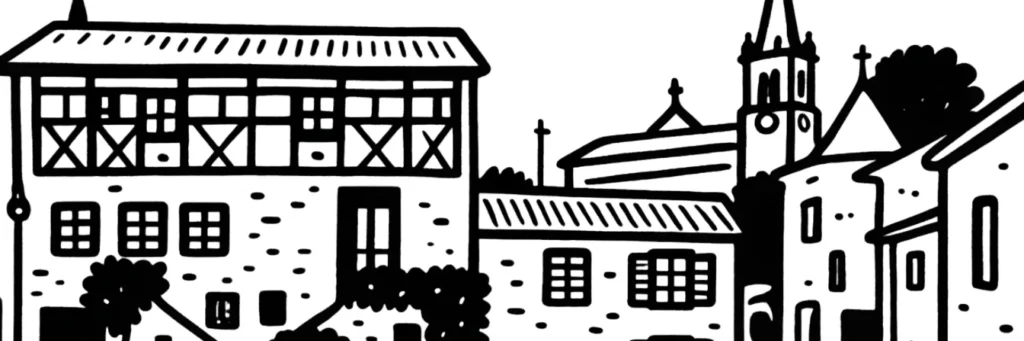
Line drawing of Orsay: the Temple de la Gloire on the edge of its lake, the wooded Yvette valley, an RER B train

Atmospheric illustration of Orsay, a university town of the Essonne in the Yvette valley, at the foot of the Saclay plateau.

Property Prices in Orsay

The 2026 figures· Sales from July 2024 to June 2026 (DVF) · updated 2026-11-24 · −4.9% since the previous update
4 251€/m²

In Orsay, an apartment sells for an average of 4 251 €/m². This benchmark is based on 77 sales completed in 2025 and published in DVF data, the French notarised sales database, which records the transfers registered by notaries, and not the prices asked in listings. Houses, a little under half of the housing stock, change hands at around 4 355 €/m², practically the same level. Between a residential block near Orsay-Ville station and a house on the heights of Mondétour, the difference depends above all on access to the RER B, the view over the valley and the energy performance of the home.

Apartment transactions / year
74
Median price per m²
4 182 €

Prices from the DVF file (Demandes de valeurs foncières, published by the DGFiP), transactions actually recorded at the notary at municipality level. Cross-referenced with the Notaires de France - INSEE indices. Learn more about our methodology.

Market trends and analysis for Orsay

The Orsay market remains narrow: around 75 apartment sales a year, for a population that has been almost stable since 2017. The territory leaves little free land, between the Yvette valley, the protected woods and a plateau already occupied by the campus and the laboratories. The Paris-Saclay national interest development project, launched in 2005, and the presence of the headquarters of the Paris-Saclay urban community anchor skilled employment in the area for the long term, with nearly half of local jobs in public administration, education and health.

House and apartment prices move almost in parity, a sign that location matters more than the type of property. Homes close to the RER B stations and the campus find buyers more quickly, as do those that have undergone an energy renovation. Properties located on the valley floor deserve a check of their exposure to flooding from the Yvette, which the municipality addressed through river re-meandering works in 2019. To position your property precisely, compare it with recent sales in your area.

Orsay at the heart of the Yvette valley and the Saclay plateau

average €/m²

Orsay sits above Palaiseau and Massy, its neighbours in northern Essonne, but remains below Châtenay-Malabry, closer to Paris.

MunicipalityTierPrice /m²Gap
Châtenay-Malabry4 759 €+7 %
Orsay4 251 €ref.
Massy3 933 €-12 %
Palaiseau3 799 €-14 %

The history of Orsay

The name of Orsay appears in the 9th century in the form Orceacum, probably derived from a Gallo-Roman landowner named Orcius. In 754, Pepin the Short gave the territory to the abbey of Saint-Germain-des-Prés. Construction of the église Saint-Martin began in 1151. In 1400, Raymond Raguier undertook the building of the château d'Orsay, taken by the English in 1424 during the Hundred Years' War. Charles Boucher d'Orsay, provost of the merchants of Paris, oversaw in 1675 the improvement of a quay on the Seine which, by royal decree, took the name quai d'Orsay.

In 1743, Pierre Grimod du Fort bought the estate and became the first count of Orsay. The municipality was created in 1790. In 1801, the architect Pierre-Alexandre Vignon built the Temple de la Gloire for Madame Hulot, in honour of General Moreau, victor at Hohenlinden; this neoclassical pavilion, set on the edge of one of the lakes inherited from the château's park, was listed as a historic monument in 1979. The Sceaux line reached Orsay-Le Guichet in 1854, then Orsay-Ville in 1867 with its extension towards Limours. The town hall was built in 1873, and the land of Mondétour was divided into building plots in 1924.

The 20th century made Orsay a town of science. The electrification of the line, in 1938, put Paris thirty minutes away. In 1955, the University of Paris bought the grounds of the château de Launay and moved there in 1958; the Institut Curie set up there in 1957. The campus, now part of Paris-Saclay University and shared with Bures-sur-Yvette, hosts around 13 000 students. Pierre-Gilles de Gennes, Nobel Prize in Physics in 1991, taught there from 1961 to 1971. The creation of Les Ulis, in 1977, forced the municipality to give up part of its plateau, and a final exchange of two hectares took place in 1997.
Who buys in Orsay

Orsay has 16 498 inhabitants in 2023 according to INSEE, the French national statistics institute. The housing stock is mixed: 52,7 % apartments and 46,0 % houses. A majority of households, 59,5 %, own their main residence, and vacant homes account for 7,5 % of the stock. The presence of the university, the CNRS research laboratories and the Institut Curie shapes demand: academics and researchers, engineers from the Saclay plateau and the Courtabœuf business park, and families attentive to schools. Median disposable income reached 32 230 € per consumption unit in 2020, one of the signs of a solvent and stable market.

Frequently asked questions

The Immover benchmark is 4 251 €/m² for an apartment in Orsay, established from 77 notarised sales in 2025. This figure is a starting point: the floor, a balcony or a garden, parking and the energy rating push it up or down. Houses stand at around 4 355 €/m². For a valuation adapted to your home, use the Immover valuation tool, which starts from the exact address.

Orsay has two stations on line B of the RER, the Paris regional express rail network: Orsay-Ville, in the centre, and Le Guichet, in the east of the municipality. Both are on the former Sceaux line, which reaches Paris via Massy-Palaiseau. The choice depends on your daily journey and on the terrain: part of the town lies on the valley floor, the rest on the slopes and the plateau. A home a few minutes' walk from one of the two stations remains the most sought after.

Orsay combines a wooded valley setting, with the Yvette, lakes and several woods listed as sensitive natural areas, and the immediate proximity of the employers of the Saclay plateau. Social housing (HLM) accounts for only 3,0 % of main residences according to INSEE, and the majority of households are owner-occupiers. This structure, more residential than that of its neighbours, supports a higher price level.

The town centre brings together the town hall, the église Saint-Martin and Orsay-Ville station. Le Guichet, to the east, is organised around its own station. Mondétour, developed from 1924, extends towards the Courtabœuf plateau. There are also le Bois du Roi, les Terrasses, Corbeville and Launay, the latter around the botanical park. The slope and the distance to the stations change the value noticeably from one street to the next.

With around 13 000 students and 2 100 doctoral candidates on the campus, rental demand for small units is real in Orsay, particularly near the stations. For a buy-to-let purchase, check the living area, the rating on the energy performance certificate (DPE), since homes rated G can no longer be let under a new lease since 2025, and the co-ownership regulations.

Value your property in Orsay

Free valuation in under 2 minutes

Value my property

This analysis is published by Immover, an independent observatory founded by . Data sourced from official sources (DVF, INSEE, Notaries of France).

Estimer mon bien