The immover observatory

Property Prices in Palavas-les-Flots2026 property valuation

Updated: January 2026 Sources: DVF · Notaires de France · INSEE · Immover January 2026 · DVF, Notaires de France, INSEE, Immover
In brief

The average price per m² in Palavas-les-Flots is 5 111 €/m² for an apartment, based on actual notarised (DVF) sales. About 212 transactions are recorded each year.

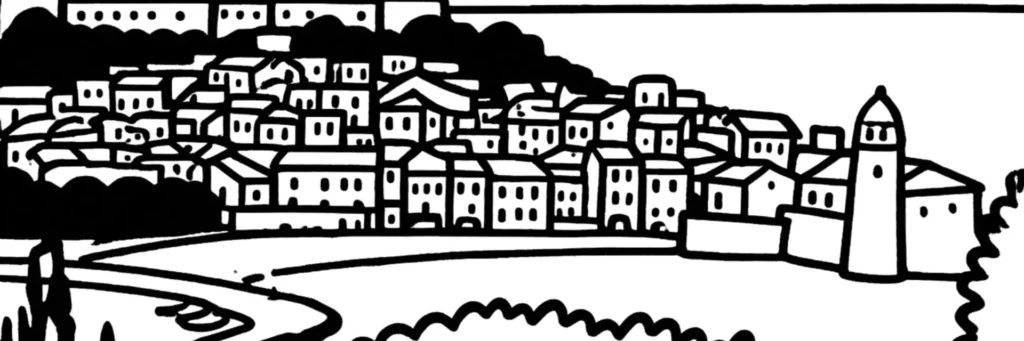
Line drawing of Palavas-les-Flots, fishermen's huts, canal, bridge and Mediterranean seafront

Atmospheric illustration of Palavas-les-Flots, a seaside resort in the Hérault.

Property Prices in Palavas-les-Flots

The 2026 figures· Indicative data
5 111€/m²

The average price recorded in Palavas-les-Flots stands at 5 111 €/m². This average covers a stock made up mainly of flats: according to INSEE, the French national statistics office, apartments account for 83,2 % of dwellings. It mixes the seafront buildings and the 1960s and 1970s developments set back along the Lez. Proximity to the beach, the floor level and the view explain most of the gaps, in a municipality where the buildable area is bounded by the sea and by the lagoons. The figures come from the DVF database, the French record of sales actually registered with notaries, not from asking prices in listings.

Apartment transactions / year
212
Median price per m²
4 932 €

Prices from the DVF file (Demandes de valeurs foncières, published by the DGFiP), transactions actually recorded at the notary at municipality level. Cross-referenced with the Notaires de France - INSEE indices. Learn more about our methodology.

Market trends and analysis for Palavas-les-Flots

The Palavas-les-Flots market rests on a twofold demand. The immediate proximity of Montpellier, some ten kilometres away, makes it the metropolitan area's beach: working households buy a second home close by, sometimes turned into a main residence after retirement. The municipality also attracts retirees from other regions, which explains why 41,7 % of inhabitants are 65 or over according to INSEE. These movements feed a steady turnover: long-held properties come back to the market with every inheritance or change of life.

Supply, by contrast, barely moves any more. Squeezed between the sea, the Lez and the lagoons, the municipality no longer has significant free land, and new schemes are limited to renewal operations on already built plots. Tourism keeps up the pressure: with 50,3 % second or occasional homes according to INSEE, and a population that swells sharply in summer, seasonal letting supports the value of small units close to the sand. That seasonality also sets the rhythm of listings, more numerous outside the summer period.

Palavas-les-Flots on the Hérault coast

average €/m²

A seaside resort backing onto Montpellier, Palavas-les-Flots sits clearly above its neighbouring metropolis and above Sète. It remains slightly behind La Grande-Motte, a resort built from scratch a few kilometres to the east.

MunicipalityTierPrice /m²Gap
La Grande-Motte5 594 €+9 %
Palavas-les-Flots5 111 €ref.
Sète3 690 €-28 %
Montpellier3 434 €-33 %

The history of Palavas-les-Flots

Before becoming a municipality, Palavas was a string of fishermen's huts set on the sand bar separating the sea from the lagoons, known as the Cabanes de Ballestras. The place takes its name from the Ballestras redoubt, a watchtower raised in 1743 and 1744, one of eight built between Le Grau-du-Roi and Cap d'Agde to watch the coast and protect fishing and trade. The independent municipality was created on 29 January 1850, from land taken from Mauguio, Pérols, Lattes and Villeneuve-lès-Maguelone. The suffix les-Flots, added in 1928, already reflected a tourist intent.

The turning point came with the railway. A local single-track line of 11,5 kilometres linked the Esplanade in Montpellier to the beach from 6 May 1872. Success was immediate: nearly 131 000 passengers between May and the end of July in the first year, and up to two million a year at the best periods. That train, made popular by the drawings of Albert Dubout, brought the population of Montpellier onto the sand every summer and fixed development on the left bank of the Lez, as close as possible to the beach. It ran for the last time on 31 October 1968, replaced by the road and the car.

The redoubt itself disappeared in the early twentieth century, turned into a reservoir and then absorbed into a water tower raised in 1942 and 1943. In 1991 and 1992 the Compagnons du Devoir dismantled it stone by stone, about 300 tonnes, and rebuilt it identically on the Levant lagoon, where it has housed the Albert Dubout museum since 1992. The former water tower was converted into a revolving panoramic restaurant and conference centre, completed in January 2000 under the name phare de la Méditerranée, with a 43-metre tower. Today's town keeps that narrow shape, cut in two by the Lez and bordered by the Rhône to Sète canal.
Who buys in Palavas-les-Flots

According to INSEE, Palavas-les-Flots has 6 133 inhabitants for 8 526 dwellings, of which 50,3 % are second or occasional homes and 3 818 are main residences. Apartments form 83,2 % of the stock and 51,3 % of households in main residences are owner-occupiers. The population is old: 41,7 % of inhabitants are 65 or over, against 9,3 % under 15. Buyers are split between retirees settling year-round, households from the Montpellier metropolitan area, some ten kilometres away, looking for a seaside base, and landlords positioned on seasonal letting.

Frequently asked questions

The average price recorded is 5 111 €/m², calculated from transactions registered by notaries and published in the DVF database. It is a municipal average, mixing seafront apartments and older dwellings set back, along the Lez or on the lagoon side. A property with a direct sea view and a terrace sits above that, a studio in a 1970s development below. The valuation of a specific dwelling depends on its area, its condition and its aspect.

The Lez crosses the municipality and reaches the sea at the harbour, which cuts the town into two banks linked by bridges. The left bank is the one served by the little train until 1968: it is the old core, with the church, the pedestrian streets, the shops and year-round life. The right bank developed later, with more holiday developments and blocks of flats facing the beach. The two areas have neither the same stock nor the same pace of transactions.

It is possible, but rare. According to INSEE, apartments account for 83,2 % of the municipality's dwellings: the local market is first of all a flats market. Houses are concentrated in a few residential pockets set back from the seafront and on former hut plots. The number of sales there is low each year, which makes price references scarcer and the gaps between properties sharper. Selling times are often longer than for a beachside apartment.

Montpellier is some ten kilometres away by road, about twenty minutes outside the season, longer in summer when beach traffic saturates. Public transport is provided by a regular bus line that joins the metropolitan network and its tram terminus on the Pérols side. A cycle path runs along the Lez to Montpellier, on the route inherited from the old little train, and serves daily commutes as much as leisure trips.

The municipality occupies a narrow coastal sand bar between the Mediterranean and the Palavas lagoons. The Coastal Act tightly frames the extension of urban development there, and the neighbouring lagoons fall under environmental protections of the Natura 2000 type. Added to this is exposure to flooding and marine submersion risk, covered by a risk prevention plan. Before buying, ask for the property's risk statement and check with the town hall planning department what the local plan actually allows in terms of works, extension or adding a storey.

Value your property in Palavas-les-Flots

Free valuation in under 2 minutes

Value my property

This analysis is published by Immover, an independent observatory founded by . Data sourced from official sources (DVF, INSEE, Notaries of France).

Estimer mon bien