The immover observatory

Property Prices in Paray-le-Monial2026 property valuation

Updated: January 2026 Sources: DVF · Notaires de France · INSEE · Immover January 2026 · DVF, Notaires de France, INSEE, Immover
In brief

The average price per m² in Paray-le-Monial is 1 664 €/m² for an apartment, based on actual notarised (DVF) sales. About 54 transactions are recorded each year.

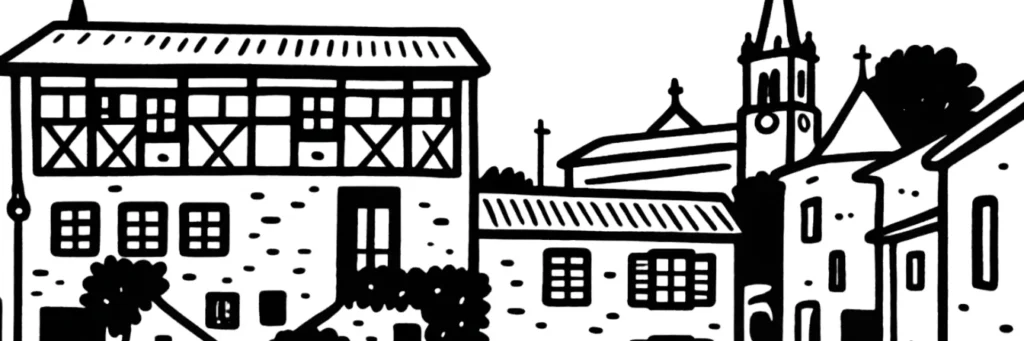
Line illustration of the Romanesque basilica of the Sacré-Coeur in Paray-le-Monial, on the banks of the Bourbince

Mood illustration of Paray-le-Monial, in the Saône-et-Loire.

Property Prices in Paray-le-Monial

The 2026 figures· Indicative data
1 664€/m²

In Paray-le-Monial, the average price comes to 1 664 €/m² for an apartment. That average covers the market of a medium-sized Burgundy town, balanced between houses and apartments, with a notable share of social housing. The old centre, around the basilica and the Bourbince, holds most of the blocks, while the outlying districts are more low-rise. The price gaps come from the condition of the building, often old, and from location. This figure comes from the DVF data, which lists the transactions actually registered before notaries, and reflects completed sales, not listings.

Apartment transactions / year
54
Median price per m²
1 504 €

Prices from the DVF file (Demandes de valeurs foncières, published by the DGFiP), transactions actually recorded at the notary at municipality level. Cross-referenced with the Notaires de France - INSEE indices. Learn more about our methodology.

Market trends and analysis for Paray-le-Monial

The Paray-le-Monial market is that of a medium-sized town of southern Burgundy, with a stable population. According to INSEE, the municipality has about 9 291 inhabitants, a figure that changes little, which translates into a measured market and contained prices. The balance of the stock between houses and apartments and the notable share of social housing draw an affordable market, geared towards the main residence. Demand comes above all from the local area, from first-time buyers and from retired people drawn by a moderate cost of living and a heritage setting.

Religious tourism, around the shrines of the Sacred Heart, and the anchoring in the Charolais-Brionnais support the activity of the town. Pilgrimages and events such as the Festival Jésus keep up a steady flow of visitors, favourable to retail and accommodation. The closeness of two high-speed stations and the rail link towards Lyon widen the accessibility of the area. Those strengths give Paray-le-Monial a market stability, without speculative momentum: prices move slowly there, carried by local demand and by heritage appeal rather than by metropolitan pressure.

Paray-le-Monial in the Charolais-Brionnais

average €/m²

The average price of Paray-le-Monial sits in the lower range of the Saône-et-Loire. It is above the most industrial towns of the department, while remaining below the municipalities of the Mâconnais wine country.

MunicipalityTierPrice /m²Gap
Charnay-lès-Mâcon2 501 €+50 %
Mâcon1 714 €+3 %
Paray-le-Monial1 664 €ref.
Le Creusot1 149 €-31 %

The history of Paray-le-Monial

Paray-le-Monial owes its name and its shape to its monastic past. A first church existed from the end of the tenth century, at the request of Lambert, count of Chalon-sur-Saône, in agreement with Saint Maiolus, abbot of Cluny. At the start of the eleventh century, Cluniac monks set up the priory on the banks of the Bourbince. The town grew around that house, on which its organisation depended. The suffix le Monial recalls that origin tied to the monks. That Cluniac imprint explains the presence of an exceptional religious heritage at the heart of a municipality that has stayed modest in size.

The basilica of the Sacré-Coeur, a jewel of Romanesque art, reproduces on a reduced scale the architectural principles of Cluny III, the great Burgundian abbey now gone. Built for the most part in the eleventh and twelfth centuries, it is one of the best preserved examples of Cluniac architecture. In 1875, Pope Pius IX raised it to the rank of minor basilica and allowed its rededication to the Sacred Heart. That monument dominates the urban fabric and lastingly shapes the image of the town. Its outline, on the banks of the Bourbince, remains the main visual landmark of Paray-le-Monial.

Paray-le-Monial has been one of the great pilgrimage sites of France since the nineteenth century. Devotion to the Sacred Heart took off there following the apparitions reported by Marguerite-Marie Alacoque, a nun who entered the Visitation monastery in 1671, and through the work of the Jesuit Claude La Colombière. The influx of pilgrims, from the nineteenth century onwards, shaped the economy and the town planning of the town, with reception facilities and a hotel trade turned towards religious tourism. To this day, shrines and spiritual events punctuate the year and add to local activity and to the housing market.
Who buys in Paray-le-Monial

According to INSEE, the French national statistics institute, Paray-le-Monial has 9 291 inhabitants, a broadly stable population. The housing stock is balanced: according to INSEE, apartments and houses share the stock in almost equal parts, and the split between owners and tenants is likewise close to half. The share of social housing is notable, around 18 %. That profile matches the market of a medium-sized town, affordable, where first-time buyers, retired people and working people from the local area live side by side. Buyers look both for town-centre apartments and for houses on the outskirts, in a municipality with a measured housing cost.

Frequently asked questions

The average price in Paray-le-Monial stands at 1 664 €/m² for an apartment, according to the DVF data drawn from the transactions registered before notaries. That level, typical of a medium-sized Burgundy town, reflects an affordable market. It is a municipal average: the price of a property depends on its condition, its type and its position between the old centre and the outskirts. A valuation suited to your dwelling remains essential.

The old centre, around the basilica and the shrines, concentrates the blocks and the apartments, in a dense heritage setting on the banks of the Bourbince. The outlying districts are more residential and low-rise, with houses that have gardens. The presence of a notable share of social housing also marks certain sectors. Those differences of setting and building explain price gaps within the municipality, which a valuation makes it possible to place precisely.

Paray-le-Monial has a station linked to Lyon by a regional line. Two high-speed stations, Le Creusot-Montceau and Mâcon-Loché, lie less than three quarters of an hour away by car, offering access to the high-speed network. The town, at the heart of the Charolais-Brionnais, benefits from a central road position in southern Burgundy. That accessibility supports the residential and tourist appeal of the municipality, without placing it in the immediate orbit of a large metropolitan area.

Religious tourism is a strong component of the local economy. The shrines draw many pilgrims and visitors each year, which supports hotels, retail and part of the seasonal rental market. Some events, such as the Festival Jésus, gather several thousand people. That flow does not create pressure comparable to that of coastal tourist areas, but it adds to activity and to demand for housing and accommodation in the town.

Paray-le-Monial shows a moderate housing cost, typical of the medium-sized towns of the Saône-et-Loire. The stock, balanced between houses and apartments, and the share of social housing draw a market where ownership remains affordable for first-time buyers and for households from the local area. The stable population and the heritage anchoring of the town support steady demand. To assess a given property, between the old centre and the low-rise outskirts, an up-to-date valuation remains the best reference.

Value your property in Paray-le-Monial

Free valuation in under 2 minutes

Value my property

This analysis is published by Immover, an independent observatory founded by . Data sourced from official sources (DVF, INSEE, Notaries of France).

Estimer mon bien