The immover observatory

Property Prices in Rillieux-la-Pape2026 property valuation

Updated: January 2026 Sources: DVF · Notaires de France · INSEE · Immover January 2026 · DVF, Notaires de France, INSEE, Immover
In brief

The average price per m² in Rillieux-la-Pape is 2 677 €/m² for an apartment, based on actual notarised (DVF) sales. For a house or villa, it is 4 186 €/m². About 135 transactions are recorded each year.

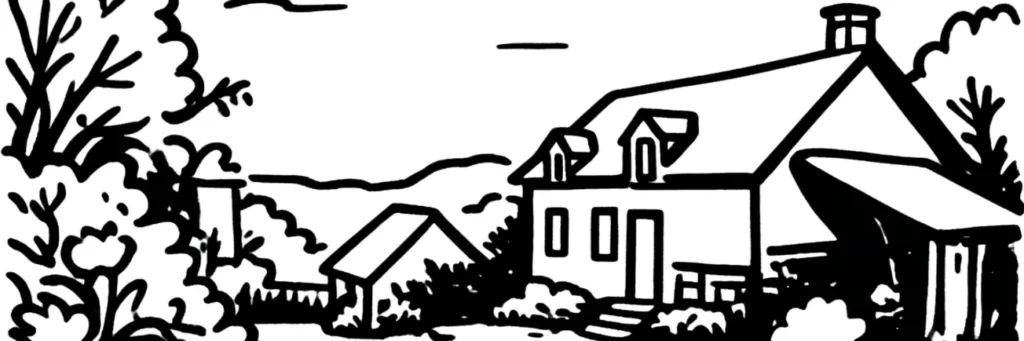
Line drawing of Rillieux-la-Pape: the farming plateau

Atmospheric illustration of Rillieux-la-Pape, on its plateau north-east of the Lyon metropolitan area.

Property Prices in Rillieux-la-Pape

The 2026 figures· Indicative data
2 677€/m²

In Rillieux-la-Pape, the average price of an apartment stands at 2 677 €/m². This average covers a contrasting housing stock, much like the town itself: the post-war housing estates of the Ville Nouvelle, built between the late 1960s and the mid-1970s, sit alongside more recent residences resulting from urban renewal and detached houses inherited from the former villages of Rillieux and Crépieux-la-Pape. Houses, scarcer in an area long dominated by apartment blocks, sell at a markedly higher level, around 4 186 €/m². These figures are based on DVF data, the French notarised sales database, which records the sales actually registered with notaries.

House : 4 186 €/m²

Apartment transactions / year
135
Median price per m²
2 543 €

Prices from the DVF file (Demandes de valeurs foncières, published by the DGFiP), transactions actually recorded at the notary at municipality level. Cross-referenced with the Notaires de France - INSEE indices. Learn more about our methodology.

Market trends and analysis for Rillieux-la-Pape

The Rillieux-la-Pape market rests on its position as an inner-ring municipality, directly adjoining Lyon, Caluire-et-Cuire and Vaulx-en-Velin. It attracts households looking for a more accessible entry point than the centre of the metropolitan area, without moving away from it. Demand focuses mainly on family apartments on the plateau and on houses in the old villages, two segments whose price levels remain far apart. Transport links to Lyon and the presence of natural areas and farmland weigh on the municipality's appeal.

Supply is evolving with urban renewal, which is replacing part of the 1970s housing stock with new homes and diversifying the neighbourhoods. This renewal is creating recent supply alongside an older stock whose energy rating is becoming a bargaining point, particularly in poorly insulated post-war estates. Compared with pricier neighbouring municipalities, Rillieux keeps an intermediate position that makes it a market closely watched by buyers looking for a compromise between price and access to Lyon.

Rillieux-la-Pape, at the north-eastern gates of the Lyon metropolitan area

average €/m²

Backing onto Lyon, Rillieux-la-Pape sits in the most accessible band of its ring: below Caluire-et-Cuire and Villeurbanne, and at a level close to that of Vaulx-en-Velin, its immediate neighbour.

MunicipalityTierPrice /m²Gap
Caluire-et-Cuire3 934 €+47 %
Villeurbanne3 601 €+35 %
Rillieux-la-Pape2 677 €ref.
Vaulx-en-Velin2 616 €-2 %

The history of Rillieux-la-Pape

The municipality was created on 15 December 1972 through the merger of Rillieux and Crépieux-la-Pape. Its name brings together the old village of Rillieux, on the plateau, and the hamlet of La Pape, lower down near the Rhône. The territory was long rural, looking towards the neighbouring Dombes and its landscape of ponds: it still had galleried farmhouses typical of that region, amid farmland that survives today over nearly 300 hectares.

The face of Rillieux changed with the population boom of the 1960s. Between 1968 and 1975, a Ville Nouvelle, or planned new town, of 120 hectares rose on the plateau between the two old villages, to house a fast-growing population. The town then went through an active industrial period, with major employers such as the die-cast model maker Majorette, Feudor lighters and departments of Crédit Lyonnais, which employed hundreds of residents.

Beyond the tower blocks, the municipality retains older heritage around Sermenaz, on the border with the Ain department: a tower and a château, as well as a military battery built in 1878-1879, a remnant of Lyon's second ring of fortifications attached to the Fort de Vancia. The Sermenaz natural area, some forty hectares classified as a sensitive natural area, extends this heritage. The territory is now engaged in a large urban renewal programme that is reshaping the town centre and several neighbourhoods on the plateau.
Who buys in Rillieux-la-Pape

Rillieux-la-Pape has 31 389 inhabitants, spread across two main types of housing. The plateau contains most of the apartment stock from the Ville Nouvelle, while the old village cores of Rillieux and Crépieux-la-Pape and the hillside areas retain a fabric of mostly detached houses. This duality is reflected among buyers: first-time buyers and investors looking for a more affordable entry point than Lyon or Caluire on one side, families seeking a house with a garden on the other. Demand is supported by the immediate proximity of the metropolitan area and by the ongoing renewal of several neighbourhoods, which brings new homes and shops.

Frequently asked questions

An apartment sells for an average of 2 677 €/m², based on transactions registered with notaries and published in DVF data, the French notarised sales database. This figure is a municipal average that mixes very different homes, from a studio in the post-war housing estates to a recent T4 (four-room apartment) in an urban renewal development. Address, floor, year of construction and energy rating explain a good part of the differences. For a specific property, it is better to rely on comparable sales than on the average alone.

The town is best understood through its geography. The plateau carries the Ville Nouvelle and its town centre, currently being transformed, around the Bottet area. The old villages of Rillieux and Crépieux-la-Pape, the latter in the Rhône plain, offer housing that is mainly detached. The north, towards Sermenaz and Vancia, combines natural areas, hillsides and housing estates. These settings do not sell at the same level, and the gap between apartments on the plateau and village houses is marked.

The municipality has no metro station within its boundaries, but it is linked to the Lyon network by trolleybus line C5, which runs to the Jean Macé metro station with a service roughly every ten minutes at peak times. Several other bus lines serve the neighbourhoods and neighbouring municipalities such as Caluire-et-Cuire. By car, the nearby ring road and routes into Lyon put the centre of the conurbation around fifteen minutes away outside heavy traffic.

Yes, but supply remains limited compared with apartments. Houses are concentrated in the old villages, on the hillsides and in the housing estates in the north of the municipality. They sell for around 4 186 €/m², a markedly higher level than apartments, which reflects their scarcity in an area built first around the Ville Nouvelle. As there are fewer sales references, valuing a house depends heavily on its plot, its condition and its precise location.

Several neighbourhoods on the plateau are covered by an urban renewal programme that is changing the surroundings, with demolitions, new construction and the redesign of public spaces: it is useful to know the timetable for the area in question. The Crépieux plain, near the Rhône, contains the water catchment field that supplies much of the metropolitan area with drinking water, a protected zone where building is restricted. Flood risk along the river and local planning rules should be checked in the official documents before any purchase.

Value your property in Rillieux-la-Pape

Free valuation in under 2 minutes

Value my property

This analysis is published by Immover, an independent observatory founded by . Data sourced from official sources (DVF, INSEE, Notaries of France).

Estimer mon bien