The immover observatory

Property Prices in Rivesaltes2026 property valuation

Updated: January 2026 Sources: DVF · Notaires de France · INSEE · Immover January 2026 · DVF, Notaires de France, INSEE, Immover
In brief

The average price per m² in Rivesaltes is 1 784 €/m² for an apartment, based on actual notarised (DVF) sales. About 20 transactions are recorded each year.

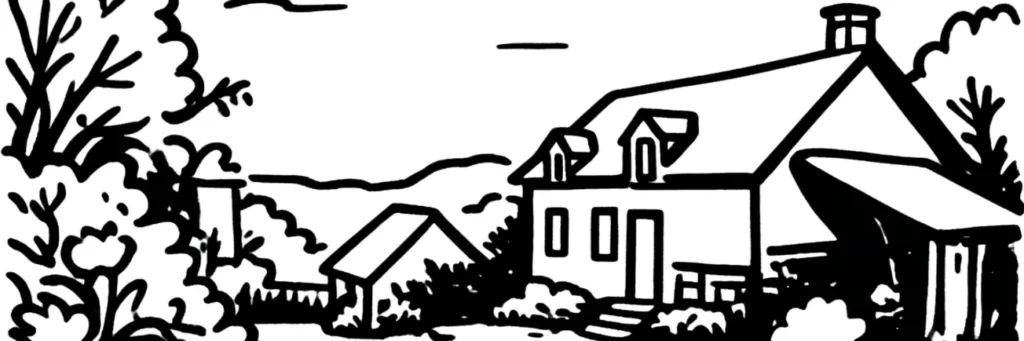
Line drawing of Rivesaltes: the Roussillon wine-growing plain around the municipality

Atmospheric illustration of Rivesaltes, a wine-growing town on the Roussillon plain, north of Perpignan, in the Pyrénées-Orientales department.

Property Prices in Rivesaltes

The 2026 figures· Indicative data
1 784€/m²

The average price recorded in Rivesaltes stands at 1 784 €/m². This average covers a housing stock split between detached houses, which predominate between the old fortified centre and the residential housing estates, and a smaller share of apartments, concentrated in a few residences close to the town centre. The differences around this average are mainly due to the type of property, floor area, condition, land and location, particularly proximity to the old centre, the northern motorway interchange or the surrounding vineyard areas. These figures come from DVF data, the French notarised sales database, which records sales actually signed before notaries, and provide a municipal benchmark to be refined property by property, especially in a municipality where older buildings sit alongside more recent extensions.

Apartment transactions / year
20
Median price per m²
1 785 €

Prices from the DVF file (Demandes de valeurs foncières, published by the DGFiP), transactions actually recorded at the notary at municipality level. Cross-referenced with the Notaires de France - INSEE indices. Learn more about our methodology.

Market trends and analysis for Rivesaltes

The Rivesaltes market draws on its position as a medium-sized town on the Roussillon plain, some ten kilometres from Perpignan and served by the A9 motorway and its own station. Demand comes mainly from families and working people looking for more affordable housing than in the Perpignan conurbation or on the nearby coast, while remaining connected to the major routes. The municipality's wine-growing past, as the birthplace of the Rivesaltes and Muscat de Rivesaltes appellations, continues to shape the landscape and local identity, between vineyards and business parks.

Supply consists mainly of detached houses, between the old fortified centre and more recent residential extensions, with a more limited share of apartments. Buyers weigh up proximity to the motorway interchange, access to the station and the relative calm of the areas furthest from traffic routes. Compared with Perpignan, where prices remain higher, or with coastal municipalities such as Sainte-Marie-la-Mer or Canet-en-Roussillon, Rivesaltes offers a price compromise that partly explains its appeal for first-time buyers.

Rivesaltes, on the Roussillon plain north of Perpignan

average €/m²

At the gates of Perpignan, on the Roussillon wine-growing plain, Rivesaltes stands above Perpignan, but below Saint-Estève and Saint-Laurent-de-la-Salanque.

MunicipalityTierPrice /m²Gap
Saint-Estève2 348 €+32 %
Saint-Laurent-de-la-Salanque1 954 €+10 %
Rivesaltes1 784 €ref.
Perpignan1 616 €-9 %

The history of Rivesaltes

The name Rivesaltes comes from the Catalan Ribes Altes, meaning the high banks, a reference to the position of the town above the banks of the Agly. The existence of a church on the site is attested as early as 923, in a document listing the possessions of the abbey of Lagrasse, in Languedoc, which then held the lordship of the place. On 23 October 1172, the abbot of Lagrasse obtained permission to build ramparts around the town, marking the start of its development as a fortified town. This ecclesiastical seigneurial origin sets Rivesaltes apart from many neighbouring villages in Roussillon, more strongly shaped by lay or royal lordships. Centuries later, the name of the municipality became attached to two internationally renowned wine appellations, Rivesaltes and Muscat de Rivesaltes.

The ramparts of Rivesaltes, built of river pebbles at the end of the 12th century, were completed in 1375 and then enclosed the church of Sainte-Marie, which has since become the parish church of Saint-André. This fortification was largely destroyed in 1496, when the town was taken by the troops of Charles VIII. The current church, rebuilt in the 17th century, retains a bell tower from the early 18th century and now houses a museum space dedicated to the Catalan sculptor Jean-Jacques Melair. The Portail-Neuf, in red brick, recalls one of the former entrances to the walled town, while a section of the ramparts survives north of the old town, along the Agly. Away from the centre, near the northern motorway toll station, the priory of Sainte-Marie de la Garrigue completes this heritage ensemble inherited from the Middle Ages and the early modern period.

Rivesaltes is the birthplace of Marshal Joseph Joffre, born in 1852, after whom the military camp built on its territory between 1935 and 1938 was named camp Joffre. This camp had a far darker use during the Second World War, serving in 1942 for the internment of Jewish people before their deportation via Drancy, then for other internments until the 2000s. The Mémorial du camp de Rivesaltes, designed by the architect Rudy Ricciotti and opened in 2015, now preserves this memory. On another level, the municipality gave its name to the Rivesaltes wine appellation, recognised in 1936, followed by Muscat de Rivesaltes in 1956, vins doux naturels (naturally sweet wines) emblematic of Roussillon. Part of the arrondissement of Perpignan, in the Pyrénées-Orientales department, Rivesaltes is now a residential and wine-growing municipality on the plain, served by the A9 motorway and its own station, some ten kilometres from the centre of Perpignan.
Who buys in Rivesaltes

Rivesaltes has 9 270 inhabitants according to INSEE, the French statistics institute. The housing stock of this municipality on the Roussillon plain remains marked by a majority of detached houses, between the old fortified centre and more recent residential extensions, with a more limited share of apartments. The vast majority of homes are main residences, second homes remaining marginal in this inland town, away from the coast. This profile attracts families and working people looking for more affordable housing than in Perpignan or on the coast, some ten kilometres from the city centre and close to the A9 motorway. First-time buyers readily turn to townhouses or detached houses, while winegrowers and farmers remain represented in a municipality historically focused on muscat vineyards and vins doux naturels.

Frequently asked questions

The average price recorded in Rivesaltes stands at 1 784 €/m², based on sales registered with notaries and published in the DVF database. This figure aggregates a variety of properties, houses as well as apartments. The type of property, floor area, condition, land and location, particularly in relation to the old centre or the surroundings of the A9 motorway, explain most of the differences around this average. For a reliable valuation, it is better to rely on sales of comparable properties than on the municipal average alone.

Rivesaltes has its own SNCF station, linked to Perpignan by direct trains taking a few minutes, and lies some ten kilometres from the city centre by road. The municipality is served by the A9 motorway, with a dedicated junction giving quick access to Perpignan as well as to the Salanque or the coast. This position, between wine-growing plain and major routes, makes it a practical base for working people employed in Perpignan who do not live there.

Rivesaltes retains an old fortified centre, with remains of ramparts along the Agly, the Portail-Neuf and the church of Saint-André, set in a wine-growing plain devoted to muscat vineyards. The municipality also carries a graver memory, that of camp Joffre and its Mémorial, opened in 2015. The setting remains that of a medium-sized inland town, between vineyards and business parks close to the motorway, away from the bustle of the coast.

The Rivesaltes market is dominated by detached houses, from the old centre to more recent housing estates, with a more limited supply of apartments. Buying a house matches the dominant profile of the municipality, often with a garden or courtyard, inherited from a wine-growing and rural tradition. Apartments, less numerous, suit tighter budgets and smaller households. Your choice will depend mainly on your budget and your need for outdoor space.

Rivesaltes is organised around its old fortified centre, tightly packed near the church of Saint-André and the Portail-Neuf, then extends into residential housing estates towards the outskirts. The most sought-after areas are often those away from the main traffic routes and close to the vineyards, while others benefit from the immediate proximity of the northern motorway interchange. Each area has its own building and environmental characteristics, to be examined closely according to your project.

Value your property in Rivesaltes

Free valuation in under 2 minutes

Value my property

This analysis is published by Immover, an independent observatory founded by . Data sourced from official sources (DVF, INSEE, Notaries of France).

Estimer mon bien