The immover observatory

Property Prices in Rochefort, in the Charente-Maritime2026 property valuation

Updated: January 2026 Sources: DVF · Notaires de France · INSEE · Immover January 2026 · DVF, Notaires de France, INSEE, Immover
In brief

The average price per m² in Rochefort is 2 462 €/m² for an apartment, based on actual notarised (DVF) sales. About 248 transactions are recorded each year.

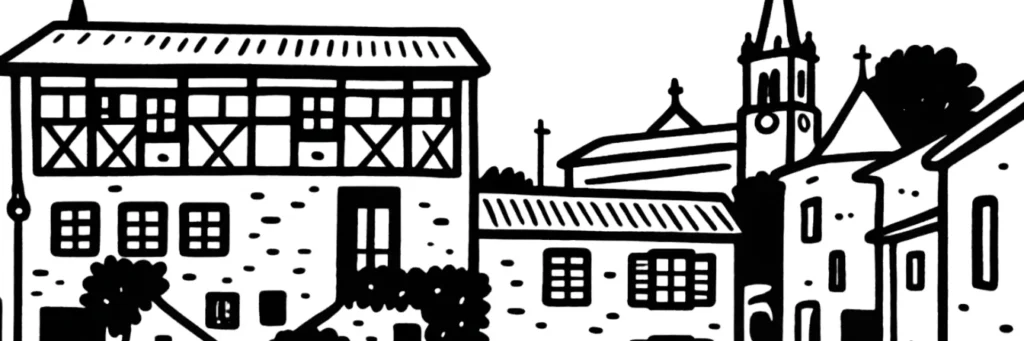
Line drawing of the Corderie royale, the quays of the Charente and the grid streets of Rochefort

Mood illustration of Rochefort, an arsenal town set on the Charente.

Property Prices in Rochefort

The 2026 figures· Indicative data
2 462€/m²

The average price recorded in Rochefort stands at 2 462 €/m². That average covers a contrasted stock. The old grid centre, with its low stone houses and its eighteenth-century blocks around the place Colbert, does not trade at the same level as the housing blocks built to the north and west of the town in the twentieth century. Addresses close to the Charente, to the arsenal and to the marina remain above that average. The figures come from the DVF database, the French notarised sales database, which lists the transactions actually registered before notaries.

Apartment transactions / year
248
Median price per m²
2 357 €

Prices from the DVF file (Demandes de valeurs foncières, published by the DGFiP), transactions actually recorded at the notary at municipality level. Cross-referenced with the Notaires de France - INSEE indices. Learn more about our methodology.

Market trends and analysis for Rochefort

The first driver of the Rochefort market is demographic, and it plays downwards. The municipality is losing about 0,5 % of its inhabitants a year since 2017 according to INSEE, and 8,8 % of dwellings are vacant, a level that weighs on the least well placed or the most energy-hungry properties. That pressure bears above all on the older flats of the outskirts. Conversely, the grid centre and the surroundings of the quays remain sought after, carried by demand from buyers coming from the La Rochelle conurbation, where price levels are appreciably higher.

The second driver is economic and touristic. Rochefort remains an employment hub with its aeronautical and marine activities, and the seat of the Rochefort Océan conurbation authority. The Corderie royale, the house of Pierre Loti and the story of the Hermione feed a steady flow of visitors, to which is added the spa activity of the thermal baths since 1956. That seasonality supports demand for furnished rentals and explains the share of second homes, without turning the town into a seaside market like the municipalities of the Royan coast.

Rochefort in the north of the Charente-Maritime

average €/m²

Rochefort sits clearly below the municipalities of the Charente coast, while remaining above the inland towns of the area.

MunicipalityTierPrice /m²Gap
La Rochelle4 835 €+96 %
Royan4 072 €+65 %
Rochefort2 462 €ref.
Angoulême1 768 €-28 %

The history of Rochefort

Rochefort is not a town born of a village. It was created from nothing in 1666, by decision of Colbert and Louis XIV, to give the Atlantic seaboard a naval arsenal. The site was chosen some fifteen kilometres from the mouth of the Charente: far enough inland to be out of reach of an English raid, deep enough to take warships. The plan was laid out with a line, on a grid, around two main axes, the rue Royale (today the avenue Charles-de-Gaulle) and the rue Dauphine (today the rue La Fayette). That regular geometry, rare in France, still shapes today the traffic and the division of plots in the centre.

The arsenal imposed its scale on the town. The Corderie royale, built between 1666 and 1670 to the plans of the engineer François Blondel, lines up 374 metres of frontage on the riverside to produce the ropes of the fleet. Until its closure in 1927, the arsenal saw close to 550 warships built. Around it, the town filled with workers' housing, warehouses and barracks. Pierre Loti, born in Rochefort in 1850, kept the family house there, now a museum. In 1900, the engineer Ferdinand Arnodin completed the Martrou transporter bridge, opened on 29 July, the only structure of its kind still standing in France.

The closure of the arsenal in 1927 forced Rochefort to reinvent itself. The thermal baths, opened in 1956, set up a spa activity that still continues. The filming of Les Demoiselles de Rochefort by Jacques Demy in 1967, on the place Colbert repainted for the occasion, gave the town a new fame, in the very year the transporter bridge ceased service in favour of the road viaduct. The Ville d'art et d'histoire label was signed in 1987. From July 1997, the rebuilding of the frigate Hermione in the Louis XV dry dock drew hundreds of thousands of visitors, up to the launch of the ship on 7 September 2014.
Who buys in Rochefort

Rochefort has 23 460 inhabitants and is losing about 0,5 % of its population a year since 2017, according to INSEE, the French national statistics institute. The market there is first of all that of a town of permanent residence: of 16 208 dwellings, 79,7 % are main residences and 11,5 % second homes, a moderate share for the Charente-Maritime. Apartments account for 52,9 % of the stock, a high level for a municipality of this size, inherited from the post-war housing schemes. Tenants are in the majority, with 52,0 % of main residences of which 18,1 % in social housing, against 46,4 % owner-occupiers. Buyers are therefore mainly local households, working people from the conurbation and retired people drawn by the prices and the services of the sub-prefecture.

Frequently asked questions

The average price stands at 2 462 €/m² across the municipality, all types combined. That value is calculated from the DVF database, which lists the sales actually registered before notaries, and not from listings. It mixes very different properties, from the 1960s block of flats to the town house of the old centre. A reliable valuation therefore has to start again from the address, the floor area and the condition of the property.

The grid centre, between the place Colbert, the rue Pierre-Loti and the arsenal quays, remains the most sought-after sector: stone town houses, older blocks, shops and listed heritage right at hand. The surroundings of the marina and of the Corderie royale come next. At the other end, the housing blocks of the Petit Marseille and La Mauratière, classed as a priority district, sit clearly below the municipal average.

The two markets coexist in almost equal parts: 52,9 % apartments and 46,8 % houses according to INSEE. Flats are concentrated in the twentieth-century schemes on the edge of the grid and attract investors and first-time buyers. The older town houses of the centre, often low and terraced with a small yard, speak to buyers who accept renovation work. Recent detached houses are found above all at the municipal boundary, towards Martrou and Saint-Agnant.

Rochefort station is served by the regional trains of the La Rochelle - Rochefort - Saintes - Bordeaux line, which makes La Rochelle reachable in about thirty minutes without a car. By road, the N137 links La Rochelle to the north and joins the route towards Saintes and Bordeaux to the south, crossing the Charente by the Martrou viaduct. That twofold service supports demand from working people employed in La Rochelle.

Part of the historic centre lies within the perimeter of historic monuments, starting with the Corderie royale and the arsenal buildings. In those sectors, work affecting façades, joinery, roofs or openings is subject to the opinion of the state architect for historic buildings. That lengthens timescales and steers the choice of materials. Before buying with works in the grid centre, check the exact zoning with the planning department of the town hall.

Value your property in Rochefort

Free valuation in under 2 minutes

Value my property

This analysis is published by Immover, an independent observatory founded by . Data sourced from official sources (DVF, INSEE, Notaries of France).

Estimer mon bien