The average price per m² in Saint-Pol-de-Léon is 1 808 €/m² for an apartment, based on actual notarised (DVF) sales. About 23 transactions are recorded each year.

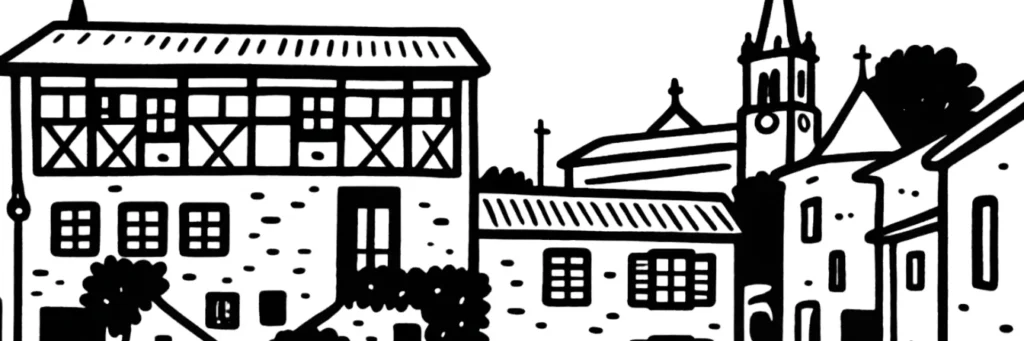
Atmospheric illustration of Saint-Pol-de-Léon, in the bay of Morlaix.
In Saint-Pol-de-Léon, the reference price stands at 1 808 €/m². This moderate level for a town of character on the Finistère coast reflects the make-up of the stock: an old centre of town houses and granite buildings around the cathedral, estate districts on the outskirts and housing linked to the market gardening of the golden belt. The market is overwhelmingly made up of houses, apartments remaining limited. This value comes from DVF data, the sales actually registered with notaries; it is a benchmark, each property being valued on its condition, its floor area and its closeness to the sea.
Prices from the DVF file (Demandes de valeurs foncières, published by the DGFiP), transactions actually recorded at the notary at municipality level. Cross-referenced with the Notaires de France - INSEE indices. Learn more about our methodology.
The Saint-Pol-de-Léon market rests on a double driver: local demand from working households and families of the vegetable-growing area, and residential appeal linked to the coast of the bay of Morlaix. Prices, more moderate than in the most popular resorts along the shore, attract second-home buyers and retired people looking for heritage and sea, without the levels reached in Roscoff or on the pink granite coast. This mix mainly supports houses, while the low transaction volume makes each sale dependent on the location and condition of the property.
Over the longer term, the scarcity of building land imposed by the coastal planning law and the market-gardening role of the soil limit new supply and tend to support values. The closeness of the Morlaix high-speed rail station and of the Roscoff ports sustains a steady flow of buyers from other regions. The energy issue of the older granite buildings and changes in taxation on second homes are the main points to watch. On the whole, Saint-Pol-de-Léon offers a stable market, driven by its heritage and its situation more than by speculation.
Saint-Pol-de-Léon sits above Landivisiau, in the hinterland, and above the Brest metropolitan area, but clearly below a well-known seaside resort such as Perros-Guirec.
Saint-Pol-de-Léon takes its name from Saint Paul Aurelian, a Welsh monk who founded a monastery here in the 6th century and became the first bishop of Léon. The town, mentioned as Oppidum Pauli around 869, was organised from the early Middle Ages around that episcopal seat. It went through the medieval conflicts, notably in 1175 when the troops of King Henry II of England laid waste to the place. For centuries, Saint-Pol remained a church town, the religious capital of the Léon, until the bishopric was abolished in 1790, at the Revolution. That old status explains the richness of its monumental heritage and the tight layout of its centre.
That episcopal past left the town two major monuments. The Saint-Paul-Aurélien cathedral, built from the 13th to the 16th century in a Gothic style inspired by Norman work, stands on the site of the original 6th-century church. A few steps away, the Kreisker chapel carries an openwork granite belfry rising to nearly seventy-eight metres, long considered the tallest in Brittany. Tradition has it that the English, after burning the town in 1375, took part in its rebuilding. These two spires still dominate the town and earn it its listing as a small town of character.
From the 19th century, Saint-Pol-de-Léon reinvented itself around market gardening. The mild climate and the fertile coastal soils made it the heart of the golden belt, the leading vegetable-growing area of Brittany, specialising in artichokes, cauliflowers, onions and early potatoes. From the 1950s to the 1980s, the town station was one of the leading vegetable dispatch centres in Europe. The port of Pempoul and the closeness of Roscoff, whose parish had separated from it in 1789, round out this dual farming and maritime role. This early-crop economy still shapes the area and its landscape of open fields.
According to INSEE, the French national statistics institute, Saint-Pol-de-Léon has around 6 941 inhabitants. Main residences account for close to 82 % of the housing stock: the municipality lives all year round, driven by market gardening and services more than by seaside tourism, even if the share of second homes is not negligible on this coast. The detached house is largely dominant, apartments remaining a minority and concentrated in the old centre. Buyers mix local families from the vegetable-growing area, working households employed towards Morlaix or Roscoff, and purchasers looking for a second home or a retirement by the Channel, drawn by the heritage and the bay.
In Saint-Pol-de-Léon, the reference price stands at 1 808 €/m². This figure comes from DVF data, the sales actually signed before notaries. It is an average that covers mainly houses, from the historic centre to the estate districts. Depending on condition, floor area and above all closeness to the sea, a renovated granite house and a 1970s estate home can sit clearly apart from that baseline.
The historic centre, around the cathedral and the Kreisker, appeals for its character and its shops within walking distance, with town houses and granite buildings. The areas close to the shore and to the port of Pempoul, facing the bay of Morlaix, are particularly in demand, notably for second homes. Inland, the estate districts offer more recent houses with gardens, at often more affordable prices. Distance from the sea and the view play an important part in the value of a property.
Saint-Pol-de-Léon lies between Morlaix, to the south, and Roscoff, very close to the north. Morlaix, some twenty kilometres away, has a high-speed rail station linking Paris and Brest, along with most of the services and secondary schools of the area. Roscoff, its immediate neighbour, adds its ferry port to England and Ireland and its marine health centre. This situation, between a vegetable-growing hinterland and a sea frontage, makes the municipality attractive to working households and retired people alike, without dependence on a single town.
The market is dominated by the house, whether granite buildings in the old centre or estate homes on the outskirts. The supply of apartments is limited and concentrated in the town; it is aimed at small budgets, young working households or a pied-à-terre. For a family main residence as for a second home, the house remains the reference product. Closeness to the coast adds strongly to the value of some houses, so much so that location and view often weigh more than floor area alone in the final price.
Yes, like all seafront municipalities, Saint-Pol-de-Léon is subject to the coastal planning law, which strictly governs building in the areas close to the shore and limits urban sprawl. This rule makes coastal building plots scarce and supports the value of existing properties with a sea view or sea access. Before a project, the local planning document should be consulted at the town hall to find out whether a plot can be built on. The presence of second homes may also affect local taxation on that type of home.
This analysis is published by Immover, an independent observatory founded by Antony Barbier. Data sourced from official sources (DVF, INSEE, Notaries of France).