The immover observatory

Property Prices in Sannois2026 property valuation

Updated: January 2026 Sources: DVF · Notaires de France · INSEE · Immover January 2026 · DVF, Notaires de France, INSEE, Immover
In brief

The average price per m² in Sannois is 3 419 €/m² for an apartment, based on actual notarised (DVF) sales. About 144 transactions are recorded each year.

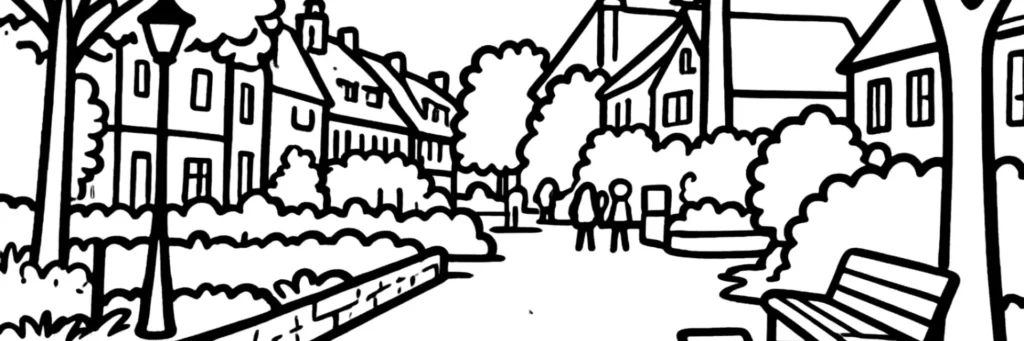
Line drawing of Sannois: the restored windmill at the top of its hill

Mood illustration of Sannois, on the flank of the buttes de Cormeilles, in the Val-d'Oise.

Property Prices in Sannois

The 2026 figures· Indicative data
3 419€/m²

In Sannois, the value of an apartment runs at around 3 419 €/m². That benchmark sums up a stock dominated by flats: according to INSEE, the French national statistics institute, about two thirds of the dwellings in the municipality are apartments, the rest being detached houses. It brings together prewar blocks close to the station, developments built in the 1960s and 1970s, and houses clinging to the slopes that climb towards the windmill. The prices shown come from the DVF database, which records sales actually signed before notaries; they are a starting point, not a verdict, since the address, the storey and the energy performance open marked gaps from one property to another.

Apartment transactions / year
144
Median price per m²
3 342 €

Prices from the DVF file (Demandes de valeurs foncières, published by the DGFiP), transactions actually recorded at the notary at municipality level. Cross-referenced with the Notaires de France - INSEE indices. Learn more about our methodology.

Market trends and analysis for Sannois

The Sannois market rests on a position in the inner suburbs of Paris well linked to the capital, with a station running direct to Saint-Lazare and a hillside setting that appeals to families. The municipality captures spillover demand: households which, unable to buy in Paris or in the most expensive municipalities of the Seine loop, look here for more floor space on a contained budget. Family apartments close to the station and houses with a garden concentrate most searches, which supports values on those segments.

Supply is held back by geography: the hillside limits large new schemes, and the older stock of the centre weighs in the volumes traded. As elsewhere in Île-de-France, energy performance has become a real bargaining point, in particular on blocks built before 1975 and on the older houses of the heights. Between more sought-after neighbours and more affordable ones, Sannois holds an intermediate place in the northern loop of the Seine, which makes it a followed but rarely speculative market.

Sannois, on the buttes of the northern loop of the Seine

average €/m²

Backed onto its slopes, Sannois sits in the average of its fringe of the Val-d'Oise: a little below Ermont, above Argenteuil and Franconville, with which it shares a direct rail link to Paris.

MunicipalityTierPrice /m²Gap
Ermont3 691 €+8 %
Sannois3 419 €ref.
Argenteuil3 320 €-3 %
Franconville3 072 €-10 %

The history of Sannois

Sannois stretches along the eastern flank of the buttes de Cormeilles and d'Orgemont, some fifteen kilometres north-west of Paris. The municipality borders Argenteuil, Cormeilles-en-Parisis, Franconville, Ermont and Saint-Gratien. On a map of 1785, the houses were already grouped around the church, along the old road linking Ermont to Argenteuil, while orchards and vines covered the slopes and gypsum was quarried on the heights. That hillside setting, between plain and summit, has lastingly shaped the town.

The symbol of the town remains its windmill, standing at the top of the mont Trouillet which overlooks the vallée de Montmorency. This post mill was built in 1759 by François Roger, a winegrower from Franconville, and turned until 1866. Sannois also owes its renown to the painter Maurice Utrillo, who came to be treated there between 1912 and 1914: he painted close to one hundred and fifty canvases there, a good share of them showing the windmills of the hill, during what is known as his white period. The Utrillo-Valadon museum, housed in an 18th century residence and opened in 1995, keeps the memory of that episode and of his mother, Suzanne Valadon.

The built heritage completes that story. The église Saint-Pierre-Saint-Paul, gothic in origin, keeps elements going back to the Middle Ages, and the château de Cernay bears witness to the middle-class holiday life of the 19th century. The writer Cyrano de Bergerac died in Sannois in 1655. Having moved over the course of the 20th century from the status of a wine-growing village to that of a residential suburban municipality, the town has kept a legible old centre and an identity attached to its wooded heights.
Who buys in Sannois

Sannois has 26 924 inhabitants, on a hillside territory bordered by five municipalities. According to INSEE, apartments account for about two thirds of the dwellings, the rest being split between town houses and hillside houses, which gives a varied residential fabric for a town of the inner suburbs of Paris. The stock mixes older blocks in the centre, developments of the 1960-1970 period and detached houses spread over the slopes. Buyers are mainly Paris-region households: first-time buyers drawn by prices more affordable than in Paris, families looking for a house with a garden, and working people counting on the direct service to Saint-Lazare. The median income, at around 24 250 euros per consumption unit in 2022 according to INSEE, places the municipality in the average of its area.

Frequently asked questions

A benchmark of around 3 419 €/m² is observed for an apartment, based on sales registered before notaries and published in the DVF database. That value is a municipal average: it covers an older studio in the centre as much as a recent three-room flat near the station. The storey, the aspect, the year of construction and the energy assessment explain most of the differences. To pin down the value of your property, comparable sales are a better basis than the average alone.

The town reads through its relief. The old centre, around the church and the station, offers the densest housing and the local shops. The slopes climbing towards the windmill hold a more open low-rise detached fabric, sometimes with a view over the valley. The fringes towards Argenteuil and Ermont mix blocks of flats and suburban houses. These settings do not all sell at the same level, closeness to the station and the quiet of the heights counting for a lot.

Sannois station is served by line J of the Transilien, between Paris-Saint-Lazare and Ermont-Eaubonne; it took the RER C until 2006, before that service was transferred to line J. Allow about twenty minutes to reach Saint-Lazare. Several bus routes complete the network, and the A15 and A115 motorways, which cross the municipality, make car journeys towards Paris and the north-west of the Paris region easier.

Yes, more easily than in many municipalities of the inner suburbs of Paris. The detached stock, spread over the slopes and in the old town centre, remains significant even though flats dominate. Houses generally trade above the average price of apartments, with wide gaps depending on the plot, the condition and the view. Properties with a well-oriented garden close to the station go quickly and concentrate demand from families.

As everywhere in Île-de-France, letting a furnished tourist rental is regulated and requires a declaration at the town hall. The relief and the former gypsum quarrying on the heights make it worth consulting the statement of risks and the planning documents before a purchase, in particular for hillside plots. Lastly, the energy performance of an older home now weighs in the negotiation: check the assessment and the cost of any works.

Value your property in Sannois

Free valuation in under 2 minutes

Value my property

This analysis is published by Immover, an independent observatory founded by . Data sourced from official sources (DVF, INSEE, Notaries of France).

Estimer mon bien