The average price per m² in Verrières-le-Buisson is 4 078 €/m² for an apartment, based on actual notarised (DVF) sales. For a house or villa, it is 5 390 €/m². About 63 transactions are recorded each year.

Verrières-le-Buisson, arboretum town in the north of the Essonne, backing onto its forest.
The average price of an apartment reaches 4 078 €/m² in Verrières-le-Buisson, according to 2025 sales recorded by notaries and published in DVF data, the French notarised sales database. It is based on 65 transactions, for a pace of about 63 apartment sales a year, spread across the residential blocks of the centre, the Clos housing estate and more recent developments. Houses hold at least as important a place in the town, with 143 sales over the period studied, and sell for around 5 457 €/m². This gap of nearly a third reflects the value of detached houses and characterful homes surrounded by gardens, on the edge of the forest or in former estates divided into plots.
House : 5 390 €/m²
Prices from the DVF file (Demandes de valeurs foncières, published by the DGFiP), transactions actually recorded at the notary at municipality level. Cross-referenced with the Notaires de France - INSEE indices. Learn more about our methodology.
Demand in Verrières-le-Buisson is fed by its position between two employment hubs: Paris and the inner suburbs to the north, the Saclay plateau and Massy to the south. Households unable to buy a house in the Hauts-de-Seine find here a compromise between distance, wooded setting and price. Supply remains constrained, as the forest and protected areas limit new construction. This imbalance supports house prices, and houses often sell quickly when they are well presented.
For apartments, buyers are more selective. Residential blocks from the 1960s and 1970s often need insulation and energy renovation works, and the energy performance certificate (DPE) weighs directly on negotiations. Service charges and the condition of the common areas are examined closely. A renovated apartment close to the centre and to Massy-Verrières station keeps a clear advantage over the rest of the supply.
Verrières-le-Buisson sits slightly above Massy, its neighbour in the Essonne, but remains below Châtenay-Malabry and even more so Antony, on the Hauts-de-Seine side.
In 543, King Childebert I gave the villa of Vedrarias to the abbey of Saint-Germain-des-Prés: this is the first written record of Verrières. The settlement became a parish in 1177 and its church, built between the 12th and 14th centuries, was burned in 1562 during the Wars of Religion before being rebuilt. In 1682, Louis XIV bought the forest, which became state property and still covers more than half of the municipal territory today. The municipality took its current name, with the addition of “le-Buisson”, in 1801.
The 19th century belonged to the Vilmorin family. These seed merchants and botanists bought their first land in Verrières in 1815 and developed trial crops and collections of trees from all over the world there. The Vilmorin-Andrieux company remained the main employer in the municipality until the 1950s, before its land was sold in 1964. From this history remain the arboretum, partly acquired by the town in 1975, and the château de Vilmorin, where the writer Louise de Vilmorin lived; André Malraux, who shared her last years and then lived in Verrières, was buried there before his transfer to the Panthéon.
Urbanisation accelerated after the war. In 1962, the Clos housing estate was built with 446 homes, including three fifteen-storey towers, then the former horticultural land gave way to a series of housing developments, from the Rinsolles to the Tombeau de Molé. The hamlets of Amblainvilliers, Salvert, Marienthal and Vaupéreux, on the banks of the Bièvre, have retained part of their character. The town has six châteaux and mansions built between the 17th and 19th centuries, including the château Vaillant, listed in 1959.
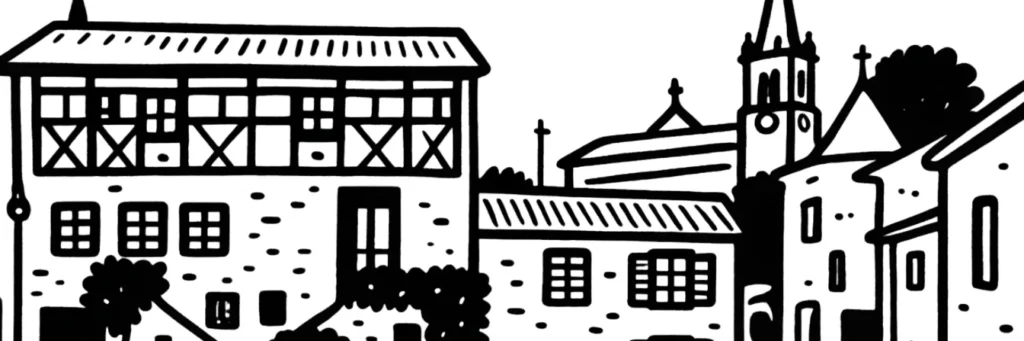
Verrières-le-Buisson has 15 057 inhabitants on a territory where the forest covers about 550 of its 991 hectares. The housing stock leans towards houses, with slightly more houses than apartments, and a large majority of residents own their home. Buyers are mainly working families employed in Paris, in the neighbouring Hauts-de-Seine or on the Saclay plateau, looking for a house with a garden around ten kilometres from the capital. Apartments attract first-time buyers, couples and seniors leaving a house that has become too large without leaving the municipality. Most working residents are employed outside the town, which makes access to transport a central criterion.
Not within its boundaries, but Massy-Verrières station, on the municipal boundary, serves the town centre via RER B, the former Sceaux line, and RER C, both Paris regional express lines. The western hamlets are closer to Igny station. Several bus lines link the town to Massy, Antony and the municipalities of the Bièvre valley. By road, the A86 and the RN118 can be reached via interchanges located in Châtenay-Malabry and Bièvres.
Apartments sold for an average of 4 110 €/m² in 2025, according to 65 notarised sales. Houses reach around 5 457 €/m², nearly a third more, which is explained by the size of the plots and the proximity of the forest. In both cases, the gap between a 1960s residential block and a recent development, or between a detached house to renovate and a characterful home, can be significant.
The town centre groups shops, services and a good share of the apartment blocks, including the Clos. Around it, a series of housing developments occupies the former horticultural land, from the Rinsolles and the Moulin de Grais in the west to the Noisette and the Tombeau de Molé in the east. To the south-west, the hamlets of Amblainvilliers, Salvert, Marienthal and Vaupéreux, in the Bièvre valley, offer a more rural setting.
Several monuments are protected, such as the church and the château Vaillant, and their surroundings are subject to the opinion of the Architectes des Bâtiments de France, the state heritage architects, for any visible works. The state forest and wooded areas limit building possibilities along the forest edge, and part of the Bièvre valley is classified as a regional nature reserve. Before an extension or plot division project, consult the local urban development plan at the town hall.
Verrières-le-Buisson ranks slightly above Massy, but below the Hauts-de-Seine municipalities bordering it to the north and east, such as Antony or Châtenay-Malabry. This position is explained by the lack of a station within the municipality and by a partly older stock of apartment buildings. For houses, however, the forest and large gardens bring the municipality closer to the most sought-after residential areas south of Paris.
This analysis is published by Immover, an independent observatory founded by Antony Barbier. Data sourced from official sources (DVF, INSEE, Notaries of France).