The immover observatory

Property Prices in Villers-sur-Mer2026 property valuation

Updated: January 2026 Sources: DVF · Notaires de France · INSEE · Immover January 2026 · DVF, Notaires de France, INSEE, Immover
In brief

The average price per m² in Villers-sur-Mer is 4 439 €/m² for an apartment, based on actual notarised (DVF) sales. About 277 transactions are recorded each year.

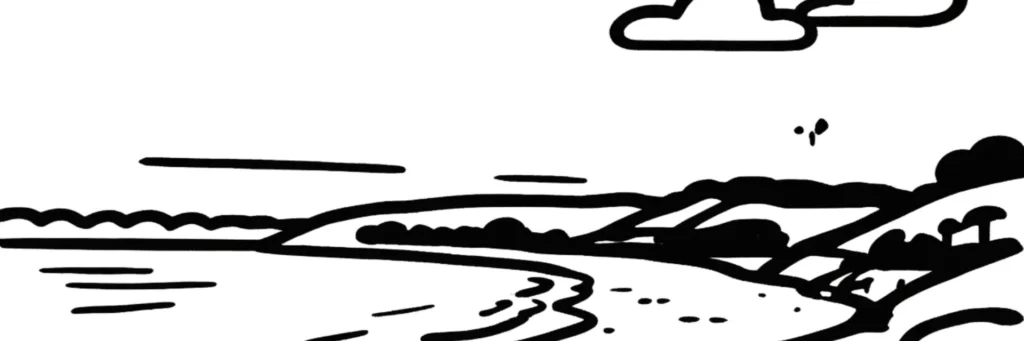
Line drawing of Villers-sur-Mer, the seafront promenade, the seaside villas and the cliffs of the Vaches Noires

Mood illustration of Villers-sur-Mer, between the seafront promenade and the cliffs of the Vaches Noires.

Property Prices in Villers-sur-Mer

The 2026 figures· Indicative data
4 439€/m²

The average price recorded in Villers-sur-Mer stands at 4 439 €/m². That average covers a stock made up of nearly four fifths of apartments, a legacy of the divided villas of the cliffs district and above all of the condominium developments built in the east of the municipality, around Villers 2000 and the housing estates near the station. A holiday studio without a view, a front-line apartment on the seafront promenade and a 19th-century seaside villa do not stand at the same level. These values come from the DVF database, which records transactions actually registered by notaries, and not from listings.

Apartment transactions / year
277
Median price per m²
4 386 €

Prices from the DVF file (Demandes de valeurs foncières, published by the DGFiP), transactions actually recorded at the notary at municipality level. Cross-referenced with the Notaires de France - INSEE indices. Learn more about our methodology.

Market trends and analysis for Villers-sur-Mer

The population of Villers-sur-Mer has been falling over the recent period, by about 8 % since 2017 according to INSEE, while the housing stock, for its part, keeps growing. That divergence is the dominant feature of the market: the municipality fills with intermittent occupants more than with permanent residents. The consequence is sustained demand for small and medium-sized condominium units, bought for weekend and holiday use, and less pressure on large family houses. The very low vacancy rate also shows that few properties stay unoccupied for long, including outside the summer season.

The second driver is tourism and heritage. Villers-sur-Mer combines a sandy beach, a seafront promenade, the palaeontological site of the cliffs of the Vaches Noires, the marsh of Blonville-Villers and the passage of the Greenwich meridian, showcased since 2011 by the Paléospace museum. This stay-based economy, backed by the immediate closeness of Deauville and Trouville, sustains seasonal rental demand and draws buyers who think in terms of partial use. Against that, the Coastal Act, the cliff risk prevention plan and the footprint of the marsh sharply limit the possibilities of urban extension.

Villers-sur-Mer on the Côte Fleurie, in the Calvados

average €/m²

Villers-sur-Mer sits clearly above the large Norman towns nearby in terms of price per square metre. Its position as a seaside resort of the Côte Fleurie, with a limited stock very largely given over to second homes, explains that gap with the neighbouring urban markets.

MunicipalityTierPrice /m²Gap
Villers-sur-Mer4 439 €ref.
Caen3 029 €-32 %
Rouen2 756 €-38 %
Le Havre2 369 €-47 %

The history of Villers-sur-Mer

The name of the municipality comes from the Gallo-Roman villare, the rural estate, and the addition sur-Mer appears in 1801. Pottery dated to the first century BC, brought to light during the building of the villas in the 19th century, attests an early occupation of the site and an activity linked to salt. The seaside resort itself was born in 1856, on the initiative of the Parisian architect Félix Pigeory, founder of the Revue des beaux-arts, and of the journalist Pierre-Michel-François Chevalier, known as Pitre-Chevalier, who ran Le Figaro. The first buildings went up on the side of the cliffs of the Vaches Noires. At the end of the 1850s, the resort counted some fifty houses and a wooden casino set on stilts.

The opening of a first section of railway in 1882, on the Mézidon to Trouville-Deauville line, sped up the movement. Villers passed 190 buildings as early as 1883. The town hall was put up in 1887, a second casino replaced the original one, and the church of Saint-Martin was built from 1872 to 1898 in Caen stone to the plans of Aimar Lavalley-Duperroux, with a bell tower of 35 metres and a set of 51 stained-glass windows by Duhamel-Marette. The villa Miramar, a chalet from the Exposition universelle of 1867, was re-erected on the spot in 1870. Around 1900, the resort gained the marshy land to the east, and a seafront promenade was rebuilt in 1934.

Georges Méliès filmed at Villers, in 1896, the view Plage de Villers par gros temps. Occupied then fortified during the Second World War, the municipality was liberated on 22 August 1944 by the Belgian brigade of General Jean-Baptiste Piron. Development resumed after 1950 towards the eastern districts, then changed scale in the 1970s with the Villers 2000 operation, built on former marshes, and the spread of housing estates near the station and the château de San Carlo. In 2011, the Paléospace museum opened on 20 April, devoted to the fossils of the Vaches Noires, to the marsh and to the Greenwich meridian, marked out in the municipality since 2016.
Who buys in Villers-sur-Mer

Villers-sur-Mer has 2 440 inhabitants according to INSEE, the French national statistics institute, for a stock of nearly 9 500 dwellings: the gap sums up the local market on its own. Second homes account for 83 % of dwellings, the highest proportion in the Calvados, against about 16 % of main residences and a very low vacancy rate. Apartments make up close to 79 % of the stock, a consequence of the condominium developments of the east of the municipality. Among the households settled year-round, about 64 % own their dwelling, again according to INSEE. Buyers are therefore mostly non-residents, often from the Paris region, looking for a weekend pied-à-terre, alongside a permanent population that is elderly and largely made up of owners.

Frequently asked questions

The average price comes out at 4 439 €/m² across the municipality, all property types together. That figure is calculated from the DVF database, which records sales actually registered by notaries. It covers very different situations: a condominium of the 1970s in the east of the municipality and an older apartment facing the seafront promenade are not valued in the same way. For a given property, the sea view, the storey, the aspect and the condition of the condominium weigh more than the municipal average.

Three groupings can be read in the urban fabric. The historic cliffs district, to the west towards the Vaches Noires, concentrates the villas of the second half of the 19th century. The centre, around the rues Fanneau, Sandret and Forin and the seafront promenade, mixes older buildings and shops. To the east, the districts developed after 1950, including the Villers 2000 operation and the housing estates near the station, offer more recent housing, denser in apartments.

The municipality has an SNCF halt located about 1.5 kilometres from the centre, on the Mézidon to Trouville-Deauville line. It is served by the TER Normandie trains running between Trouville-Deauville and Dives-Cabourg, with stops at Blonville-sur-Mer and Houlgate. From Paris Saint-Lazare, the journey goes via the station of Trouville-Deauville, linked to the capital all year round. That connection explains the weight of buyers from the Paris region in local transactions.

It exists, but it stays narrow. Apartments account for close to 79 % of the dwellings of the municipality according to INSEE, against a little more than 21 % of houses. The supply of houses is split between the seaside villas of the cliffs district, often large and costly to maintain, and the detached houses of the eastern housing estates. Sales volumes there are lower than on flats, with generally longer marketing times and a clearly wider dispersion of prices.

The municipality applies the Coastal Act of 3 January 1986, which makes the hundred-metre strip from the shore unbuildable outside the areas already urbanised and requires extension to follow on from the existing fabric. Part of the territory also comes under the ground movement risk prevention plan for the cliffs of the Vaches Noires. The marsh of Blonville-Villers, a wetland of about 150 hectares, likewise bounds urban growth to the east. Buildable land is therefore scarce, and the market plays out on the existing stock.

Value your property in Villers-sur-Mer

Free valuation in under 2 minutes

Value my property

This analysis is published by Immover, an independent observatory founded by . Data sourced from official sources (DVF, INSEE, Notaries of France).

Estimer mon bien