The immover observatory

Property Prices in Amfreville-la-Mi-Voie2026 property valuation

Updated: January 2026 Sources: DVF · Notaires de France · INSEE · Immover January 2026 · DVF, Notaires de France, INSEE, Immover
In brief

The average price per m² in Amfreville-la-Mi-Voie is 1 992 €/m² for an apartment, based on actual notarised (DVF) sales. About 20 transactions are recorded each year.

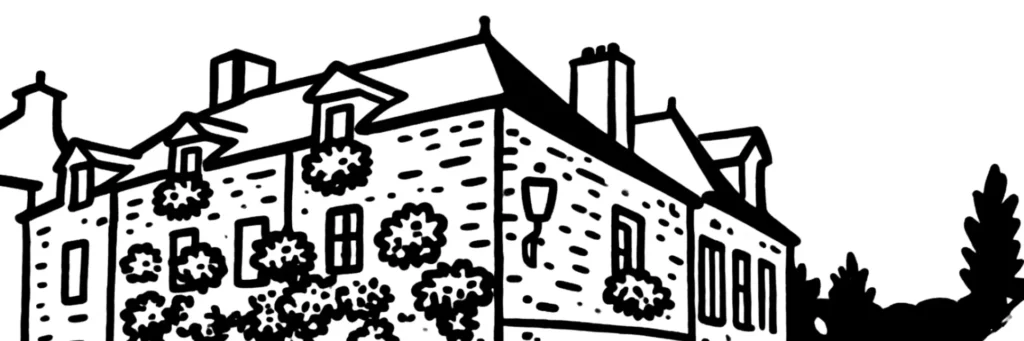
Line drawing of a Norman suburb on the banks of the Seine, quays, a concrete church and a wooded hillside overlooking the valley

Mood illustration of Amfreville-la-Mi-Voie, in the Seine-Maritime.

Property Prices in Amfreville-la-Mi-Voie

The 2026 figures· Indicative data
1 992€/m²

In Amfreville-la-Mi-Voie, the average price stands at 1 992 €/m², a contained level for a suburb at the gates of Rouen. That average covers a stock mixing older houses by the Seine, detached houses and more recent blocks clinging to the hillside. Properties close to the river and to the routes towards Rouen stand apart from those set on the heights. This figure comes from the DVF database, which records the transactions actually registered before notaries, and therefore reflects signed sales rather than asking prices.

Apartment transactions / year
20
Median price per m²
1 958 €

Prices from the DVF file (Demandes de valeurs foncières, published by the DGFiP), transactions actually recorded at the notary at municipality level. Cross-referenced with the Notaires de France - INSEE indices. Learn more about our methodology.

Market trends and analysis for Amfreville-la-Mi-Voie

The Amfreville-la-Mi-Voie market is first of all governed by the closeness of Rouen. Five kilometres from the centre, the municipality acts as the southern gateway to the conurbation, with prices appreciably lower than those of the central city. That difference attracts households seeking to move nearer their work without bearing Rouen budgets. The stability of the population, almost flat over recent years, reflects a mature market, without strong tension but with steady demand supported by its role as a residential suburb.

The transformation of the economic fabric is the second factor. The retreat of industry has freed up sites on the banks of the Seine and moved the village towards a residential vocation. The bus service towards Rouen and the bypass of 1997 have improved everyday living conditions. The relative youth of the population, marked by a large share of under-thirties, keeps up a letting demand and a renewal of households that support the activity of the local market over the long term.

Amfreville-la-Mi-Voie south of Rouen, on the banks of the Seine

average €/m²

The Amfreville-la-Mi-Voie market sits in the lower middle of the conurbation: more affordable than Rouen and than its neighbour Bonsecours, but above municipalities of the left bank such as Canteleu.

MunicipalityTierPrice /m²Gap
Rouen2 756 €+38 %
Bonsecours2 345 €+18 %
Amfreville-la-Mi-Voie1 992 €ref.
Canteleu1 320 €-34 %

The history of Amfreville-la-Mi-Voie

Amfreville-la-Mi-Voie takes its name from an old Norman personal name, recorded in the forms Onfreville from 1217, then Onffreville-la-mi-voie in 1395. The second element recalls the position of the municipality halfway along the road linking Rouen to Pont-de-l'Arche, along the Seine. Backing onto a hillside and open to the river, the village grew up at the water's edge, where people and goods passed. Its territory, limited to less than four square kilometres, rises from 3 to 145 metres in altitude, between the bank and the wooded heights that overlook the valley.

In the 19th and 20th centuries, Amfreville-la-Mi-Voie became an industrial suburb of Rouen. There were alum works, a production of lead nitrate and shipyards installed along the Seine, which took advantage of the waterway and of the closeness of the great port of Rouen. That manufacturing activity shaped the urban form of the municipality, with its workers' housing and its industrial sites on the riverbank. The heavily built appearance of the village, dense for its area, keeps the trace of that period when work set the rhythm of local life.

Heavy industry has now largely receded, but a few companies bear witness to that heritage, among them a cable maker inherited from Pirelli and taken over by the Prysmian group. The church of Saint-Remi, built in 1908 in a style mixing Byzantine and Renaissance inspiration, ranks among the first churches built in concrete after the separation law of 1905. In 1997, a bypass relieved the village crossing of through traffic. Served by the bus line that reaches the centre of Rouen, the municipality has turned into a residential suburb of the Rouen conurbation.
Who buys in Amfreville-la-Mi-Voie

According to INSEE, the French national statistics institute, Amfreville-la-Mi-Voie has around 3 265 inhabitants, on a dense territory of less than four square kilometres. The population is rather young: those under thirty accounted for close to 43 % of inhabitants at the 2018 census. Unlike the peri-urban villages dominated by the house, the stock here mixes detached houses and flats, a legacy of its past as a working-class suburb. There are therefore both owner-occupiers and a notable share of tenants. Buyers are above all households looking for quick access to Rouen on a more measured budget than in the city.

Frequently asked questions

The average price recorded in Amfreville-la-Mi-Voie is 1 992 €/m², an affordable level for a suburb of Rouen. That figure is drawn from the DVF data, which records the sales actually signed before notaries. It is an average: an older house by the Seine and a more recent apartment on the hillside are not valued in the same way. A reliable valuation has to take into account the floor area, the condition and the exact location of the property.

The municipality is split between the bank of the Seine, where the older buildings and the sites inherited from industry are concentrated, and the wooded heights of the hillside, which are more residential. Properties offering easy access towards Rouen and the main roads are the most in demand. Dwellings on the heights sometimes enjoy views over the valley, while those below stay close to the shops and to transport. That duality between bank and hillside shapes the price gaps.

Amfreville-la-Mi-Voie lies around five kilometres south of Rouen, along the Seine. A bus line links the municipality regularly to the centre of Rouen, and the bypass opened in 1997 has eased the through traffic that used to cross the village. That immediate closeness to Rouen, combined with more measured prices than in the city, is one of the main drivers of the residential appeal of the municipality.

The market is more mixed than in many peri-urban villages. There are houses, in particular older ones by the Seine and detached houses on the hillside, but also a notable share of apartments, a legacy of the municipality's past as a working-class suburb. That diversity lets varied profiles buy, from families in search of a house to first-time buyers aiming at an apartment close to Rouen. The average budget there stays below that of the central city.

Heavy industrial activity has largely receded, but it has left a mark on the landscape, with converted sites and dense building along the Seine. A few companies remain, such as a cable maker inherited from Pirelli. For a buyer, the closeness of the river and of the main roads is an advantage in accessibility, while the nature of the former sites can influence certain sectors. The municipality benefits above all from its integration into the Rouen conurbation.

Value your property in Amfreville-la-Mi-Voie

Free valuation in under 2 minutes

Value my property

This analysis is published by Immover, an independent observatory founded by . Data sourced from official sources (DVF, INSEE, Notaries of France).

Estimer mon bien