The immover observatory

Property Prices in Bain-de-Bretagne2026 property valuation

Updated: January 2026 Sources: DVF · Notaires de France · INSEE · Immover January 2026 · DVF, Notaires de France, INSEE, Immover
In brief

The average price per m² in Bain-de-Bretagne is 2 169 €/m² for an apartment, based on actual notarised (DVF) sales. About 20 transactions are recorded each year.

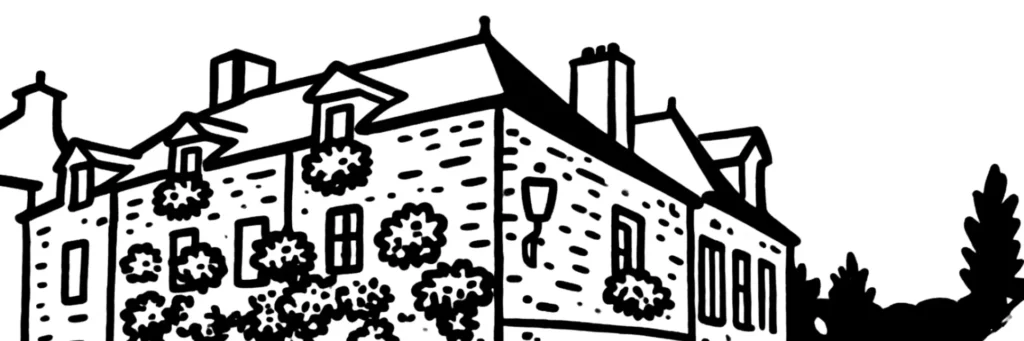
Line drawing of Bain-de-Bretagne: the old town gathered around its pond of more than thirty hectares

Mood illustration of Bain-de-Bretagne, a main town of the south of the Ille-et-Vilaine, between Rennes and Nantes.

Property Prices in Bain-de-Bretagne

The 2026 figures· Indicative data
2 169€/m²

The average price recorded in Bain-de-Bretagne stands at 2 169 €/m². That average brings together a stock very largely made up of individual houses, the town holding only a small share of apartments, located mainly around the town centre. The gaps seen around that average come chiefly from the type of property, its floor area, its general condition, the presence of land and closeness to the old centre or to the pond. The houses of the recent estates on the edges show different values from the older stock packed around the town. These figures come from the DVF database, which records sales actually signed before notaries, and give a municipal benchmark to be refined property by property according to the sector and the precise features of the home.

Apartment transactions / year
20
Median price per m²
2 156 €

Prices from the DVF file (Demandes de valeurs foncières, published by the DGFiP), transactions actually recorded at the notary at municipality level. Cross-referenced with the Notaires de France - INSEE indices. Learn more about our methodology.

Market trends and analysis for Bain-de-Bretagne

The Bain-de-Bretagne market rests on its status as the main town of the south of the Ille-et-Vilaine, on the historic road linking Rennes to Nantes. Demand comes above all from families and working people employed in Rennes, some thirty kilometres away, looking for a house with land at a more affordable price than in the Rennes conurbation. The living environment organised around the pond and the old centre, along with the presence of local shops and services, adds to the residential appeal of the municipality. Demand bears very largely on individual houses, which dominate the housing stock by far.

Supply remains marked by the large share of low-rise detached housing built over the last decades, on the edges of the old town, alongside older stock concentrated around the church and the pond. On the resale market, general condition, energy performance and the presence of land have become decisive negotiating criteria for buyers. Trade-offs are also made between closeness to the town centre, prized for its shops, and the quiet of the more outlying estates. The position of the municipality on the road from Rennes to Nantes continues to support steady demand from households looking for a compromise between accessibility and living environment.

Bain-de-Bretagne, main town of the south of the Ille-et-Vilaine

average €/m²

On the road between Rennes and Nantes, Bain-de-Bretagne shows prices below those of its closest benchmark municipalities, Guichen, Janzé and Bruz, which are more sought after around Rennes.

MunicipalityTierPrice /m²Gap
Bruz3 283 €+51 %
Guichen2 610 €+20 %
Janzé2 481 €+14 %
Bain-de-Bretagne2 169 €ref.

The history of Bain-de-Bretagne

Bain-de-Bretagne takes its name from a Gallo-Roman landowner, Baenus or Balnus, whose estate lay on the edge of the pond, near the present anglers' shelter, at the spot where the Romans had built a dyke. The municipality is recorded as early as 850 in the form Bain villula, then appears under the spellings Baiocum in 1040, Baionum in 1050, Baym in 1231 and Beign in the 14th century. The current name, Bain-de-Bretagne, was officially adopted only in 1895, to distinguish the municipality from other places of the same name in France. Around 1050, monks from the abbey of Saint-Melaine in Rennes settled near the pond and formed there a small community of about a hundred people in the early 1080s, marking the beginnings of a settlement organised around this stretch of water, which remains today the central geographic feature of the town.

The first known lord of Bain, Senebrun de Bain, is mentioned in 1127. The lordship then passed to the barons of Châteaubriant, who held it from the 13th century until 1543, before it went in turn to the Montespedon family, to the Scepeaux around 1578, then to the Gondi, dukes of Retz, in 1610. The La Marzelière family became owners from 1615 and obtained the raising of the land to a marquisate in 1618; the last lord, Charles de la Bourdonnaye de Montluc, emigrated during the revolutionary period. The built heritage keeps the trace of that history: the chapel of Notre-Dame-du-Coudray, linked to a local legend, dates from 1611, and the cemetery holds a carved cross of the 15th century. The parish church of Saint-Martin, rebuilt between 1854 and 1892, overlooks the present town, while the tower mill of Bertaud, an 18th century building since restored, today produces organic flour on the hill above the town.

The chief town of a district from 1790 to the end of the 18th century, then the chief town of a canton, Bain-de-Bretagne today belongs to the arrondissement of Redon, in the Ille-et-Vilaine. The municipality holds a strategic position on the old road linking Rennes to Nantes, which already earned it, in the 18th century, one of the busiest fairs between the two towns. That role of staging town has continued with the route nationale 137, which now bypasses the town centre but remains the structuring artery of the south of the department. Its population has almost doubled in some sixty years, carried by the building of many low-rise detached housing estates on the edges of the old town. From a rural municipality organised around its pond and its fairs, Bain-de-Bretagne has become a residential main town of the south of the Ille-et-Vilaine, benefiting both from closeness to Rennes and from the appeal of the road towards Nantes.
Who buys in Bain-de-Bretagne

Bain-de-Bretagne has 7 674 inhabitants according to INSEE, the French national statistics institute. The housing stock is very largely made up of individual houses, which account for about four dwellings out of five, apartments forming a smaller share, concentrated mainly around the town centre. Main residences dominate the stock by far, second homes remaining marginal, and a little more than two households out of three own their home. That profile attracts above all families and working people employed in Rennes or in the local employment area, looking for a house with a garden at a more affordable price than in the Rennes conurbation. First-time buyers readily turn to the low-rise detached housing estates on the edges of the town, while buyers attached to the old centre look for town houses close to the pond.

Frequently asked questions

The average price recorded in Bain-de-Bretagne stands at 2 169 €/m², based on sales registered before notaries and published in the DVF database. That figure brings together varied properties, houses as well as apartments, in a stock where houses dominate by far. The type of property, the floor area, the condition, the land and the location, in particular closeness to the old centre or to the pond, explain most of the gaps around that average. For a reliable valuation, it is better to rely on sales of comparable properties than on the municipal average alone.

Bain-de-Bretagne has no station on its territory, but lies some thirty kilometres from Rennes and a little under an hour from Nantes by road. The municipality is served by a BreizhGo coach line linking Grand-Fougeray to Rennes, which stops in the town, and remains organised above all around the route nationale 137, the historic road between Rennes and Nantes. That role of staging town, halfway between the two conurbations, explains the appeal of the municipality for working people employed in one or the other without wishing to live there.

Bain-de-Bretagne is organised around its pond of more than thirty hectares, laid out for walking and outdoor activities, and around a town centre that has kept its church of Saint-Martin and several older heritage features such as the chapel of Notre-Dame-du-Coudray or the tower mill of Bertaud. The setting remains that of a main town of the south of the Ille-et-Vilaine, with local shops and services, surrounded by countryside and by more recent low-rise detached housing estates. That situation attracts households looking for a living environment on a human scale, away from the density of Rennes but well connected to the main roads.

The Bain-de-Bretagne market gives a large place to individual houses, which account for about four dwellings out of five, against a smaller share of apartments, located mainly around the town centre. Buying a house matches the dominant profile of the municipality, with land and a low-rise or old town setting depending on the sector. Apartments suit more measured budgets or smaller households looking for a home in the town centre. Your choice will depend above all on your budget, on your need for outdoor space and on your attachment to the old centre or to the more recent districts.

Bain-de-Bretagne is organised around its old town, close to the church of Saint-Martin and to the pond, then spreads out in low-rise detached housing estates towards the edges, in particular in the direction of the roads to Rennes and Nantes. The most sought-after sectors remain those in the immediate vicinity of the pond and of the town centre, for their setting and their local shops, while the more recent estates attract families looking for land and for a more contemporary build. Each sector has its own features of building and environment, to be looked at closely according to your project.

Value your property in Bain-de-Bretagne

Free valuation in under 2 minutes

Value my property

This analysis is published by Immover, an independent observatory founded by . Data sourced from official sources (DVF, INSEE, Notaries of France).

Estimer mon bien