The average price per m² in Bayeux is 2 519 €/m² for an apartment, based on actual notarised (DVF) sales. About 88 transactions are recorded each year.

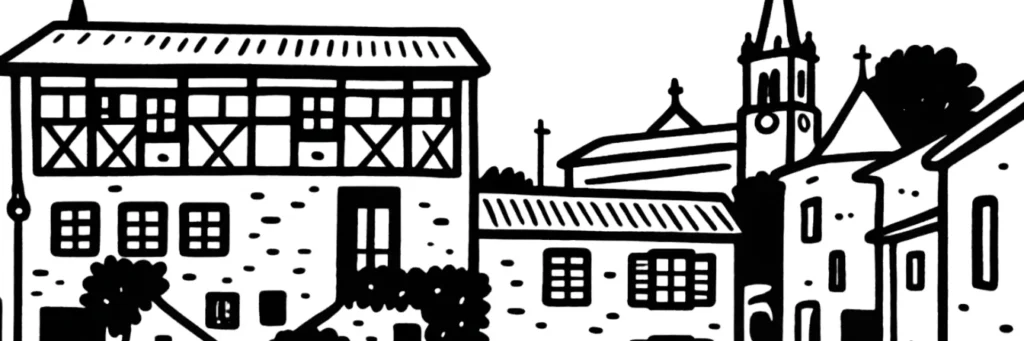
Mood illustration of Bayeux, the town of the Tapestry, in the Calvados.
In Bayeux, the average price for apartments stands at 2 519 €/m², based on the sales actually recorded in the DVF database of the notaries. The town sits a notch below nearby Caen and well below the seaside resorts of the Calvados coast. The stock mixes older stone buildings of the old town, Norman houses and estates on the edges. The charm of the historic centre, closeness to the cathedral and to the Tapestry, the condition of the property and its energy performance make the value vary from one home to another. These figures, drawn from notarial transactions, give a municipal benchmark; a reliable valuation then rests on comparable properties, examined one by one.
Prices from the DVF file (Demandes de valeurs foncières, published by the DGFiP), transactions actually recorded at the notary at municipality level. Cross-referenced with the Notaires de France - INSEE indices. Learn more about our methodology.
The Bayeux market combines local main-town demand and outside demand linked to heritage and tourism. The character properties of the historic centre, sought after for living as well as for seasonal letting, stand clearly apart from the rest of the stock. Closeness to Caen and to the coast widens the pool of buyers, which supports prices compared with other medium-sized towns of inland Normandy.
Energy performance weighs on an older stone stock that is sometimes hard to insulate, where the least efficient homes trade at a discount. For a seller, a renovated character property well placed in the old town keeps a strong appeal, while an energy-hungry house has to factor in the cost of works. In the medium term, remembrance tourism and heritage remain lasting assets for the Bayeux market.
Bayeux sits a little below Caen and clearly under the seaside resorts of the Calvados coast, while staying above towns of inland Normandy such as Saint-Lô.
Bayeux is one of the oldest towns in Normandy, born of a Gallo-Roman then episcopal city, crossed by the small river Aure. It is known worldwide for the Bayeux Tapestry, an 11th century embroidery nearly seventy metres long that tells the conquest of England by William the Conqueror. That masterpiece, inscribed on the UNESCO Memory of the World register, draws many visitors every year.
The town has kept a remarkably preserved medieval centre, dominated by the cathedral of Notre-Dame, a masterpiece of Norman Gothic art. Half-timbered houses, stone mansions and former watermills bear witness to a rich past as an episcopal, trading and lace-making city, the lace of Bayeux having long made the reputation of the municipality.
Bayeux holds a particular place in the history of the 20th century: the first town in mainland France to be liberated after the Normandy landings of June 1944, it escaped massive destruction thanks to its rapid capture. General de Gaulle gave speeches there that have remained famous. The town today holds a British military cemetery and the memorial of the Battle of Normandy, which makes remembrance tourism one of its drivers, alongside its medieval heritage.
Bayeux has about 12 700 inhabitants and acts as the main town for the Bessin, west of Caen. The property market there is carried by local and family demand, but also by buyers won over by the heritage setting and by closeness to the coast and to the landing beaches. Tourism, very present, supports a market of second homes and of rental investment, in particular in the historic centre. The municipality also attracts households from the Caen conurbation looking for a quieter living environment, some thirty minutes from Caen by road or by train.
The average price for apartments in Bayeux is 2 519 €/m², based on the DVF transactions completed before notaries. That average blends the older apartment of the historic centre and the more recent home on the edges. The charm of stone, closeness to the cathedral, the storey and energy performance explain the gaps. For a specific property, a reliable valuation rests on comparable sales rather than on the municipal average alone.
Yes, on several counts. The Bayeux Tapestry, the cathedral of Notre-Dame, the preserved old town and closeness to the landing beaches make it a major destination in Normandy. That tourism supports a market of second homes and of seasonal letting, in particular in the historic centre. It tightens demand for character properties without lifting prices to the level of the seaside resorts of the coast.
The historic centre, around the cathedral and the Aure, concentrates the older stone buildings and the character houses, the most sought after. The low-rise detached housing districts on the edges offer houses with a garden at more moderate prices. The sectors close to the station and to the roads towards Caen appeal to working households. Closeness to the medieval centre and the charm of the built fabric make up most of the value gaps from one sector to another.
Bayeux lies some thirty kilometres west of Caen, linked by road and by a regular rail line that puts the centre of the conurbation about twenty minutes away. That closeness allows working people to be employed in Caen while enjoying the setting of Bayeux. The town is also the gateway to the Bessin and to the landing beaches, all close by.
The Bayeux Tapestry, the cathedral of Notre-Dame and the medieval old town form the heart of the heritage. The memorial of the Battle of Normandy and the British military cemetery recall the role of the town in 1944. The mills on the Aure and the lace-making tradition complete the visit. That dense heritage makes Bayeux a town where tourism and the living environment keep property appeal alive.
This analysis is published by Immover, an independent observatory founded by Antony Barbier. Data sourced from official sources (DVF, INSEE, Notaries of France).