The immover observatory

Property Prices in Cavalaire-sur-Mer2026 property valuation

Updated: January 2026 Sources: DVF · Notaires de France · INSEE · Immover January 2026 · DVF, Notaires de France, INSEE, Immover
In brief

The average price per m² in Cavalaire-sur-Mer is 5 753 €/m² for an apartment, based on actual notarised (DVF) sales. About 283 transactions are recorded each year.

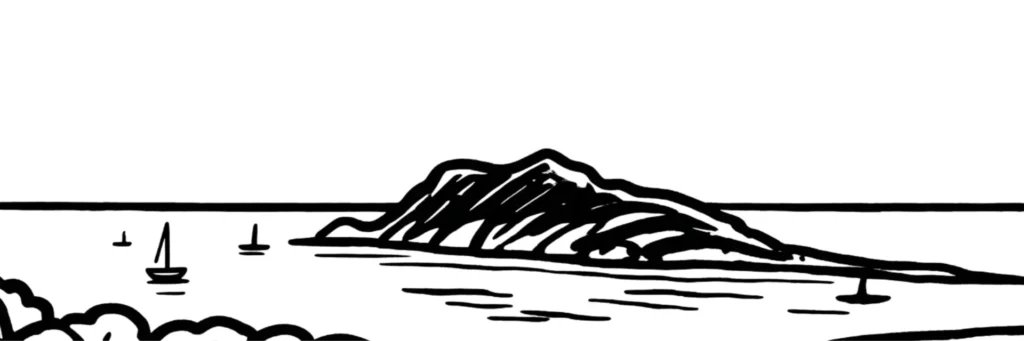
Line drawing of the bay of Cavalaire-sur-Mer, arc-shaped beach, sailboats at anchor and the hills of the Maures massif

Atmospheric illustration of the bay of Cavalaire-sur-Mer, between Cap Cavalaire and Cap Lardier.

Property Prices in Cavalaire-sur-Mer

The 2026 figures· Indicative data
5 753€/m²

The average price recorded in Cavalaire-sur-Mer stands at 5 753 €/m². This average covers a housing stock made up very largely of apartments, a legacy of the seaside residences built after the war along the bay and on the heights. A studio in a co-ownership building with a sea view, a family apartment in the Dattier or Pardigon areas and a villa in the hills are not valued in the same way, and the gap between the seafront and the hamlets of the hinterland remains marked. These figures come from the DVF database (the French record of notarised property sales), which lists transactions actually registered by notaries, rather than listings or self-declared estimates.

Apartment transactions / year
283
Median price per m²
5 553 €

Prices from the DVF file (Demandes de valeurs foncières, published by the DGFiP), transactions actually recorded at the notary at municipality level. Cross-referenced with the Notaires de France - INSEE indices. Learn more about our methodology.

Market trend in Cavalaire-sur-Mer

+17 % over 5 years
Change in the average price per m² in Cavalaire-sur-Mer, from 4 919 € in 2021 to 5 753 € in 2026. 6 000 € 5 500 € 5 000 € 4 500 € 4 919 € 5 314 € 5 549 € 5 695 € 5 739 € 5 753 € 2021 2022 2023 2024 2025 2026
Change in the average price per m² in Cavalaire-sur-Mer, 2021 to 2026. Source: DVF.

After 4 919 €/m² in 2021, the average price in Cavalaire-sur-Mer reaches 5 753 €/m² in 2026, an increase of roughly +17 % over the period.

Market trends and analysis for Cavalaire-sur-Mer

The demography of Cavalaire-sur-Mer is rising steadily, from about 7 000 inhabitants at the start of the 2010s to 8 121 today according to INSEE. This growth comes above all from the year-round settling of households that already knew the municipality as a holiday spot. It sustains a demand for main residences on a stock originally designed for seasonal use, and feeds the gradual transformation of holiday homes into permanent housing. The very low vacancy rate, a little over 1 %, reflects this pressure: few properties stay unoccupied for long, including outside the season.

The second driver is tourism. Classified as a tourist resort in 2013, the municipality lives to the rhythm of a summer influx that multiplies its population, with two marinas, a three-kilometre beach and the immediate proximity of the gulf of Saint-Tropez. This economy supports the rental value of apartments and attracts buyers looking for a property usable part of the year. In return, the Coastal Law and the relief of the Maures massif limit the possibilities for expansion: new supply remains rare, and the trade-offs play out mainly on the existing stock.

Cavalaire-sur-Mer within the gulf of Saint-Tropez

average €/m²

Cavalaire-sur-Mer holds an intermediate position around the gulf of Saint-Tropez: price levels there remain clearly below those of the most popular municipalities of the peninsula, while sitting above those of the Var coast further west.

MunicipalityTierPrice /m²Gap
Saint-Tropez14 807 €+157 %
La Croix-Valmer6 450 €+12 %
Cavalaire-sur-Mer5 753 €ref.
Hyères4 361 €-24 %

The history of Cavalaire-sur-Mer

Around 325 BC, Greek merchants from Marseille set up a trading post at the head of the bay, called Heraclea Caccabaria. The site, sheltered and easy to land on, served as a port of call on the sea route between Provence and Italy. Excavations carried out on the Pardigon estate have brought to light remains of ancient occupation that attest to the continuity of this coastal settlement. From the end of Antiquity, incursions from the sea pushed the inhabitants to withdraw inland, to the fortified heights of Gassin and Grimaud. The shore then emptied for a long period, and the bay kept only a role of fishing and anchorage.

For centuries, Cavalaire was no more than a fishing hamlet attached to Gassin. The turning point came with the railway. The metre-gauge line from Toulon to Saint-Raphaël, opened on 23 March 1889 and nicknamed the Macaron, ran along the coast of the Maures massif and pierced the Bonporteau tunnel on the municipal territory. It brought the bay within reach of the first summer visitors and set off the construction of seafront villas. The hamlet grew substantial enough to claim its independence: Cavalaire was made a municipality in 1929, detached from Gassin. The former station, converted into a cultural venue, remains the visible witness of that period.

On 15 August 1944, the bay became one of the strongholds of Operation Dragoon, the landing in Provence. From eight in the morning, General John W. O'Daniel's 3rd US Infantry Division gained a foothold on the Alpha sector, of which the Cavalaire beaches form the western part, before linking up with the Africa commandos engaged at Cap Nègre. The town was held from the early afternoon. The railway, badly damaged by the conflict, ceased operating in 1948. Reconstruction then opened half a century of continuous seaside development, with its hillside housing estates, its co-ownership blocks facing the sea and the development of the harbours.
Who buys in Cavalaire-sur-Mer

Cavalaire-sur-Mer has 8 121 inhabitants according to INSEE (the national statistics institute), compared with around 7 000 at the start of the 2010s. The local market is first of all one of second homes: 66 % of the roughly 12 700 dwellings in the municipality fall into this category, against 33 % of main residences and barely more than 1 % of vacant housing, a very low rate. The stock is 68 % apartments, a direct consequence of the co-ownership programmes built facing the bay. Among the households settled year-round, 65 % own their home, again according to INSEE. Buyers are therefore split between permanent residents, often retired or settled after a period of seasonal use, and non-resident buyers looking for a summer pied-a-terre.

Frequently asked questions

The average price comes to 5 753 €/m² across the municipality, all property types combined. This figure is calculated from the DVF database (the French record of notarised sales), which lists the sales actually registered by notaries. It hides a wide spread: an older co-ownership on the heights and a recent apartment in the front line on the bay are not at the same level. For a specific property, the exposure, the floor, the sea view and the condition of the building weigh more than the municipal average.

Demand is concentrated on the coastal strip of the main beach, about three kilometres long, and on the co-ownerships bordering the two harbours. The western coves, around Bonporteau, and the heights facing Cap Lardier attract buyers looking for quiet and open views. Away from the shore, the hamlets of Dattier, Pierrugues and Pardigon offer more detached-house living and price levels generally lower than those of the seafront.

The municipality has had no rail service since the Toulon Saint-Raphaël line closed in 1948. Access is via the departmental road 559, which runs along the Maures coast, with Saint-Tropez about fifteen kilometres away, Hyères about 24 kilometres away and Fréjus a little under 40 kilometres away. The nearest stations are those of Saint-Raphaël and Toulon, and Toulon-Hyères airport serves the area. This road accessibility strongly shapes the summer flows.

The two markets do not have the same depth. Apartments account for 68 % of the municipal stock according to INSEE, with a steady volume of transactions and a wide co-ownership offer, from the holiday studio to the three-room flat with a terrace. Individual houses, about 32 % of the stock, are concentrated on the hills and in the hamlets, with lower volumes and often longer selling times. The choice therefore depends as much on the liquidity sought as on the type of use envisaged.

Yes. Like all municipalities bordering the sea, Cavalaire-sur-Mer applies the 1986 Coastal Law (loi Littoral): the extension of urbanisation must take place in continuity with what already exists, the hundred-metre strip from the shore cannot be built on outside already urbanised areas, and the remarkable natural coastal spaces are protected. The urbanised areas of the municipality rose from about 640 to 740 hectares between 1990 and 2018. Available land therefore remains limited, which gives weight to the existing stock.

Value your property in Cavalaire-sur-Mer

Free valuation in under 2 minutes

Value my property

This analysis is published by Immover, an independent observatory founded by . Data sourced from official sources (DVF, INSEE, Notaries of France).

Estimer mon bien