The average price per m² in Chevreuse is 4 050 €/m² for an apartment, based on actual notarised (DVF) sales. About 21 transactions are recorded each year.

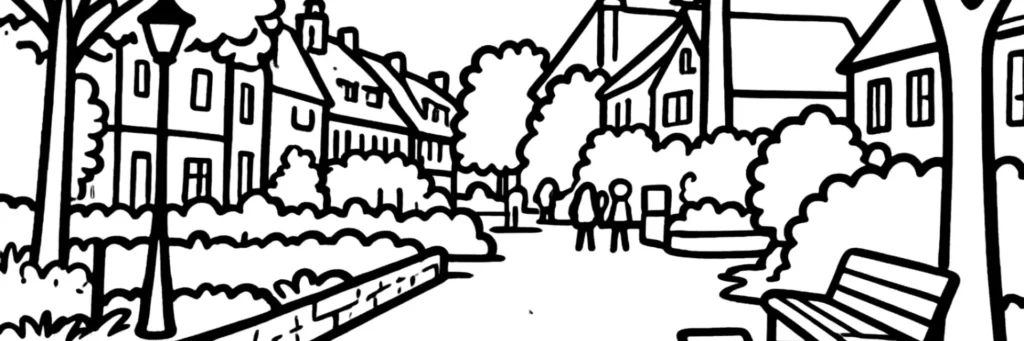
Ambience illustration of Chevreuse and the château de la Madeleine.
In Chevreuse, the average price reaches 4 050 €/m². That level, high for a rural commune, owes to its position in the Yvette valley at the heart of the regional nature park, some thirty kilometres from Paris and close to the Paris-Saclay hub. The stock is overwhelmingly made up of houses, with a more limited share of apartments, which pulls the average upwards. The gaps are appreciable between the old centre, the hillsides and the recent housing developments. This figure comes from the DVF data, which lists sales actually registered before notaries.
Prices from the DVF file (Demandes de valeurs foncières, published by the DGFiP), transactions actually recorded at the notary at municipality level. Cross-referenced with the Notaires de France - INSEE indices. Learn more about our methodology.
The market in Chevreuse is carried by a position that is rare in the outer ring: a rural setting protected by a regional nature park, yet less than an hour from Paris thanks to the RER B. The rise of the Paris-Saclay scientific hub, about ten kilometres away, strengthens the appeal of the sector among managers and researchers. That demand, combined with supply constrained by landscape protection rules, keeps prices high for a commune of this size and makes the house market particularly contested.
The demographics of Chevreuse are stable, even slightly falling, which reflects a commune already largely built up where new construction is rare. That scarcity benefits selling owners, but can hold back access for young households and first-time buyers. Credit rates and Paris-region conditions influence the pace of transactions more than local demographics do. For a seller, the position in the valley, the view and the condition of the property remain decisive, the town-wide average not reflecting the real variety of the stock.
Chevreuse shows a price level above that of the towns of Saint-Quentin-en-Yvelines, but stays below Versailles. Its neighbours help to place that position.
Chevreuse lies in the Yvette valley, some thirty kilometres south-west of Paris. Its name evokes a place where goats were raised, a reminder of its medieval rural vocation. The commune is dominated by the château de la Madeleine, whose building began around 1030 on the initiative of the first lords of Chevreuse; the keep and the stone walls were raised in the 12th century, around 1146, and the fortress was enlarged until the 14th century. A strategic stronghold, it went through hard times during the Hundred Years' War.
The duchy of Chevreuse marked the history of the place. In 1693, Louis XIV acquired the estate before transferring it to the Dames de Saint-Cyr. The town then lived on craft trades: the tanneries set up along the arms of the Yvette worked leather, notably kidskin, an activity that carried on into the 1980s. The writer Jean Racine, close to the neighbouring abbey of Port-Royal des Champs, is associated with the commune, where he is said to have overseen works at the castle in 1661. The old centre keeps from that period its houses, its washhouses and its small bridges over the canals.
The 20th century turned Chevreuse into a residential commune of the Paris outer ring, without making it lose its character. The creation in 1985 of the Regional Nature Park of the upper Chevreuse valley frames urban growth and protects the landscapes, which limits sprawl and makes land scarce. The station of Saint-Rémy-lès-Chevreuse, the terminus of the RER B some three kilometres away, links the sector directly to central Paris and to the Saclay plateau, about ten kilometres off. That accessibility, combined with the preserved setting, explains the lasting appeal of the commune among families and working households of the Paris region.
Chevreuse has 5 502 inhabitants according to INSEE, the French national statistics institute, a population slightly down since the late 2010s. The housing stock is dominated by the detached house, which accounts for close to two thirds of homes, against a little more than a third apartments. Owner-occupiers are in the majority and main residences make up almost all of the stock, the sign of a residential rather than a tourist commune. Buyers are mainly families and managers working in Paris, at Saclay or in the neighbouring hubs, drawn by the setting of the nature park and by the RER B service. That profile supports steady demand for houses.
The average price recorded in Chevreuse is 4 050 €/m², based on the DVF data drawn from sales registered before notaries. That average covers clear gaps depending on the type of property, the location and the age: a house in the historic centre, a home on the hillsides and a recent apartment do not sit at the same level. The weight of houses in the stock pulls the average value upwards.
Chevreuse has no station on its territory, but the Saint-Rémy-lès-Chevreuse station, the terminus of the RER B, is around three kilometres away. That line serves central Paris directly as well as the Saclay plateau, about ten kilometres off. The commune is also linked by road to the Bièvre valley and to Versailles. That accessibility, while keeping a rural setting, is among the assets buyers look for.
Yes. Chevreuse is part of the Regional Nature Park of the upper Chevreuse valley, created in 1985, which frames planning and protects the landscapes. Those rules limit new building and sprawl, which makes available land scarce and supports the prices of existing properties. For a buyer, they guarantee a preserved setting, but can also impose constraints on works and extensions, to be checked with the town hall.
The market in Chevreuse is overwhelmingly one of detached houses, which make up close to two thirds of the stock. A supply of apartments exists but stays limited, concentrated in the centre and a few more recent schemes. Families looking for space and a garden dominate demand, which keeps tension on houses. Apartments offer a more affordable way in, notably for a first purchase or a local buy-to-let investment.
The historic centre, with its older houses, its canals and its immediate closeness to the shops, remains in high demand. The hillsides and the residential developments, quieter and often with gardens, appeal to families. Closeness to the Saint-Rémy-lès-Chevreuse RER station and the aspect are two criteria that move prices from one district to another. Each sector answers different expectations, from older character to recent comfort.
This analysis is published by Immover, an independent observatory founded by Antony Barbier. Data sourced from official sources (DVF, INSEE, Notaries of France).