The immover observatory

Property Prices in Clichy2026 property valuation

Updated: January 2026 Sources: DVF · Notaires de France · INSEE · Immover January 2026 · DVF, Notaires de France, INSEE, Immover
In brief

The average price per m² in Clichy is 6 929 €/m² for an apartment, based on actual notarised (DVF) sales. About 630 transactions are recorded each year.

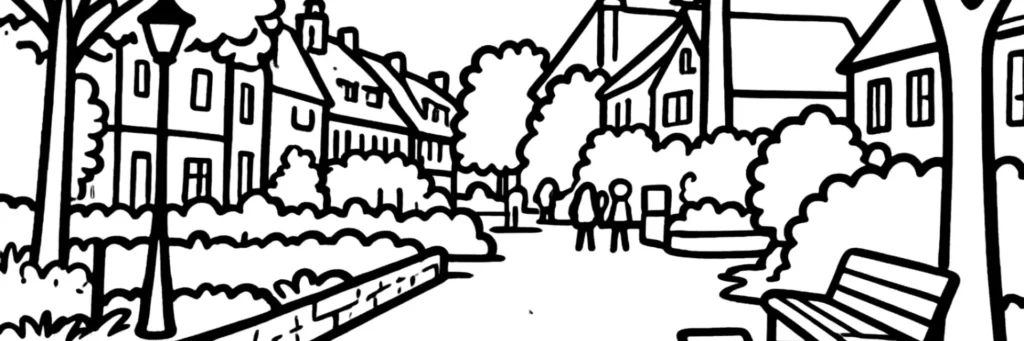
Line drawing of the banks of the Seine at Clichy, tightly packed apartment blocks and a tree-lined park in the background

Ambience illustration of Clichy, at the north-western gates of Paris.

Property Prices in Clichy

The 2026 figures· Indicative data
6 929€/m²

The average price recorded in Clichy stands at 6 929 €/m². That average covers a stock made up almost entirely of flats, where the rental blocks of the town centre and the developments of the 1960s and 1970s sit alongside the recent schemes on the banks of the Seine and at the Bac d'Asnières. The gaps owe above all to closeness to the porte de Clichy and to Levallois-Perret, to the floor level, to the presence of a lift and to exposure to busy roads. These values come from the DVF database, which lists sales actually registered before notaries, not the prices asked in listings.

Apartment transactions / year
630
Median price per m²
6 981 €

Prices from the DVF file (Demandes de valeurs foncières, published by the DGFiP), transactions actually recorded at the notary at municipality level. Cross-referenced with the Notaires de France - INSEE indices. Learn more about our methodology.

Market trend in Clichy

-9 % over 5 years
Change in the average price per m² in Clichy, from 7 609 € in 2021 to 6 929 € in 2026. 8 000 € 7 500 € 7 000 € 6 500 € 7 609 € 7 568 € 7 034 € 6 678 € 6 912 € 6 929 € 2021 2022 2023 2024 2025 2026
Change in the average price per m² in Clichy, 2021 to 2026. Source: DVF.

After 7 609 €/m² in 2021, the average price in Clichy reaches 6 929 €/m² in 2026, roughly -9 % over the period.

Market trends and analysis for Clichy

The Clichy market is first of all constrained by land. With 3,08 square kilometres and close to 21 000 inhabitants per square kilometre, the commune can only grow by recycling its brownfield sites. The development zones of the Bac d'Asnières, the Berges de Seine and the Entrée de ville have for some fifteen years been delivering new schemes that renew supply without widening it greatly. This output feeds an active resale market, with several hundred transactions a year, and sets a high point of comparison for older properties nearby.

The second driver is employment. Clichy hosts the world headquarters of L'Oréal, that of BIC based there since 1948, several other head offices and the Beaujon hospital, a major employer in north-west Paris. This concentration of offices draws working people looking to live nearby, in a commune linked directly to Paris by metro and by Transilien. Rental demand stays strong, as a low vacancy rate confirms. The residential market then depends on credit conditions and on households choosing between Clichy and the neighbouring communes.

Clichy in the north-east of the Hauts-de-Seine

average €/m²

Clichy sits in the upper middle range of the north-western inner suburbs, clearly below Levallois-Perret, its immediate neighbour, and above Asnières-sur-Seine. Courbevoie, carried by the closeness of La Défense, sits at a comparable level.

MunicipalityTierPrice /m²Gap
Levallois-Perret9 126 €+32 %
Clichy6 929 €ref.
Courbevoie6 653 €-4 %
Asnières-sur-Seine6 196 €-11 %

The history of Clichy

Clichy appears in the records under the name Clipiacum, an estate where the Merovingian king Dagobert I held a palace around 625. The place owes its medieval fame to the royal game preserve that surrounded it, hence the name Clichy-la-Garenne still used today. Between 1612 and 1625, Vincent de Paul served there as parish priest and organised charitable works that left a lasting mark on local memory. Until the start of the 19th century, the commune remained a village of vines, market gardens and guinguettes, riverside cafés, separated from Paris by the plaine des Batignolles and bordered to the north-west by the course of the Seine.

The annexation of the neighbouring communes by Paris in 1860 and the arrival of the railway turned the village into an industrial suburb. The Clichy crystal works, founded in the 1840s, gained a reputation that reached beyond France before closing in 1896. After the First World War, Citroën set up workshops on the commune's territory, joined by chemical, engineering and food factories. The population went from a few thousand inhabitants to several tens of thousands in two generations, which explains the present density, with 64 410 inhabitants over 3,08 square kilometres. The town then built upwards, in tightly packed blocks, with very few detached houses.

Two projects of the 1930s set the face of the town. The Beaujon hospital, built from 1930 to 1935, was the first single-block hospital in France and takes up close to seven hectares. The Maison du Peuple, designed by Eugène Beaudouin, Marcel Lods, Vladimir Bodiansky and Jean Prouvé between 1935 and 1940 with its movable steel structure, was listed as a historic monument in 1983. From the 2000s, the town began converting its brownfield sites, with the Bac d'Asnières development zone launched in 2007, that of the Berges de Seine coordinated by Massimiliano Fuksas, and the parc des Impressionnistes opened in 2010 over five hectares of former industrial land.
Who buys in Clichy

Clichy has 64 410 inhabitants on a territory of 3,08 square kilometres. According to INSEE, the French national statistics institute, the housing stock is close to 99 per cent apartments, houses accounting for barely more than 1 per cent of dwellings. Main residences make up the bulk of the stock, second homes staying marginal, and around seven households out of ten are tenants. Social housing exceeds 30 per cent of main residences, above the threshold set by the SRU law on social housing quotas. Buyers are therefore mainly first-time buyers and working couples employed in Paris or in the neighbouring office hubs, looking for a one- or two-bedroom flat one metro stop from the capital. Buy-to-let investors are also present, carried by a low vacancy rate.

Frequently asked questions

The average price recorded in Clichy is 6 929 €/m², across all apartment sales. It comes from the DVF database, which lists sales signed before notaries, not the prices asked in listings. That level places the commune in the upper middle range of the towns bordering Paris to the north-west. A given property can depart from it clearly depending on its sector, its floor level, its condition and its energy performance.

The commune reads as six districts: Centre-ville around the town hall and rue Martre, Victor-Hugo-République, Berges de Seine-Quartier Nord, Bac d'Asnières-Valiton-Fournier, Entrée de ville and Moreuil-Gambetta. The centre and the surroundings of the metro concentrate demand, while the banks of the Seine and the Bac d'Asnières offer recent homes born of the conversion of industrial brownfield land. Over 3,08 square kilometres, the gaps between sectors stay narrower than in a large commune.

Metro line 13 serves the Mairie de Clichy station, in the centre of the town. On the commune boundary, the porte de Clichy gives access to metro lines 13 and 14, to the RER C and to the T3b tramway. The Clichy-Levallois station links Transilien line L to Paris Saint-Lazare in a few minutes. Bus routes and a municipal shuttle, brought into service in 2025, complete the network. This provision explains part of the demand, the capital being reachable without a change.

It is possible but rare. According to INSEE, houses account for around 1 per cent of the stock, a few hundred properties for more than thirty thousand dwellings. They are concentrated in the older streets of the centre and near the commune boundaries, often as small town houses inherited from the industrial suburb. Sale volumes there are too low to set a reliable benchmark, and each property trades case by case. Most of the market therefore involves apartments.

Clichy comes under the Métropole du Grand Paris and the Boucle Nord de Seine territorial authority, which handles inter-communal planning. The commune is classified as a tight housing market area, which cuts a tenant's notice period to one month and subjects vacant homes to a specific tax. In the development sectors such as the Bac d'Asnières or the Berges de Seine, building also follows the rules specific to each development zone.

Value your property in Clichy

Free valuation in under 2 minutes

Value my property

This analysis is published by Immover, an independent observatory founded by . Data sourced from official sources (DVF, INSEE, Notaries of France).

Estimer mon bien