The immover observatory

Property Prices in Concarneau2026 property valuation

Updated: January 2026 Sources: DVF · Notaires de France · INSEE · Immover January 2026 · DVF, Notaires de France, INSEE, Immover
In brief

The average price per m² in Concarneau is 3 566 €/m² for an apartment, based on actual notarised (DVF) sales. About 140 transactions are recorded each year.

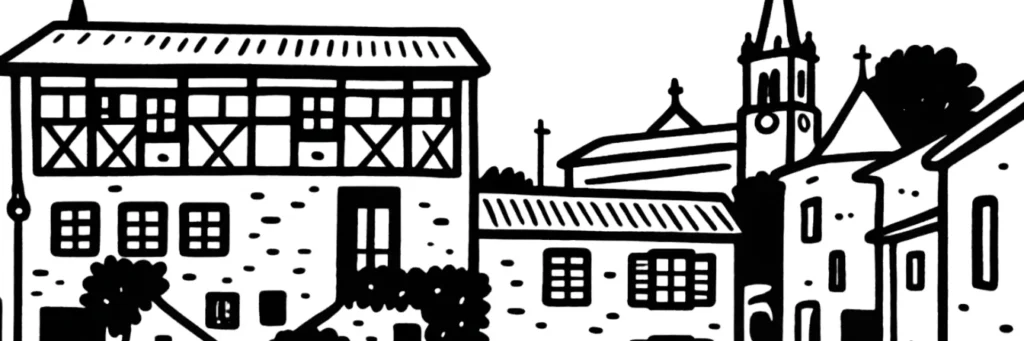
Line drawing of Concarneau: the granite ramparts of the Ville Close on its islet

Mood illustration of Concarneau, its fortified Ville Close and its fishing harbour, in the Finistère.

Property Prices in Concarneau

The 2026 figures· Indicative data
3 566€/m²

In Concarneau, the average price of an apartment stands at 3 566 €/m². That average rests on the sales actually registered before notaries and published in the DVF database. The stock mixes two realities: apartments, often in the town centre and along the coast, and a large body of detached housing that dominates residential districts such as Beuzec-Conq or Lanadan. Houses in Concarneau change hands at a level close to that of apartments, without the premium seen in the most exclusive seaside resorts. A municipal average remains indicative: between an old studio flat in the Ville Close and a house at the Sables Blancs, the gaps in price per square metre are real.

Apartment transactions / year
140
Median price per m²
3 377 €

Prices from the DVF file (Demandes de valeurs foncières, published by the DGFiP), transactions actually recorded at the notary at municipality level. Cross-referenced with the Notaires de France - INSEE indices. Learn more about our methodology.

Market trends and analysis for Concarneau

The Concarneau market rests on its double nature as a town of the sea and a tourist destination. Demand comes both from working people and families settled year-round, and from buyers of second homes drawn by the beaches and the Ville Close. That tourist pressure supports the best located properties, in particular those offering a view or quick access to the shore, while the weight of second homes reduces the supply available to permanent residents. The sectors close to the Sables Blancs and to the centre remain the most sought after.

Supply is split between a dense old centre, more outlying districts of low-rise housing and a few recent developments. As everywhere, energy performance has become a bargaining criterion, in particular on the older buildings of the Ville Close and of the streets of the centre, whose renovation can be costly. The closeness of Quimper, a centre of employment and services, anchors Concarneau in an area that lives all year round, which sets its market apart from that of the purely seasonal resorts of the region.

Concarneau, between Quimper and the Morbihan coast

average €/m²

A town of the sea in the south of the Finistère, Concarneau sits above Quimper and Lorient, two nearby urban centres, but remains below Vannes, dearer on the neighbouring gulf.

MunicipalityTierPrice /m²Gap
Vannes3 938 €+10 %
Concarneau3 566 €ref.
Lorient2 669 €-25 %
Quimper2 180 €-39 %

The history of Concarneau

Concarneau grew up around the Ville Close, the walled town, a fortified islet set at the head of the bay. Its occupation is recorded from the end of the 11th century, when a community of fishermen and merchants settled on the former island of Conq, sheltered from the water. Between the 14th and 16th centuries, the town ringed itself with granite ramparts two to three metres thick, punctuated by towers and pierced by three gates. At stake in the conflicts between the French and English kingdoms in the Middle Ages, the stronghold was reworked and reinforced by Vauban in the 17th century.

The town owes its growth to fishing. From the beginning of the 18th century, the harbour lived to the rhythm of the sardine, pressed into barrels then shipped south. Over the decades Concarneau became one of the leading French fishing ports and a major tuna port. That legacy can still be read in the urban fabric, in the fish auction markets and in the Musée de la Pêche housed inside the ramparts. The town is also home to the oldest marine biology station still working in the world, whose public space, the Marinarium, opens the bay to visitors.

The maritime identity of Concarneau carries on in its collective life. The fête des Filets Bleus, born in 1905 to support the families of sailors hit by a sardine crisis, brings together Breton costumes, music and dance every summer. Today the municipality combines that heritage, a fishing harbour that is still active, shipyards and a tourist trade fed by its beaches and its walled town.
Who buys in Concarneau

Concarneau has about 20 845 inhabitants and forms one of the main towns in the south of the Finistère, between Quimper and the pays de l'Aven. Its housing stock is mixed: apartments in the town centre and near the coast, and detached housing dominating in the districts of Beuzec-Conq, Lochrist or Lanadan. The town attracts varied profiles, local working people tied to fishing, to the shipyards and to services, families settled year-round, retired people won over by the maritime setting, and buyers of second homes drawn by the beaches of the Sables Blancs and of Cornouaille. That diversity of demand explains the coexistence of very different properties on a single market.

Frequently asked questions

For an apartment, the average stands at 3 566 €/m², based on the transactions registered before notaries and compiled in the DVF database. That figure brings together varied properties, from an old studio flat in the Ville Close to a recent apartment close to the beaches. Location, the sea view, the storey and energy performance weigh heavily in the final value. To value a particular property, it is better to rely on comparable sales than on the municipal average alone.

The municipality reads in several sectors. The Ville Close and the town centre, very touristy, concentrate older houses and apartments, with the harbour immediately at hand. The Sables Blancs and Maison Blanche sector gives direct access to the beach and remains much in demand. Beuzec-Conq and the districts of Lochrist or Cabellou offer more residential housing, often low-rise. These atmospheres do not sell at the same level.

Concarneau is reached by road from Quimper, some twenty kilometres away, or from Lorient. The town has no railway station of its own: rail services run through the station of Rosporden, linked by BreizhGo coaches. The local Coralie bus network connects the districts to the centre. Quimper-Bretagne airport and the TGV services from Quimper complete the access, which makes the town reachable without depending on the car alone.

The two markets sit side by side. Apartments are found above all in the town centre and along the coast, while houses dominate the residential districts such as Beuzec-Conq. In Concarneau, houses change hands at a level close to that of apartments, without the marked gap seen in some more exclusive resorts. The choice depends above all on your plans: closeness to the shops and to the harbour for an apartment, a garden and quiet for a house.

Part of the territory is exposed to the risk of marine and coastal flooding: this information can be checked in the planning documents and in the statement of risks before any purchase. Letting a furnished tourist rental, common in a seaside town, may be subject to controls at the town hall that are worth anticipating. Finally, the tax treatment of second homes deserves study according to the use you plan for the property.

Value your property in Concarneau

Free valuation in under 2 minutes

Value my property

This analysis is published by Immover, an independent observatory founded by . Data sourced from official sources (DVF, INSEE, Notaries of France).

Estimer mon bien