The immover observatory

Property Prices in Eu2026 property valuation

Updated: January 2026 Sources: DVF · Notaires de France · INSEE · Immover January 2026 · DVF, Notaires de France, INSEE, Immover
In brief

The average price per m² in Eu is 1 880 €/m² for an apartment, based on actual notarised (DVF) sales. About 29 transactions are recorded each year.

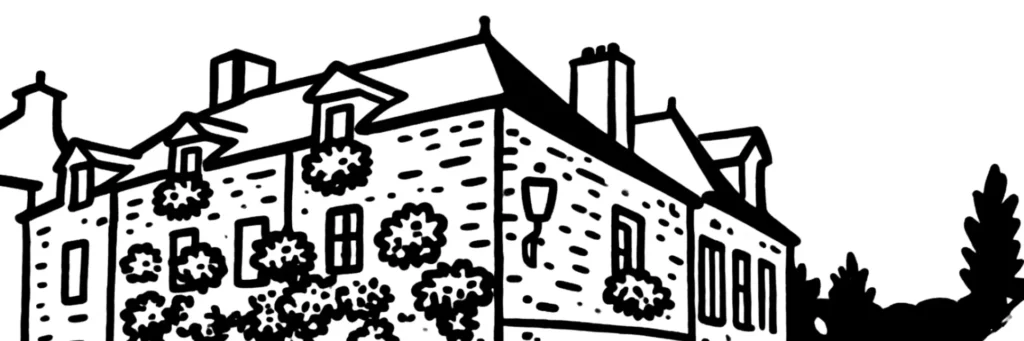
Line illustration of Eu, its Gothic collegiate church, the château des ducs de Guise and the forest in the background

Ambience illustration of Eu, in the Bresle valley, in the Seine-Maritime.

Property Prices in Eu

The 2026 figures· Indicative data
1 880€/m²

The average price for apartments in Eu stands at 1 880 €/m², based on the DVF transactions actually registered before notaries. That average rests on a modest volume, close to thirty transactions a year, and covers a contrasted stock: older town houses in the historic centre, detached houses from the second half of the 20th century and a few blocks of flats near the station. The year of construction, the condition of the property, closeness to the centre and to the Bresle valley make value vary from one address to another. The source remains DVF, that is completed sales, not agency estimates.

Apartment transactions / year
29
Median price per m²
1 873 €

Prices from the DVF file (Demandes de valeurs foncières, published by the DGFiP), transactions actually recorded at the notary at municipality level. Cross-referenced with the Notaires de France - INSEE indices. Learn more about our methodology.

Market trends and analysis for Eu

The Eu market is first of all a market of use, carried by a population that lives there year-round. The demographic decline seen over the past decade, in a municipality of 6 499 inhabitants according to INSEE, weighs on demand and partly explains prices that have stayed measured compared with the nearby coast. Transactions, of the order of thirty a year, rest on resales of town houses and detached houses rather than on new developments, which are rare in a town whose building stock is largely in place. The small share of second homes limits pressure coming from outside.

Several factors could change this market. Industrial employment in the Bresle valley, around luxury glass flacon making, keeps a base of working people and of local housing needs. Heritage tourism, with the chateau, the collegiate church and the forêt d'Eu, and the pull of the Trois Villes Soeurs, sustain a level of visitors that can support certain segments. Conversely, competition from the neighbouring seaside resorts for second homes and the fall in population contain the rise in values. The regional rail service remains an asset for working people.

Eu in the Bresle valley, in the Seine-Maritime

average €/m²

Eu sits at the bottom of the local price scale, clearly below its seaside neighbours on the seafront and a little below the neighbouring sub-prefecture town. Its status as an inland town, lived in year-round, explains most of that gap.

MunicipalityTierPrice /m²Gap
Mers-les-Bains2 884 €+53 %
Le Tréport2 692 €+43 %
Dieppe2 344 €+25 %
Eu1 880 €ref.

The history of Eu

Eu owes its name to the river that runs alongside it, the Bresle, called Ou or Eu in the Middle Ages, from a Germanic root meaning water. The county of Eu, one of the oldest in Normandy, was created at the end of the 10th century by the Norman dukes to guard the frontier with Picardy. The town entered great history in 1050 or 1051, when William, duke of Normandy and future conqueror of England, married Matilda of Flanders there. A frontier stronghold, Eu was then fought over: Philip Augustus took it in 1202, and in 1475 Louis XI had the town burned, the Mardi Piteux, so that it would not fall into English hands.

The heritage of Eu keeps the trace of that past. The collégiale Notre-Dame et Saint-Laurent O'Toole, built between 1186 and 1240, ranks among the great Gothic buildings of Normandy; it recalls the death at Eu, in 1180, of Laurence O'Toole, archbishop of Dublin. At the end of the 16th century, Henri de Lorraine, duke of Guise, and Catherine de Clèves had the present chateau built, in brick and stone, and founded a college entrusted to the Jesuits, whose chapel houses their mausoleum. In the 17th century, the Grande Mademoiselle, Anne Marie Louise d'Orléans, bought the county in 1660 and had the residence enlarged.

The chateau took on a national dimension in the 19th century. The future king Louis-Philippe inherited it in 1821; once king of the French, he made Eu his summer residence from 1830 to 1848 and received Queen Victoria there twice, in 1843 and 1845, founding episodes of the Franco-British entente. Ravaged by a fire in 1902, the chateau was restored and today houses the musée Louis-Philippe and the town hall. The town also lives from the Bresle valley, the world's leading centre for luxury glass flacon making, and backs onto the forêt domaniale d'Eu, a vast beech forest covering the plateau to the north-east.
Who buys in Eu

Eu has 6 499 inhabitants, a population in slight decline over the past decade. According to INSEE, the French national statistics institute, main residences make up about 83 % of dwellings and second homes only 4,5 %, the profile of a small town lived in year-round, very different from the neighbouring seaside resorts. The stock remains mostly low-rise, with close to 64 % houses against 36 % apartments, and a little over half of households own their home. Buyers are mainly local households, working people from the Bresle valley and the Trois Villes Soeurs, first-time buyers and families looking for a town house at a measured price, alongside a few retired people.

Frequently asked questions

The average price for apartments in Eu is 1 880 €/m², based on the DVF transactions actually completed before notaries. That average, calculated on a small number of annual sales, covers appreciable gaps depending on the condition of the property, the year of construction and closeness to the historic centre. A renovated town house and an older dwelling in need of work are not at the same price level.

The market is dominated by the house, which accounts for close to 64 % of the stock according to INSEE, from the town houses of the old centre to the detached houses on the outskirts. Apartments, about a third of dwellings, are concentrated near the station and in a few buildings in the centre, and mainly interest first-time buyers and smaller budgets. For a family looking for land, the supply of houses remains the widest.

Eu has a station on the TER line linking Le Tréport to Beauvais and Abbeville, which connects it to the regional network. Le Tréport and its beach are 4 kilometres away, Mers-les-Bains five: the three municipalities form the Trois Villes Soeurs, straddling Normandy and Picardy. Dieppe, a sub-prefecture town, lies less than about thirty kilometres away by road.

Eu is an inland town, backing onto the Bresle and its forest, whereas Le Tréport and Mers-les-Bains are seaside resorts on the seafront. The presence of the beach, demand for second homes and the view over the Channel pull the prices of those two neighbours upwards. In Eu, the market remains carried by local buyers and by a majority of main residences, which contains values.

The Bresle valley, of which Eu is one of the hubs, is the world's leading centre for luxury glass flacon making, an industry that employs across the valley and anchors working people locally. The town also lives from its heritage, with the château des ducs de Guise, now the musée Louis-Philippe, the Gothic collegiate church and the forêt domaniale d'Eu, which draw visitors from the surrounding area.

Value your property in Eu

Free valuation in under 2 minutes

Value my property

This analysis is published by Immover, an independent observatory founded by . Data sourced from official sources (DVF, INSEE, Notaries of France).

Estimer mon bien