The immover observatory

Property Prices in Fécamp2026 property valuation

Updated: January 2026 Sources: DVF · Notaires de France · INSEE · Immover January 2026 · DVF, Notaires de France, INSEE, Immover
In brief

The average price per m² in Fécamp is 2 190 €/m² for an apartment, based on actual notarised (DVF) sales. About 105 transactions are recorded each year.

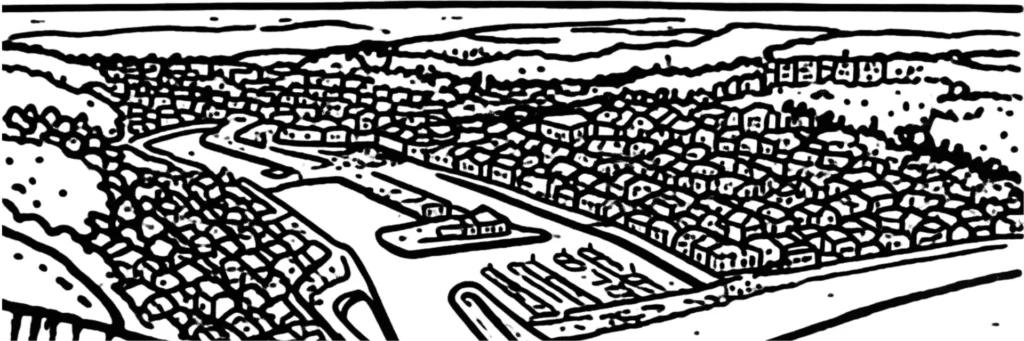
Line drawing of Fécamp: harbour basins lined with quays and the abbey church of the Trinité

Atmospheric illustration of Fécamp, a port on the Côte d'Albâtre in the Seine-Maritime department.

Property Prices in Fécamp

The 2026 figures· Indicative data
2 190€/m²

In Fécamp, an apartment sells on average for 2 190 €/m², a benchmark drawn from sales signed before notaries and published in DVF data, the French notarised sales database, not from asking prices in listings. The calculation rests on 121 apartment sales, a pace of around 105 transactions a year: for a town of this size, the sample is large enough to describe the flat market without mistaking it for a handful of isolated sales. These apartments are found mainly around the port and in the rebuilt or older town centre, in brick and flint town buildings, post-war residential blocks and a few more recent developments facing the basins. Houses remain very present, with 322 recorded sales, on the slopes framing the Valmont valley and in the neighbourhoods of the plateau.

Apartment transactions / year
105
Median price per m²
2 062 €

Prices from the DVF file (Demandes de valeurs foncières, published by the DGFiP), transactions actually recorded at the notary at municipality level. Cross-referenced with the Notaires de France - INSEE indices. Learn more about our methodology.

Market trends and analysis for Fécamp

The Fécamp market rests on an economy that renewed itself after the end of the great cod fishery. The offshore wind farm, 71 turbines installed more than 13 kilometres off the coast and completed in 2024, has made the port the supervision and maintenance base for the site, with around a hundred permanent jobs announced. Added to this are tourism, driven by the Palais Bénédictine, Les Pêcheries and the proximity of Étretat, as well as pleasure boating and inshore fishing. This economic base supports steady local demand, supplemented by second-home buyers.

On the supply side, part of the older housing stock in the centre needs work, particularly on insulation and heating, and the energy performance certificate (DPE) weighs more and more on negotiations. Homes rated F or G face restrictions on letting, which pushes some sellers to lower their price or renovate before putting the property on the market. Conversely, an apartment in good condition near the port, or a house with a garden on the heights, sells within reasonable timeframes. With a population in slight decline, the stability of the market rests mainly on this coastal appeal and on the Le Havre employment area.

Fécamp, between the pays de Caux and the estuary

average €/m²

Fécamp sits at the level of Yvetot, its inland neighbour in the pays de Caux, and remains below Le Havre as well as Saint-Romain-de-Colbosc, a sought-after residential municipality on the edge of the Le Havre conurbation.

MunicipalityTierPrice /m²Gap
Saint-Romain-de-Colbosc2 784 €+27 %
Le Havre2 369 €+8 %
Yvetot2 197 €0 %
Fécamp2 190 €ref.

The history of Fécamp

Fécamp first grew up around its abbey. The Dukes of Normandy made it one of their seats of power: Richard I died there in 996, and his son Richard II settled a Benedictine community there that became the richest monastery in the duchy. The relic of the Precious Blood, kept in the abbey church of the Trinité, drew pilgrims from across the region for centuries. Occupied by the English from 1410 to 1449 during the Hundred Years' War, the town has kept from this medieval period an abbey church on the scale of a cathedral, still at the heart of the centre.

The port then took over from the abbey. For generations Fécamp fitted out ships for the great cod fishery on the Grand Banks of Newfoundland, an activity that peaked in 1903 with 73 cod-fishing vessels, then died out in the 1970s when Canada restricted access to its waters. Shipyards, fish-drying works and quayside trades long set the rhythm of life in the lower town. This memory has been told since December 2017 at the Les Pêcheries museum, housed in a former fish-processing plant facing the basins.

In the nineteenth century, a Fécamp merchant, Alexandre Le Grand, launched the Bénédictine liqueur in 1863, drawing on a recipe presented as inherited from the monks. To produce it he had the Palais Bénédictine built, designed by the architect Camille Albert: begun in 1882, ravaged by fire in 1892, it was rebuilt and inaugurated in 1900. Its mix of Gothic Revival and Renaissance Revival styles still marks the skyline of the town. Finally, Fécamp sits in a notch of the Côte d'Albâtre, between two chalk cliffs, where the Valmont meets the Channel, which explains its elongated shape stretching between the port, the valley and the plateaux of the pays de Caux.
Who buys in Fécamp

Fécamp has 17 313 inhabitants, a population that has declined slightly in recent years. The town acts as a service centre for the coast between Étretat and Saint-Valery-en-Caux: shops, schools, healthcare facilities and port activities. The housing stock mixes old town houses, detached houses on the slopes and apartments in the centre, some of which serve as second homes or seasonal lets for buyers drawn by the sea. Purchasers are households from the pays de Caux and the Le Havre conurbation, workers linked to the port and to offshore wind, and outside buyers looking for a foothold on the coast on a tighter budget than on the Côte Fleurie. This mixed demand explains why a well-located apartment, with a view or close to the basins, finds a buyer faster than a home with no outdoor space far from the centre.

Frequently asked questions

Notarised sales published in DVF data put apartments in Fécamp at around 2 190 €/m². This level corresponds to the market of a mid-sized coastal town, without the runaway effect seen in the most sought-after seaside resorts of Normandy. The spread around this average is real: a renovated apartment with a view of the port or the sea sells well above an older home needing refreshment in a street with no open outlook. To position your property, the Immover online valuation starts from this benchmark and adjusts it to its features.

The port area and the centre, around the abbey church and the shopping streets, account for most of the apartments and for the demand for pied-à-terre homes. The seafront, backed by the cliffs, offers sought-after views but a limited housing stock. The slopes and the plateau sectors are home mainly to houses with gardens, more in demand among families. The Valmont valley, heading inland, has a more mixed fabric, combining older housing, public facilities and businesses.

Fécamp station is linked to Le Havre by TER Normandie regional trains running via Bréauté-Beuzeville, with a journey of around 42 minutes on direct trains. Bréauté-Beuzeville lies on the Paris - Le Havre line, which allows connections towards Rouen and Paris. The frequency remains that of a regional line, with around a dozen direct trains a day on weekdays according to SNCF. In practice, many workers combine the car and the train to reach the Le Havre area.

The two coexist, but houses weigh more in volume, with 322 recorded sales. Per square metre, they sell at a level very close to apartments, around 2 220 €/m², which sets Fécamp apart from municipalities where the gap is marked. The choice therefore turns more on lifestyle than on price: garden and space on the slopes, proximity to the port and shops in an apartment. The condition of the building and its energy performance then make most of the difference.

On the Côte d'Albâtre, the chalk cliffs are retreating through erosion, and properties close to the edge receive particular attention. At the bottom of the valley, the Valmont and run-off from the plateau can also expose some sectors to flooding. The risk statement attached to every preliminary sale agreement sets out the situation of each address: it deserves a careful reading, as do the planning rules in force. Finally, around the abbey church, a protected monument, exterior works may require the opinion of the Architectes des Bâtiments de France, the state heritage architects.

Value your property in Fécamp

Free valuation in under 2 minutes

Value my property

This analysis is published by Immover, an independent observatory founded by . Data sourced from official sources (DVF, INSEE, Notaries of France).

Estimer mon bien