The immover observatory

Property Prices in Fréhel2026 property valuation

Updated: January 2026 Sources: DVF · Notaires de France · INSEE · Immover January 2026 · DVF, Notaires de France, INSEE, Immover
In brief

The average price per m² in Fréhel is 4 173 €/m² for an apartment, based on actual notarised (DVF) sales. About 14 transactions are recorded each year.

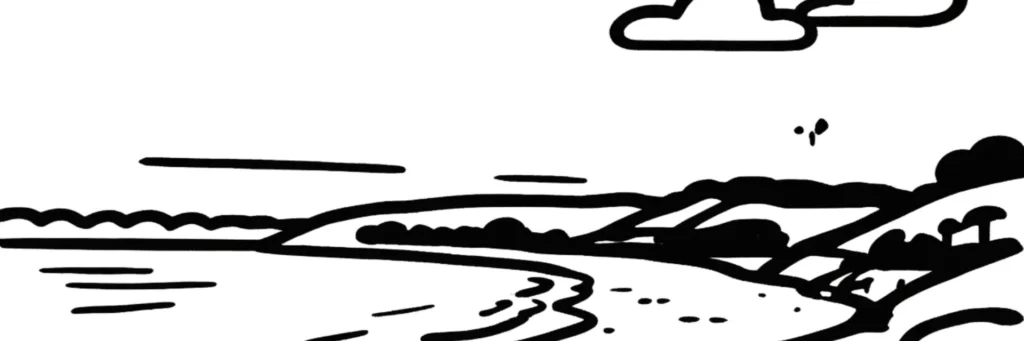
Line drawing of Fréhel: the pink schist cliffs of the cap Fréhel overlooking the Channel

Mood illustration of Fréhel, a coastal municipality of the côte d'Émeraude, between cap Fréhel and Sables-d'Or-les-Pins, in the Côtes-d'Armor.

Property Prices in Fréhel

The 2026 figures· Indicative data
4 173€/m²

The average price recorded in Fréhel stands at 4 173 €/m². That average brings together a housing stock split between a majority of individual houses, spread across the old village and the rural hamlets, and apartments concentrated in the developments of the Sables-d'Or-les-Pins resort. The gaps around this average come from the type of property, the floor area, the condition, the plot and above all the distance to the coast: properties close to the sea or to the seaside resort trade well above properties set in the hinterland. The weight of second homes in the housing stock also bears on the price level, tourist demand and seasonal letting investment adding to ordinary residential demand. These figures come from the DVF database, which records the sales actually signed before notaries, and give a municipality-wide benchmark to be refined property by property.

Apartment transactions / year
14
Median price per m²
4 432 €

Prices from the DVF file (Demandes de valeurs foncières, published by the DGFiP), transactions actually recorded at the notary at municipality level. Cross-referenced with the Notaires de France - INSEE indices. Learn more about our methodology.

Market trends and analysis for Fréhel

The property market of Fréhel is shaped by its status as a coastal municipality of the côte d'Émeraude, where more than half of the housing stock is made up of second homes. Demand comes in large part from buyers outside the department, drawn by the closeness of the cap Fréhel, the fort la Latte and the Sables-d'Or-les-Pins resort, and looking for a holiday home or a seasonal letting investment. That demand, concentrated on properties close to the coast and the beaches, pulls prices upwards and sets the municipality apart from the more rural sectors inland.

Supply remains constrained by the scarcity of buildable land by the sea and by the protection of the natural site of the cap Fréhel, which limits development in the immediate surroundings of the coast. Properties at Sables-d'Or-les-Pins or in the sectors close to the beaches trade above the municipal average, while properties further from the coast, towards the interior, remain more affordable. The condition of the property, its view, its distance to the sea and its purpose, main or second home, are the main points of negotiation on this seasonal market.

Fréhel, on the côte d'Émeraude of the Côtes-d'Armor

average €/m²

On this prized coast between Saint-Malo and Saint-Brieuc, Fréhel sits below Saint-Cast-le-Guildo and Dinard, which are more highly rated, but clearly above Lamballe-Armor, turned more towards the interior.

MunicipalityTierPrice /m²Gap
Dinard5 839 €+40 %
Saint-Cast-le-Guildo4 746 €+14 %
Fréhel4 173 €ref.
Lamballe-Armor2 323 €-44 %

The history of Fréhel

Fréhel has carried since 2004 the name it inherited from an earlier merger. Before that date, the municipality was called Pléhérel, an old Breton name designating the parish of a man named Hirel. In 1972, Pléhérel merged with the neighbouring municipality of Plévenon to form a single municipality named Fréhel, after the cap Fréhel that overlooks the rocky point close by. That administrative association lasted more than thirty years, until its dissolution at the end of 2004: Plévenon then became a separate municipality again, while the former Pléhérel kept the name Fréhel. The cape that gave the municipality its name thus lies, since that separation, on the territory of Plévenon, as does the fort la Latte next to it, but the two sites remain inseparable from the geographic and tourist identity of Fréhel.

The built heritage of Fréhel carries the mark of its religious history and of its tourist rise in the 20th century. The chapelle Saint-Sébastien, in the Gothic style, dates from the 16th century and has been listed as a monument historique, a protected heritage building, since 1928. The église Saint-Hilaire, rebuilt in the 19th century, completes this set along with the chapelle du Vieux Bourg, restored in the early 2000s. A few kilometres away, on the neighbouring territory of Plévenon, the fort la Latte, a medieval fortress raised in the 14th century by Étienne III Goyon and reworked as a coastal fort in the 17th and 18th centuries, and the lighthouse of the cap Fréhel, built under Louis XIV, complete this shared heritage landscape. The seaside hamlet of Sables-d'Or-les-Pins, created from 1921 by the developer Roland Brouard on former dunes, adds to the heritage of the municipality its villas and its casino of the 1920s.

Fréhel belongs to the department of the Côtes-d'Armor, in Brittany, some thirty kilometres north-west of Dinan. Set on the côte d'Émeraude, between Saint-Malo to the east and Saint-Brieuc to the west, the municipality is served by the departmental roads that run along the coast and lies close to the station of Lamballe, connected to the national rail network. From a rural municipality organised around its old village of Pléhérel, Fréhel became over the course of the 20th century a sought-after seaside destination, carried by the fame of the neighbouring cap Fréhel and by the continuous growth of the Sables-d'Or-les-Pins resort, which holds a large share of the second-home stock of the municipality.
Who buys in Fréhel

Fréhel has 1 611 inhabitants according to INSEE, the French national statistics institute. The housing stock of the municipality is dominated by second homes, which account for more than half of the total, a proportion clearly above the average of the Côtes-d'Armor municipalities and typical of the Breton coast. Main residences remain in the minority, despite a high rate of owner occupation among the year-round inhabitants. This profile attracts above all buyers of holiday homes, often from other regions, drawn by the closeness of the cap Fréhel and of the Sables-d'Or-les-Pins resort, along with investors turned towards seasonal letting. Families settled year-round and working people from the local employment area are still present, notably in the village and the hamlets further from the shore, but they deal with a market pulled upwards by second-home demand.

Frequently asked questions

The average price recorded in Fréhel stands at 4 173 €/m², based on the sales registered before notaries and published in the DVF database. That figure brings together varied properties, houses as well as apartments, across the whole municipal territory. The type of property, the floor area, the condition, the distance to the coast and the aspect explain most of the gaps around this average. For a reliable valuation, it is better to rely on sales of comparable properties than on the municipal average alone.

Fréhel has no station on its territory; the nearest station, at Lamballe, is connected to the national rail network. The municipality is served above all by the departmental roads that run along the côte d'Émeraude between Saint-Malo and Saint-Brieuc, some thirty kilometres north-west of Dinan. That position, away from the main motorways, contributes to the preserved character of the coast and weighs on the travel time for buyers coming from further afield. The tourist appeal of the region nonetheless offsets this relative distance from the infrastructure.

Fréhel combines a village of rural origin, inherited from the former Pléhérel, with a coastal front marked by the Sables-d'Or-les-Pins resort and the closeness of the cap Fréhel, whose pink schist cliffs are among the highest in Brittany. The living environment thus alternates between a hinterland that is still farmed and a seafront that is very busy in the summer season. This duality shapes a property market where the location, close to or far from the shore, weighs heavily on the value of properties. Buyers find there a compromise between rural quiet and the seasonal bustle of the coast.

The housing stock of Fréhel is very largely made up of individual houses, spread across the old village, the rural hamlets and the villas of Sables-d'Or-les-Pins. Apartments remain in the minority and are concentrated above all in the developments of the seaside resort, prized for use as a second home or for seasonal letting. Buying a house matches the dominant profile of the municipality, often with a plot attached. An apartment, more affordable as an entry budget, suits a coastal pied-à-terre project better.

The village of Fréhel, the former centre of Pléhérel, holds most of the local shops and services, in a more rural setting. The Sables-d'Or-les-Pins resort holds the villas of the 1920s and the developments closest to the beach, much sought after as second homes. Between the two, several hamlets and more recent estates offer a compromise between distance to the coast and access to the services of the village. The choice of sector depends above all on the project, a year-round main residence or a holiday pied-à-terre, and on the budget available.

Value your property in Fréhel

Free valuation in under 2 minutes

Value my property

This analysis is published by Immover, an independent observatory founded by . Data sourced from official sources (DVF, INSEE, Notaries of France).

Estimer mon bien