The immover observatory

Property Prices in Fresnes, Val-de-Marne2026 property valuation

Updated: January 2026 Sources: DVF · Notaires de France · INSEE · Immover January 2026 · DVF, Notaires de France, INSEE, Immover
In brief

The average price per m² in Fresnes is 3 281 €/m² for an apartment, based on actual notarised (DVF) sales. For a house or villa, it is 5 156 €/m². About 219 transactions are recorded each year.

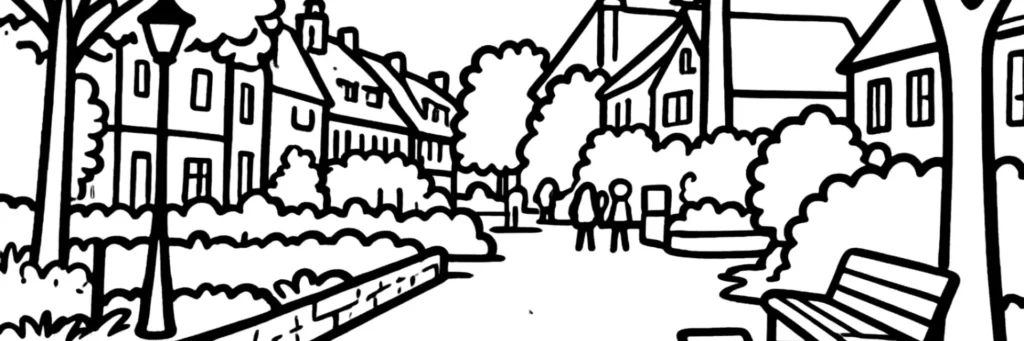
Line drawing of detached houses and low-rise blocks along the Bièvre, with the bell tower of the church of Saint-Éloi

Mood illustration of Fresnes, in the Val-de-Marne.

Property Prices in Fresnes

The 2026 figures· Indicative data
3 281€/m²

The average price in Fresnes stands at 3 281 €/m² for apartments. That value comes from the DVF database, which records sales actually registered before notaries. The average covers a housing stock overwhelmingly made up of flats, where the post-war housing estates built between 1955 and 1967, La Peupleraie, Les Gémeaux or La Vallée aux Renards, weigh heavily in the volumes traded. Houses, far rarer, trade at a markedly higher level, around 5 156 €/m². Internal gaps come mainly from the age of the buildings, the closeness of the A6 and A86 motorways and the distance to the Antony stations.

House : 5 156 €/m²

Apartment transactions / year
219
Median price per m²
3 137 €

Prices from the DVF file (Demandes de valeurs foncières, published by the DGFiP), transactions actually recorded at the notary at municipality level. Cross-referenced with the Notaires de France - INSEE indices. Learn more about our methodology.

Market trends and analysis for Fresnes

Demography supports the market. The municipality has gained around 6 % more inhabitants since 2017, reaching 29 528 residents, on a territory of 3,58 km² already largely built up. That tension between demand and available land limits new schemes and concentrates trading on the existing stock, in particular the condominiums built between 1955 and 1967. Road access, with the A6 and A86 interchanges, remains a driver for households working in the southern Paris region, notably around the Rungis wholesale market platform, an immediate neighbour.

The second driver is the price gap with the south of the Hauts-de-Seine. Fresnes adjoins Antony and sits a few minutes from Bourg-la-Reine and Sceaux, better served by the RER B, where the square metre costs appreciably more. Part of the demand switches to Fresnes to gain floor space on the same budget. The improvement of local services, with the opening in June 2024 of the Chevilly-Larue station on Line 14 a few kilometres to the east, strengthens the appeal of this southern edge of the Val-de-Marne, without any immediate mechanical effect on prices.

Fresnes in the south of the Val-de-Marne

average €/m²

Fresnes stays behind its neighbouring municipalities in the south of the Hauts-de-Seine, such as Antony or Sceaux, better linked to Paris by the RER B. Its price level comes closer to that of Vitry-sur-Seine, further east in the Val-de-Marne.

MunicipalityTierPrice /m²Gap
Sceaux6 043 €+84 %
Antony5 096 €+55 %
Vitry-sur-Seine3 998 €+22 %
Fresnes3 281 €ref.

The history of Fresnes

The name Fresnes comes from the Latin fraxinum, the ash tree, and appears in the texts in the 12th century, notably in the cartulary of the abbey of Longpont. A papal bull of 1152 placed the parish under the protection of the Church, and the church of Saint-Éloi dates from that period. The territory was then shared between the seigneuries of Fresnes, Tourvoie and Berny. In the 17th century, Pierre II Brûlart, Secretary of State, brought together the fiefs of Fresnes and Berny, then around 1640 entrusted the architect François Mansart with the building of the château de Berny. Three inspection shafts of the aqueduc Médicis, numbered 3, 4 and 5, survive in the municipality.

Fresnes remained a farming village until the end of the 19th century. In 1900, out of 341 hectares of territory, the built-up area covered only ten of them, with around 125 houses. The decision taken in 1892 to set up a prison there changed everything: built between 1895 and 1900 by the architect Henri Poussin, the establishment opened in 1898 and pushed the population up to 2 379 inhabitants. Its layout, known as the telegraph pole plan, with wings at right angles to a central gallery, served as a model for other establishments, in Marseille as in New York. It was the first Paris prison built outside Paris, in a village of the southern suburbs.

Urbanisation then accelerated in two waves. The first housing developments came out of the ground in the 1930s under the effect of the loi Loucheur, and the population rose from 3 688 inhabitants in 1926 to 6 023 in 1936. Then, between 1955 and 1967, the post-war estates multiplied: Tourvoie, Val-de-Bièvre, La Butte Fleurie, Le Clos de la Garenne, La Peupleraie, Les Gémeaux, La Vallée aux Renards, La Fresnaie. The church of Notre-Dame-de-la-Merci was built in 1960. The cutting of the A6 and A86 motorways splits the 3,58 km² of the municipality into separate sectors. The Bièvre footbridge in 1992, the media library in 1999 and then the refurbishment of the municipal health centre in 2006 completed the town's facilities.
Who buys in Fresnes

Fresnes has 29 528 inhabitants and its population has grown by around 6 % since 2017. According to INSEE, the French national statistics institute, 85,4 % of dwellings are apartments and 92,8 % of the stock is occupied as a main residence: the market is driven by buyers who come to live there, not by second homes. Again according to INSEE, 48,8 % of households own their home, close to parity with renting. Buyers are mainly families and first-time buyers looking for affordable floor space a dozen kilometres from Paris, along with households from the neighbouring municipalities of the Hauts-de-Seine, where the square metre costs more.

Frequently asked questions

In Fresnes, the average price of apartments comes out at 3 281 €/m². That figure is calculated from DVF data, the record of sales actually registered before notaries, on a base of 237 transactions in 2025. It is a municipal average: a renovated home close to the centre and an apartment in a 1960s housing estate both depart markedly from that value.

Yes. Houses in Fresnes trade at around 5 156 €/m², a level well above that of apartments. The detached stock is limited: according to INSEE, 85,4 % of the municipality's dwellings are apartments. That scarcity, combined with demand from families looking for a garden a dozen kilometres from Paris, explains the gap seen on house sales.

No station lies within the municipal territory. Fresnes is served by RATP bus lines 184, 186, 187, 286 and 396, by the night line N62 and by the Trans-Val-de-Marne, extended to La Croix de Berny in 2007. The RER B stations at Antony and La Croix de Berny, along with the Chemin d'Antony halt on the RER C, are the nearest rail access points. Feeder bus time weighs on the value of the most distant homes.

They weigh above all on sale volumes. The blocks built between 1955 and 1967, such as La Peupleraie, Les Gémeaux, La Vallée aux Renards or Le Clos de la Garenne, account for a large share of the homes put back on the market each year. Their weight pulls the municipal average down compared with the neighbouring municipalities of the Hauts-de-Seine. The detached sectors that came out of the 1930s developments sit, for their part, above that average.

The 3,58 km² territory is crossed by the A6 and A86 motorways, which cut it into separate sectors. Exposure to road noise therefore varies sharply from one street to another: a visit on site at several times of the day is useful. In the 1960s condominiums, look at the condition of the common areas, the level of service charges, the works voted through and the energy performance certificate, often unfavourable on those generations of building.

Value your property in Fresnes

Free valuation in under 2 minutes

Value my property

This analysis is published by Immover, an independent observatory founded by . Data sourced from official sources (DVF, INSEE, Notaries of France).

Estimer mon bien