The immover observatory

Property Prices in Gagny2026 property valuation

Updated: January 2026 Sources: DVF · Notaires de France · INSEE · Immover January 2026 · DVF, Notaires de France, INSEE, Immover
In brief

The average price per m² in Gagny is 3 212 €/m² for an apartment, based on actual notarised (DVF) sales. About 158 transactions are recorded each year.

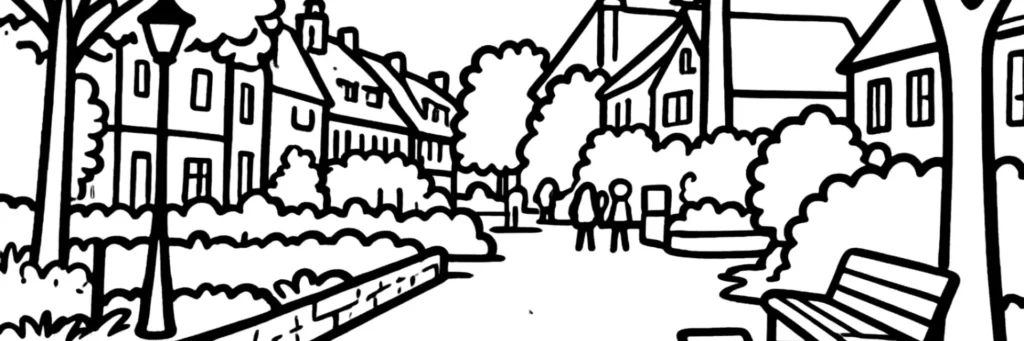
Line drawing of Gagny: wooded hillsides of eastern Paris overlooking the valley of the Marne

Mood illustration of Gagny, on the hillsides of eastern Paris in the Seine-Saint-Denis.

Property Prices in Gagny

The 2026 figures· Indicative data
3 212€/m²

The average price recorded in Gagny stands at 3 212 €/m². That average covers a balanced housing stock, at the hinge between the detached fabric of the hillsides and the apartment blocks of recent decades: according to INSEE, the French national statistics institute, apartments account for 53,9 % of dwellings and houses for 46,1 %, a high proportion of houses for a municipality of the Seine-Saint-Denis. That weight of detached housing pulls part of the market upwards, the average price recorded on houses and villas coming out at 3 932 €/m². Position on the hillside or in the valley, the age of the buildings and closeness to the stations widen the gaps. The figures come from the DVF database, which records the transactions actually registered before notaries.

Apartment transactions / year
158
Median price per m²
3 109 €

Prices from the DVF file (Demandes de valeurs foncières, published by the DGFiP), transactions actually recorded at the notary at municipality level. Cross-referenced with the Notaires de France - INSEE indices. Learn more about our methodology.

Market trends and analysis for Gagny

The Gagny market reads within the frame of the Grand Paris to the east. About ten kilometres from Paris and well linked by the RER E, the municipality captures demand from families looking for a house with a garden at a more measured price than in the nearby municipalities of the Val-de-Marne, where the square metre climbs markedly higher. That intermediate position supports prices without overheating them: Gagny sits above the most affordable municipalities of the north-eastern inner ring and below the most expensive centres along the Marne. The high share of owner-occupiers, 59,3 % according to INSEE, also limits turnover and tightens a market where the supply of houses stays scarce.

Several medium-term factors bear on this sector. The arrival of Line 16 of the Grand Paris Express in the neighbouring municipalities, at Chelles and at Clichy-Montfermeil, improves access across the whole east of the Seine-Saint-Denis and may spread part of its appeal towards Gagny. Conversely, the age of a large share of the stock, with more than half of dwellings built before 1971 according to INSEE, puts energy retrofitting at the heart of negotiations, above all on apartments. The detached housing of the hillsides, rarer and more sought after, remains the tightest segment.

Gagny on the hillsides of eastern Paris, in the Seine-Saint-Denis

average €/m²

A detached-housing municipality in the east of the Seine-Saint-Denis, Gagny sits in the upper middle of its immediate inner-ring neighbours, above Bondy and Livry-Gargan and below Rosny-sous-Bois, without reaching the more expensive centres along the Marne.

MunicipalityTierPrice /m²Gap
Rosny-sous-Bois3 732 €+16 %
Gagny3 212 €ref.
Livry-Gargan3 080 €-4 %
Bondy2 977 €-7 %

The history of Gagny

The name comes from the Latin Ganniacum, recorded in the Middle Ages in the forms Guagniacum then Gaigny. A priory was founded there in the 11th century by Adèle de Champagne, and in the 13th century the place formed the fief of Étienne de Gagny. For a long time the municipality remained a farming village terraced on the slope bordering the plateau of the former forest of Bondy, overlooking the valley of the Marne. The marl and limestone subsoil, rich in gypsum, was worked there from early on in plaster stone quarries, first open-cast then in galleries, which would lastingly mark the relief and the subsoil of the town.

The 19th century transformed Gagny. The Paris to Strasbourg railway line crosses the municipality and a station was brought into service there as early as 1849, which accelerated the working of the gypsum: the plaster extracted from the local quarries then left for more distant markets. Baron Roger, owner of the quarries, was behind the widening of the canal and the building of the château du Chesnay, whose name is found again in the Chénay sector. In 1869, part of the territory of Gagny was detached to form the new municipality of Le Raincy.

At the turn of the 20th century, rail service made Gagny a residential suburb: the former farmland and the abandoned quarries gave way to detached housing developments that shape a large part of the present urban fabric. Growth continued after the war, with the arrival of apartment schemes that complete the detached fabric without erasing it. The population has kept rising in the recent period, going from around 39 000 inhabitants in the middle of the 2010s to 42 313 inhabitants at the 2023 census, under the effect of residential pressure from the Grand Paris to the east.
Who buys in Gagny

According to INSEE, the French national statistics institute, Gagny has 42 313 inhabitants and a housing stock clearly dominated by main residences, at 93,8 %, against 0,9 % second homes: people buy here to live, not for a pied-à-terre. Among households, 59,3 % own their home and 40,7 % rent, a share of owner-occupiers above the department average. The stock splits roughly evenly between apartments (53,9 %) and houses (46,1 %), which draws two buyer profiles: families looking for a house with a garden on the hillsides, often movers from Paris or the inner ring, and first-time buyers or more modest households on the apartment segment, sensitive to the RER service and to prices more measured than in the neighbouring municipalities of the Val-de-Marne.

Frequently asked questions

The average price recorded is 3 212 €/m², calculated from the transactions registered before notaries and published in the DVF database. It is a municipal average, which blends the apartment of the valley and the house of the hillsides. The average price recorded on houses and villas reaches 3 932 €/m². The sector, the age of the property, its condition and its closeness to a station explain most of the gaps. A reliable valuation rests on recent comparable sales, not on the town's average alone.

The municipality is terraced between the valley of the Marne, to the south along the canal de Chelles, and the hillsides rising towards the plateau, up to nearly 120 metres in altitude. Upper Gagny, around the Chénay and the older developments, is clearly detached in character, with sought-after houses and plots. The lower part and the surroundings of the stations mix older detached houses and apartment blocks. These housing patterns, plus the relief and the distance to a station, do not sell at the same level.

Gagny is served by two RER E stations, Gagny and Le Chénay-Gagny, on the line from Paris-Est towards Chelles and the eastern Paris region, which reach the gare de l'Est in about twenty minutes. Bus lines, including RATP line 121 and the Noctilien N23, complete local services. The municipality is also close to Chelles, its neighbour to the east, whose station will take Line 16 of the Grand Paris Express, which strengthens the appeal of this whole sector of eastern Paris.

More so than elsewhere in the Seine-Saint-Denis. According to INSEE, houses account for 46,1 % of dwellings, against 53,9 % apartments, a balance that is rare for the department. These houses, often development homes from the early or middle 20th century, are concentrated on the hillsides. The average price recorded on houses and villas, at 3 932 €/m², sits above the municipal average: condition, plot size, aspect and the view over the valley then weigh more than the town's average price.

The mining past of Gagny is a point to watch. The old working of gypsum left underground quarries, and part of the territory is concerned by a ground movement risk linked to those cavities, framed by the State services. Before buying, it is worth checking whether the property lies in a risk zone and consulting the statement of risks attached to the sale file. As everywhere, the compulsory surveys and local taxation should be examined ahead of a transaction.

Value your property in Gagny

Free valuation in under 2 minutes

Value my property

This analysis is published by Immover, an independent observatory founded by . Data sourced from official sources (DVF, INSEE, Notaries of France).

Estimer mon bien