The average price per m² in Guingamp is 2 831 €/m² for an apartment, based on actual notarised (DVF) sales. About 79 transactions are recorded each year.

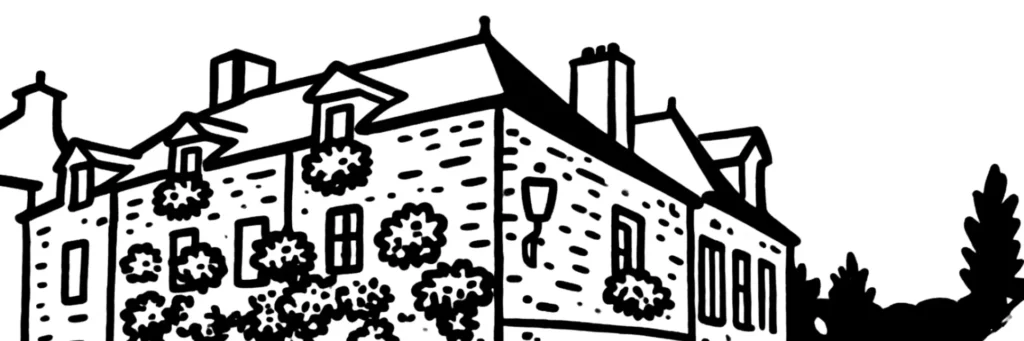
Mood illustration of Guingamp, a Breton medieval town, in the Côtes-d'Armor.
In Guingamp, the average price for apartments comes out at 2 831 €/m², based on the sales actually registered in the DVF database kept from notarial deeds. A local feature: that level sits above the market for houses. In this small town, the apartments of the historic centre, rarer and often sought after, are negotiated higher than the houses on the outskirts, whereas the opposite holds in most municipalities. The price remains moderate on the Breton scale, far from the coastal resorts, but supported by the role of the town as a centre. Location in the old core, the condition of the property and its energy performance explain most of the gaps. Drawn from transactions signed before notaries, these figures give a reliable municipal benchmark; a precise valuation then rests on comparable sales, examined property by property.
Prices from the DVF file (Demandes de valeurs foncières, published by the DGFiP), transactions actually recorded at the notary at municipality level. Cross-referenced with the Notaires de France - INSEE indices. Learn more about our methodology.
The Guingamp market is that of a main town of inland Brittany, driven by local demand. The apartments of the historic core form a sought-after segment, which explains their price level above that of the houses, a local singularity. Energy performance is establishing itself as a negotiating criterion on the older stock, where the worst rated properties sell at a discount, in particular in the buildings of character in need of renovation.
The appeal of the heritage, the role of sub-prefecture town and the cultural life of the town support demand, without the tension of the coastal markets. For a seller, a property correctly valued and presented finds a buyer within reasonable times, while an over-ambitious price settles on the market. The character of the old centre and the quality of the location remain the main levers of value in the medium term.
Guingamp sits above nearby Saint-Brieuc and within the range of inland Breton towns such as Dinan or Quimper, far from the prices of the coastal resorts.
Guingamp grew at the heart of the Côtes-d'Armor, on the banks of the Trieux, as a stronghold and a town of counts. In the eleventh century, count Étienne made the town a centre of the county of Penthièvre, and Guingamp acquired ramparts of which traces remain. The town is still marked by that medieval past, with its old houses, its square and the line of its walls, witnesses to its historic role in the duchy of Brittany.
The basilica Notre-Dame-de-Bon-Secours dominates the old centre. Its building, spread from the twelfth century to the sixteenth, mixes the Romanesque, Gothic and Renaissance styles, a layering readable on its façades. Long a place of Marian pilgrimage around a Black Virgin, the church was raised to the rank of minor basilica by Pope Léon XIII in 1899. Each summer, the pardon of Notre-Dame-de-Bon-Secours remains a high point in the life of the town.
A sub-prefecture town of the Côtes-d'Armor, Guingamp acts as a centre of services and trade for a wide rural area of inland Brittany. The town also owes part of its renown to its football club, En Avant Guingamp, which long played at the highest national level. Between medieval heritage, cultural life and its role as a local centre, it keeps a strong identity away from the coast.
Guingamp has a little over 7 000 inhabitants and acts as the main town for a rural area of inland Brittany. The property market there is driven by local demand: first-time buyers drawn by measured prices, working households employed in services, in retail and in the administrations of the sub-prefecture town, and buyers won over by the character of the old centre. The town also attracts households looking for a heritage setting and a life of proximity, without the price pressure of the Breton coast. The apartments of the historic core form a particular segment, more sought after than elsewhere, while the houses on the outskirts are aimed above all at families.
The average price for apartments in Guingamp is 2 831 €/m², based on the DVF transactions actually completed before notaries. That average covers varied properties, from the apartment of character in the medieval centre to the more recent dwelling. The condition, the energy performance, the storey and the location in the old core explain the gaps around that value. A reliable valuation rests on comparable sales rather than on the municipal average alone.
It is a local feature. In this small town, the apartments of the historic centre are rare and sought after, which supports their price, while the houses are found rather on the outskirts and change hands at more measured levels. The reverse of the pattern seen in most municipalities comes from the structure of the stock and from the appeal of the old core. That gap can be read in the sales actually registered.
Guingamp remains a moderate market on the Breton scale, nothing like the coastal resorts of the Côtes-d'Armor and of the côte d'Émeraude. Its status as a main town and the character of its heritage nonetheless support demand. For a buyer, the municipality offers a compromise between urban character, the services of a sub-prefecture town and prices more affordable than by the sea.
The market is aimed first of all at a local clientele: first-time buyers, working households employed in services and retail, and families looking for a town house. The apartments of the old centre also attract buyers responsive to the character of the medieval heritage. Demand remains steady, carried by the role of the town in its area and by prices more measured than on the Breton coast.
This analysis is published by Immover, an independent observatory founded by Antony Barbier. Data sourced from official sources (DVF, INSEE, Notaries of France).