The average price per m² in Lannion is 2 336 €/m² for an apartment, based on actual notarised (DVF) sales. About 78 transactions are recorded each year.

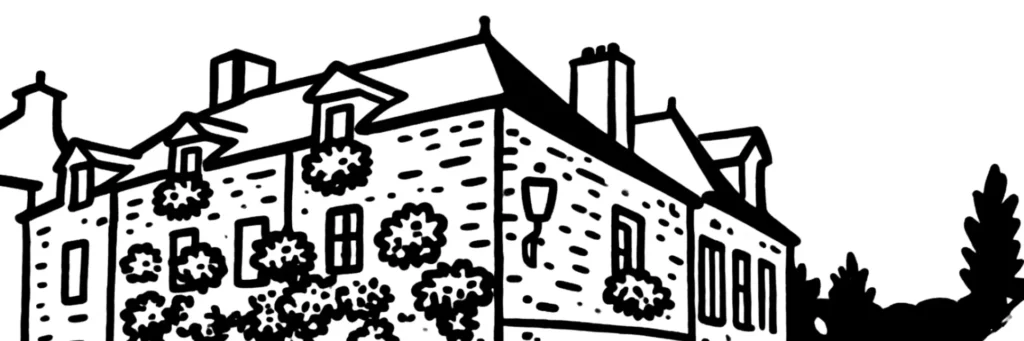
Atmospheric illustration of Lannion, the historic capital of the Trégor area, in the Côtes-d'Armor.
Apartments in Lannion trade at an average of 2 336 €/m², based on sales actually completed and recorded in the DVF database kept by notaries. This is a measured level for a town of this size, consistent with the Côtes-d'Armor market and close to that of comparable Breton towns. A sub-prefecture town and the capital of the Trégor area, Lannion offers a varied stock: half-timbered houses in the old centre, recent apartment buildings and houses on the outskirts. The nearby Trégor coast, a few kilometres away, supports demand and sets the town apart from those further inland. The condition of a property, its energy performance, its location and its view all weigh on the differences in price from one home to another. These values, drawn from sales signed before notaries, give a reliable municipal benchmark; an accurate valuation then relies on comparable sales, studied property by property.
Prices from the DVF file (Demandes de valeurs foncières, published by the DGFiP), transactions actually recorded at the notary at municipality level. Cross-referenced with the Notaires de France - INSEE indices. Learn more about our methodology.
The Lannion market is that of a lively medium-sized town, carried by an employment base linked to technology and by proximity to the coast. Demand remains steady, split between local households and buyers drawn by the Breton setting. Energy performance weighs more and more on the prices of an older stock that can be poorly insulated, where the least efficient homes are negotiated at a discount.
Supply is more plentiful than on the coast itself, which limits pressure and leaves room for negotiation on some properties. For a seller, a home that is correctly valued, renovated and well presented stands out, while an over-ambitious price leaves the property lingering on the market. The vitality of the technology park and the tourist appeal of the Trégor area are the main drivers of value in the medium term.
Lannion shows moderate prices, in line with the medium-sized towns of the Côtes-d'Armor and of neighbouring Finistère, far below the levels of the region's seaside resorts.
Lannion is the historic capital of the Trégor area, developed around a ford that allowed people to cross the Léguer, the coastal river that runs through the town. Its old centre still has half-timbered houses and, on the heights above, the church of Brélévenez, reached by a long stone stairway.
The town owes its present character to telecommunications. In 1960 the Centre national d'études des télécommunications, the CNET, set up here, a laboratory that produced major innovations in the sector. A technology park grew up around it, now called Anticipa, which has attracted well-known electronics firms and engineering schools, to the point of being nicknamed a small Breton Silicon Valley.
The telecommunications crisis of the 1980s hit this fabric hard, before a shift towards opto-electronics and photonics. Lannion today remains a centre of employment and higher education of some twenty thousand inhabitants, at once a town of history and a technology hub with an international outlook.
Lannion has a population of around 20 000 and acts as a centre of employment and study for the whole Trégor area. The local property market is driven by local households: families looking for a house with a garden, people working in technology and services, and first-time buyers drawn by contained prices. The presence of higher-education institutions feeds steady rental demand. Proximity to the coast also appeals to buyers looking for a Breton setting, whether as a main or a second home.
The average price of apartments in Lannion is 2 336 €/m², based on DVF transactions actually completed before notaries. This average covers a wide range of properties, from the older apartment in the centre to the recent home on the outskirts. The floor level, the general condition, the energy performance and the location explain the differences around this figure. A reliable valuation rests on comparable sales rather than on the municipal average alone.
Lannion follows the trends of medium-sized Breton towns, with demand supported by local employment and by the appeal of the coast. Energy performance plays a growing role in negotiations, with poorly insulated homes selling at a discount. To place a specific property within this pattern, it is better to rely on recent sales of comparable homes.
The historic centre, with its half-timbered houses, and the Brélévenez area on the heights are valued for their character. The residential neighbourhoods on the outskirts offer houses with gardens, while proximity to the coast lifts the value of certain areas. Location, views and access to services clearly influence value from one neighbourhood to another.
The presence of engineering schools and a technology park sustains rental demand, particularly for small and medium-sized properties. The yield depends on the location of the property, its condition and its energy performance. As with any rental project, it is prudent to compare the purchase price with recent sales and to estimate running costs before deciding.
Yes, in part. Lannion is not directly on the coast, but the Trégor shoreline is very close, which supports demand and sets the town apart from inland municipalities. Properties with easy access to the sea or an open view command higher values, without reaching the levels of the region's seaside resorts.
This analysis is published by Immover, an independent observatory founded by Antony Barbier. Data sourced from official sources (DVF, INSEE, Notaries of France).