The immover observatory

Property prices per m² in Le Lavandou2026 property valuation

Updated: January 2026 Sources: DVF · Notaires de France · INSEE · Immover January 2026 · DVF, Notaires de France, INSEE, Immover
In brief

The average price per m² in Le Lavandou is 6 602 €/m² for an apartment, based on actual notarised (DVF) sales. For a house or villa, it is 8 794 €/m². About 256 transactions are recorded each year.

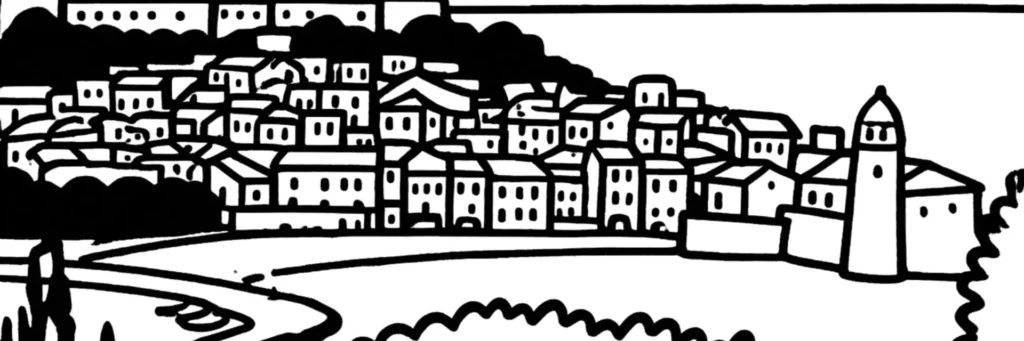
Line drawing of Le Lavandou harbour, fishing boats, the beach below and the wooded slopes of the Maures massif

Ambience illustration of Le Lavandou, between the fishing harbour and the hamlets of the Maures coast road.

Property Prices in Le Lavandou

The 2026 figures· Indicative data
6 602€/m²

The average price recorded in Le Lavandou stands at 6 602 €/m². This average brings together a stock dominated by seaside apartment blocks, from the studio near the harbour to the three-room flat with a terrace, and a smaller share of villas set on the slopes of the Maures massif. The gap is clear between the old centre around the harbour and the hamlets of the coast road, Saint-Clair, Aiguebelle or Cavalière, where a sea view and direct access to a beach count for a lot. Houses and villas come out on average at 8 794 €/m². These figures come from the DVF database (the French notarised sales database), which lists transactions actually recorded by notaries.

House : 8 794 €/m²

Apartment transactions / year
256
Median price /m²
6 131 €

Prices from the DVF file (Demandes de valeurs foncières, published by the DGFiP), transactions actually recorded at the notary at municipality level. Cross-referenced with the Notaires de France - INSEE indices. Learn more about our methodology.

Market trends and analysis for Le Lavandou

Le Lavandou's population is growing, with 6 646 inhabitants recorded by INSEE against about 1 338 in 1921 and a rise of around 11 % over the recent period. This growth rests on the year-round settling of households that already knew the commune as a holiday spot. It runs up against a stock built for seasonal use: with 70,8 % second homes and only 1,5 % vacant homes, the supply available for a main residence stays very limited. This scarcity keeps local buyers and purchasers from elsewhere competing for the same properties.

The second driver is tourism. A classified tourist resort since 2017, Le Lavandou is among the French communes whose population multiplies most in season, with twelve beaches, a marina and links to Port-Cros and Le Levant. This economy supports the rental value of apartments and draws buyers thinking in terms of mixed use, a few personal weeks and letting for the rest of the summer. Against that, the loi Littoral (the French Coastal Act), the terrain and the protection of wooded areas cap any expansion: new supply is rare and decisions play out on existing stock.

Le Lavandou on the Maures coast road

average €/m²

Le Lavandou sits in the upper half of the Var coast: prices here exceed those of the communes around the bay of Hyères and hold above those of the neighbouring bay of Cavalaire, while staying well below the levels reached on the Saint-Tropez peninsula.

MunicipalityTierPrice /m²Gap
Saint-Tropez14 807 €+124 %
Le Lavandou6 602 €ref.
Cavalaire-sur-Mer5 753 €-13 %
Hyères4 361 €-34 %

The history of Le Lavandou

For a long time Le Lavandou was no more than a seaside district of Bormes, turned towards fishing. Linguists link its name to the Provençal word for a washing place, a reading kept by Frédéric Mistral's dictionary, rather than to lavender. The coast bears traces of early use: the bay of Cavalière is identified as an ancient anchorage, and local tradition places in 1481 the landing of Francis of Paola, blown off course from Marseille as the city was struck by plague. Corsair raids, including one in 1529, kept settlement of the shore cautious. In 1831 the hamlet had only 146 inhabitants, and 776 in 1906.

The turning point came first from painters. Henri-Edmond Cross left Paris in 1891 for the Var and had his house built at Saint-Clair, a few hundred metres from the beach. The Belgian Théo Van Rysselberghe settled in the hamlet in turn, where Paul Signac came to work: Van Rysselberghe's villa, now the Villa Théo, today hosts exhibitions. This growing renown went alongside the claim to autonomy pressed since 1909. The law making Le Lavandou a commune separate from Bormes was enacted by President Raymond Poincaré on 25 May 1913, over a territory of about 2 975 hectares. The first tourist office was created on 20 October 1926.

On the night of 14 to 15 August 1944, the commandos d'Afrique landed on the coast at the foot of Cap Nègre, at Cavalière, and scaled the rocks to knock out the German batteries in the opening of the Allied landing in Provence. The post-war years turned the fishing village into a seaside resort: the Maures coast road feeds the successive hamlets of Saint-Clair, La Fossette, Aiguebelle, Cavalière and Pramousquier, where villas and holiday homes were built along the twelve kilometres of coast and their twelve beaches. The population rose from 1 338 inhabitants in 1921 to 6 646 today, and the commune was classified as a tourist resort in 2017.

This string-like pattern of development, grafted onto a single coastal road between sea and forested massif, explains the commune's present shape: a dense centre around the harbour, then a succession of small clusters separated by headlands and wooded slopes.
Who buys in Le Lavandou

Le Lavandou has 6 646 inhabitants according to INSEE (the national statistics institute), for a stock of nearly 12 950 homes. The imbalance is striking: 70,8 % second or occasional homes, against 27,7 % primary residences and only 1,5 % vacant homes. Apartments make up 66,6 % of the stock, a legacy of the apartment-block schemes built along the coast road. Among households living here year-round, the split is close to even, with 50,4 % owner-occupiers and 45,5 % tenants, again according to INSEE. Buyers are therefore divided between non-resident purchasers looking for a summer base or a seasonal rental investment, and local households, often retirees or tourism workers, in a narrow primary-residence market.

Frequently asked questions

The average price comes out at 6 602 €/m² across the commune. This figure is calculated from the DVF database, which lists sales actually recorded by notaries rather than listings. It covers a wide spread between an older flat in the centre with no view and a front-line property at Saint-Clair or Aiguebelle. For houses and villas, the average sits at 8 794 €/m².

The commune stretches over twelve kilometres of coast and twelve beaches, from the harbour centre to Pramousquier. The hamlets of Saint-Clair, La Fossette, Aiguebelle and Cavalière hold the best-valued properties, with direct access to a beach and open views over the Hyères islands. The old centre around the harbour and Avenue du Général de Gaulle offers denser housing and more affordable levels, with shops within walking distance.

The commune has no station. Access is by the departmental road 559, the Maures coast road, which serves every hamlet in turn. The nearest stations are those of Hyères and Toulon, and Toulon-Hyères airport is about thirty kilometres away. The harbour also runs the sea links to the Golden Isles, Port-Cros and Le Levant. This single road access strongly shapes traffic in summer.

Apartments make up 66,6 % of the stock according to INSEE: the supply of flats is wide, transaction volumes steady and seasonal use easy to arrange. Villas, a third of the stock, are spread across the wooded slopes and in the hamlets, with lower volumes, a markedly higher price per square metre and often longer selling times. The choice therefore depends as much on the liquidity you want as on the intended use.

Yes. The commune borders the sea and applies the loi Littoral of 1986: building in continuity with existing development, a hundred-metre strip closed to construction outside already-urbanised areas, protection of outstanding natural sites. To this are added the relief of the Maures massif, wildfire risk and the protection of the wooded headlands that separate the hamlets. Buildable land is therefore scarce, and the market rests overwhelmingly on existing stock.

Value your property in Le Lavandou

Free valuation in under 2 minutes

Value my property

This analysis is published by Immover, an independent observatory founded by . Data sourced from official sources (DVF, INSEE, Notaries of France).

Estimer mon bien