The immover observatory

Property Prices in Le Mesnil-Saint-Denis2026 property valuation

Updated: January 2026 Sources: DVF · Notaires de France · INSEE · Immover January 2026 · DVF, Notaires de France, INSEE, Immover
In brief

The average price per m² in Le Mesnil-Saint-Denis is 3 669 €/m² for an apartment, based on actual notarised (DVF) sales. About 21 transactions are recorded each year.

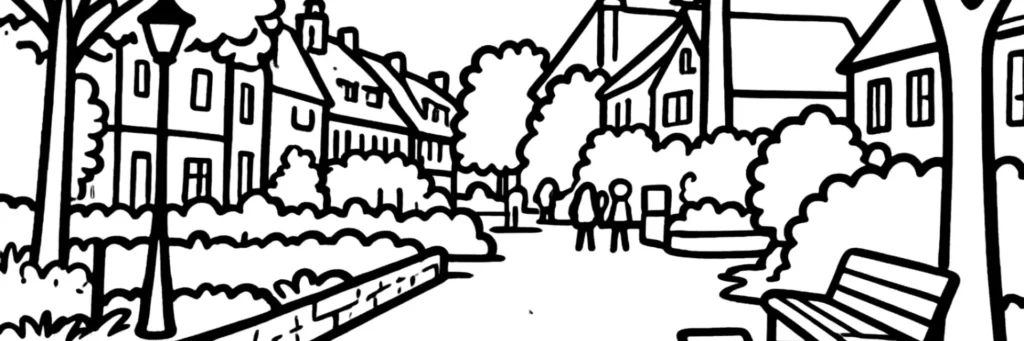
Line illustration of a Renaissance château with its dovecote and moat, at the centre of a wooded village in the Yvelines

Mood illustration of Le Mesnil-Saint-Denis, in the Yvelines.

Property Prices in Le Mesnil-Saint-Denis

The 2026 figures· Indicative data
3 669€/m²

In Le Mesnil-Saint-Denis, the average price stands at around 3 669 €/m². That average pools a stock in which the detached house is very largely in the majority, apartments remaining a minority and concentrated in a few developments. Gaps come above all from location, between the old village around the château, the suburban estates of the 1960s to the 1980s and the older garden cities. These values come from DVF data, which records the transactions actually registered before notaries, and that is what sets them apart from the prices shown in listings.

Apartment transactions / year
21
Median price per m²
3 681 €

Prices from the DVF file (Demandes de valeurs foncières, published by the DGFiP), transactions actually recorded at the notary at municipality level. Cross-referenced with the Notaires de France - INSEE indices. Learn more about our methodology.

Market trends and analysis for Le Mesnil-Saint-Denis

The Le Mesnil-Saint-Denis market is driven by demand from families working in the employment area of Saint-Quentin-en-Yvelines and of western Paris. The absence of a station in the municipality makes location, relative to the neighbouring stations and to the road routes, decisive in how properties are valued. Inclusion within the Parc naturel régional de la Haute Vallée de Chevreuse constrains new development: supply is renewed mainly through the resale of existing houses. That relative scarcity supports house prices.

Compared with the municipalities of Saint-Quentin-en-Yvelines, Le Mesnil-Saint-Denis stands out for its suburban fabric and its wooded setting, which place it above denser towns such as Trappes or Élancourt, but behind more sought-after sectors such as Voisins-le-Bretonneux. The high proportion of owner-occupiers and the low share of second homes limit the annual volume of sales. Buyers weigh the quiet of the setting against the relative distance from the stations, which makes the market sensitive to the quality and the location of each house.

Le Mesnil-Saint-Denis, south of Saint-Quentin-en-Yvelines

average €/m²

Le Mesnil-Saint-Denis stands above denser municipalities such as Trappes, in the middle of the range with Montigny-le-Bretonneux, and behind Voisins-le-Bretonneux, which is dearer.

MunicipalityTierPrice /m²Gap
Voisins-le-Bretonneux4 292 €+17 %
Le Mesnil-Saint-Denis3 669 €ref.
Montigny-le-Bretonneux3 627 €-1 %
Trappes2 754 €-25 %

The history of Le Mesnil-Saint-Denis

The name Le Mesnil-Saint-Denis refers to the medieval word mesnil, a rural estate, and to the abbey of Saint-Denis, which controlled the territory. In 768, Pépin le Bref gave the monks of Saint-Denis a fief in the forest of Yveline; they set up their seat at the fortress of Beaurain. The name Mesnil-Saint-Denis appeared in the 12th century. In 1543, Philippe Habert, a clerk at the Parlement, acquired a house and land at Le Mesnil; his family became lords of the place, at the origin of the seigneury of Mesnil-Habert. The locality then remained a small farming parish.

The present château was built for Louis Habert de Montmort, treasurer of the wars, around 1579 and 1580. Enlarged and altered in the 17th century, it keeps from its first period its dovecote, its turrets, its moat and part of the main building. In 1952, the municipality bought it to house the town hall and its technical services, a use it still has today. The village long remained a small farming municipality, away from the main routes, in a setting of woods and small valleys characteristic of the vallée de Chevreuse.

Le Mesnil-Saint-Denis developed above all from the 1960s and 1980s onwards, with the building of residential estates. The municipality keeps older districts, such as the Henriville garden city, laid out in the 1920s with its half-timbered houses of Norman inspiration, and the Résidences du Château, which introduced forms of suburban planning brought in from elsewhere. The territory belongs to the Parc naturel régional de la Haute Vallée de Chevreuse, the regional nature park, which governs planning and preserves the wooded character. The population today reaches around 7 276 inhabitants.
Who buys in Le Mesnil-Saint-Denis

According to INSEE, the French national statistics institute, Le Mesnil-Saint-Denis has around 7 276 inhabitants. Nearly nine dwellings in ten are main residences, the sign of a municipality where people settle for the long term. Owners are dominant, at around eight households in ten, and the detached house accounts for more than seven dwellings in ten. That profile attracts families looking for a wooded, suburban setting close to Saint-Quentin-en-Yvelines and its employment hubs. Apartments, in the minority, are aimed above all at smaller households or first-time buyers, in a market where the house remains the benchmark.

Frequently asked questions

The average price stands at around 3 669 €/m² in Le Mesnil-Saint-Denis, according to the DVF transactions registered before notaries. That average covers a market very largely made up of houses, with marked gaps depending on location, plot size and the age of the property. Apartments, few in number, trade in different brackets. A reliable valuation means looking at the precise features of the home.

The municipality combines an old village, laid out around the château that became the town hall and around the church, with more recent residential estates. The Henriville garden city, with its half-timbered houses of the 1920s, forms an identifiable sector, as do the Résidences du Château. The suburban estates built between 1960 and 1980 complete the fabric. The whole remains uniform and residential, in a wooded setting governed by the regional nature park.

Le Mesnil-Saint-Denis has no station on its territory; residents use the stations of Saint-Quentin-en-Yvelines, such as Montigny-le-Bretonneux or La Verrière, to take the Transilien towards Paris-Montparnasse. The car remains widely used, via the RN10 and the routes of the Saint-Quentin-en-Yvelines conurbation. That dependence on the road and on neighbouring stations weighs on journey times and steers part of demand towards the best-located properties.

The territory belongs to the Parc naturel régional de la Haute Vallée de Chevreuse, whose charter governs planning and the protection of landscapes. In practice, the scope for urban extension and for subdividing plots is more constrained than in municipalities without that status. This protection preserves the wooded, suburban character, but limits the supply of new building land. It helps keep the market for existing houses under pressure.

Yes. The detached house accounts for more than seven dwellings in ten and takes most of the transactions. The supply of apartments is small, spread across a few developments, which makes it less liquid and more sensitive to the features of each scheme. Buyers are mostly families looking for a house with a garden. The budget needed for a house is well above that for an apartment, for a comparable floor area.

Value your property in Le Mesnil-Saint-Denis

Free valuation in under 2 minutes

Value my property

This analysis is published by Immover, an independent observatory founded by . Data sourced from official sources (DVF, INSEE, Notaries of France).

Estimer mon bien