The immover observatory

Property Prices in Le Petit-Quevilly2026 property valuation

Updated: January 2026 Sources: DVF · Notaires de France · INSEE · Immover January 2026 · DVF, Notaires de France, INSEE, Immover
In brief

The average price per m² in Le Petit-Quevilly is 1 832 €/m² for an apartment, based on actual notarised (DVF) sales. About 124 transactions are recorded each year.

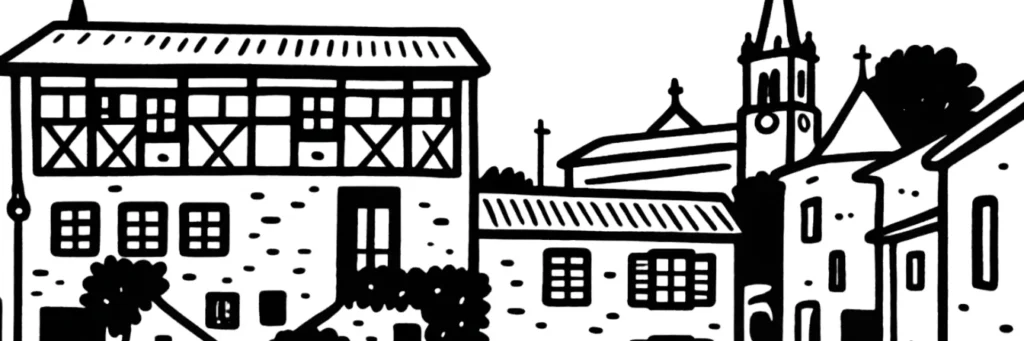
Line drawing of Le Petit-Quevilly: the Romanesque chapel of Saint-Julien

Atmospheric illustration of Le Petit-Quevilly, on the left bank of the Seine in the Rouen conurbation.

Property Prices in Le Petit-Quevilly

The 2026 figures· Indicative data
1 832€/m²

In Le Petit-Quevilly, an apartment sells for an average of 1 832 €/m², based on transactions registered with notaries and gathered in the DVF database. This figure covers a stock made up overwhelmingly of apartments, inherited from the working-class past of the left bank: older brick buildings, post-war blocks and estates, and newer developments arising from urban regeneration schemes. The few houses, often terraced town houses, trade at a similar level, around 1 990 €/m². These values remain clearly more affordable than those of Rouen, whose outer districts the municipality adjoins.

Apartment transactions / year
124
Median price per m²
1 804 €

Prices from the DVF file (Demandes de valeurs foncières, published by the DGFiP), transactions actually recorded at the notary at municipality level. Cross-referenced with the Notaires de France - INSEE indices. Learn more about our methodology.

Market trends and analysis for Le Petit-Quevilly

The Le Petit-Quevilly market owes much to its place in the conurbation: an inner-belt municipality, adjoining Rouen, but far more accessible than the city itself. This price gap attracts spillover demand, made up of first-time buyers and investors looking for an apartment close to their work without the budget of a purchase in Rouen. Good metro service and the presence of facilities and shops support this appeal, particularly for renovated homes and new developments.

Supply changes in step with the regeneration schemes that are gradually transforming the former industrial sites of the left bank. New homes pull values upwards, while the older stock of the inner districts, often less efficient in energy terms, trades lower. As everywhere, the energy performance certificate has become a point of negotiation: a poorly rated home still sells, but at the cost of a discount or of works to be budgeted for. The proximity of more highly rated municipalities such as Rouen or Mont-Saint-Aignan places Le Petit-Quevilly in the affordable band of the Rouen market.

Le Petit-Quevilly, the affordable left bank of Rouen

average €/m²

Adjoining Rouen on the left bank of the Seine, the municipality sits below its neighbours in the conurbation: cheaper than Rouen and Mont-Saint-Aignan, and below the level of the large port of Le Havre, the other centre of the Seine-Maritime.

MunicipalityTierPrice /m²Gap
Rouen2 756 €+50 %
Le Havre2 369 €+29 %
Mont-Saint-Aignan2 248 €+23 %
Le Petit-Quevilly1 832 €ref.

The history of Le Petit-Quevilly

Le Petit-Quevilly stretches along the left bank of the Seine, in the heart of the Rouen conurbation, across a territory of just over four square kilometres. A village formed here around a pond, on the site of the present town hall, following the clearing of the Rouvray forest. The municipality separated from Grand-Quevilly in the Middle Ages and long lived off the land and the nearby river, before industry transformed its character.

Its oldest monument is the chapel of Saint-Julien, built around 1150-1160 for Henry II Plantagenet, Duke of Normandy and King of England, within a hunting lodge laid out in the Rouvray forest. In 1183, Henry II and his wife Eleanor of Aquitaine handed the site over to house the sick: the lodge became a leper hospital, active until its closure in 1366. The chapel has kept a set of Romanesque frescoes that make it one of the rare survivals from that period in the region.

From the 19th century onwards, Le Petit-Quevilly became an industrial town, carried by the Seine and by its immediate proximity to Rouen. The Malétra chemical works, established as early as 1808, the La Foudre cotton mill, built between 1845 and 1847 and whose chimney rivalled the cathedral spires in height, and later the Prestil zip factory, made the municipality a dense working-class town. This legacy of brick and inner-suburb streets still shapes its urban fabric and its population today.
Who buys in Le Petit-Quevilly

Le Petit-Quevilly has 22 208 inhabitants, making it one of the most populated municipalities on the left bank of the Rouen conurbation. Its housing stock consists overwhelmingly of apartments: older homes in the working-class districts, post-war estates and new developments from urban regeneration schemes sit side by side from one neighbourhood to the next. Buyers are mainly households from the conurbation, with a high proportion of first-time buyers drawn by contained prices a few minutes from the centre of Rouen. Buy-to-let investors are also present, supported by demand from students and employees across the metropolitan area. Town houses, which are rarer, appeal to families looking for outdoor space without leaving the inner belt.

Frequently asked questions

For an apartment, the average stands at 1 832 €/m², based on sales actually signed and published in the DVF database. It is a municipal figure, covering both an older home in the inner districts and a new apartment in a recent development. The address, the floor level, the condition, the year of construction and the energy performance explain most of the differences around this average. A solid valuation rests on comparable properties sold nearby, not on the municipal figure alone.

The municipality reads from the river towards the plateau. The banks of the Seine and the former industrial sites concentrate new housing and regeneration schemes. The centre, around the town hall and the chapel of Saint-Julien, mixes town-centre buildings, shops and older housing. The neighbourhoods further south, close to Grand-Quevilly, alternate between town houses and apartment blocks. These different settings do not all sell at the same level.

The municipality is crossed by the metro line of the Rouen conurbation, in service since 1994, which links it to the centre of Rouen in about ten minutes. Five stations serve the town, including Saint-Julien and Place du 8 Mai. To this are added TEOR high-service bus routes and a dense bus network towards neighbouring municipalities. This level of service is a strong argument for buyers who work in Rouen without wanting to live there.

Yes, but supply is limited. The stock is dominated by apartments, and houses are most often terraced town houses with a small outdoor space. They trade at around 1 990 €/m², a level close to that of apartments. As sale references are few, the valuation of a house depends above all on its condition, its floor area and its plot, rather than on the municipal average.

Proximity to the Seine exposes part of the territory to flood risk: this information can be checked in the planning documents and in the état des risques, the statutory natural-hazard disclosure attached to every sale. The industrial past of the municipality may also justify enquiring about possible soil contamination in the case of a building project. Finally, as across the Rouen metropolitan area, letting a furnished tourist property is regulated and requires a declaration at the town hall.

Value your property in Le Petit-Quevilly

Free valuation in under 2 minutes

Value my property

This analysis is published by Immover, an independent observatory founded by . Data sourced from official sources (DVF, INSEE, Notaries of France).

Estimer mon bien