The immover observatory

Property Prices in Marly-la-Ville2026 property valuation

Updated: January 2026 Sources: DVF · Notaires de France · INSEE · Immover January 2026 · DVF, Notaires de France, INSEE, Immover
In brief

The average price per m² in Marly-la-Ville is 3 475 €/m² for an apartment, based on actual notarised (DVF) sales. About 14 transactions are recorded each year.

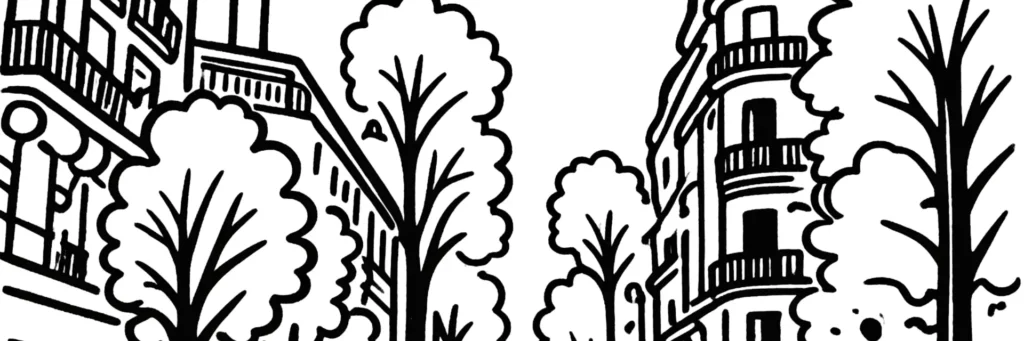
Line drawing of Marly-la-Ville: the Gothic church of Saint-Étienne at the heart of the village

Mood illustration of Marly-la-Ville, a small town of the plaine de France on the Ysieux plateau, in the north of the Val-d'Oise.

Property Prices in Marly-la-Ville

The 2026 figures· Indicative data
3 475€/m²

The average price recorded in Marly-la-Ville stands at 3 475 €/m². That average aggregates a stock dominated by detached houses, largely in the majority in the municipality, alongside a minority of apartments spread over a few more recent developments. The gaps observed around that average come mainly from the type of property, the floor area, the general condition, the presence of a plot and the location, in particular closeness to the A1 motorway or to Roissy-Charles-de-Gaulle airport. The municipality stands out for a high rate of owner-occupation, which reflects a market turned towards families settling for the long term. These figures come from the DVF database, which records the sales actually signed before notaries, and serve as a municipal benchmark to be refined according to the precise features of each property.

Apartment transactions / year
14
Median price per m²
4 038 €

Prices from the DVF file (Demandes de valeurs foncières, published by the DGFiP), transactions actually recorded at the notary at municipality level. Cross-referenced with the Notaires de France - INSEE indices. Learn more about our methodology.

Market trends and analysis for Marly-la-Ville

The Marly-la-Ville market rests on its status as a residential municipality of the plaine de France, at the gates of the Roissy-Charles-de-Gaulle employment hub and some thirty kilometres from Paris. Demand comes above all from families and working people employed at the airport, in the logistics of the northern Paris region or in the capital, drawn by affordable suburban housing and a high rate of owner-occupation. The still farming character of the surrounding plateau, around the Ysieux valley, adds to the appeal of the municipality for buyers looking for a less dense setting than the inner suburbs. Demand bears overwhelmingly on houses, the share of apartments remaining marginal.

Supply remains constrained by the modest size of the town and by the small share of flatted housing, which keeps particular pressure on detached houses. On the second-hand market, the condition of the building, energy performance and exposure to noise from the A1 and from Roissy have become negotiating criteria in their own right. Buyers weigh closeness to the main routes against the relative quiet of certain suburban sectors and the presence of a garden. The low annual volume of transactions heightens the sensitivity of the local market to unusual sales.

Marly-la-Ville, between the plaine de France and Roissy

average €/m²

At the gates of Roissy and the plaine de France, Marly-la-Ville sits above Luzarches and Villiers-le-Bel, but below Chantilly, more highly rated on the edge of the Oise.

MunicipalityTierPrice /m²Gap
Chantilly4 047 €+16 %
Marly-la-Ville3 475 €ref.
Luzarches2 910 €-16 %
Villiers-le-Bel2 398 €-31 %

The history of Marly-la-Ville

The name Marly-la-Ville is thought to come from marcilliacum, the estate of Marcel, a reading reinforced by the recorded early forms: Marlacum in 675, Maillico in the 12th century, Malliacum in the 13th century, then praedium Marlianum in 1540. The local lordship changed hands several times through the Middle Ages. In 1130, Ascelin de Marly founded the abbey of Hérivaux, on which the parish long depended. The land then passed to the house of Trie in 1353, and in part to the house of Châtillon in 1378. Between 1480 and 1540, it belonged to the Budé family, which included the humanist Guillaume Budé, adviser to François Ier. Before 1600, it went to Jacques Danes, adviser to the Parlement and provost of the merchants of Paris, which shows how firmly the municipality sat within the networks of the royal administration.

The built heritage of Marly-la-Ville carries the mark of that seigneurial and religious history. The church of Saint-Étienne, listed as a historic monument in 1933, was raised in early Gothic at the end of the 12th century, completed around 1280 in the Rayonnant Gothic style, then given Flamboyant vaults at the end of the 15th century; its polygonal chevet with two superposed levels of windows and its semicircular chapel are rare in the Île-de-France. The municipality also keeps a hospital and almshouse founded by Louis XIV in 1697-1698, bought back by the municipality in 1972 and turned into the town hall in 1977, along with the water towers known as les Jumeaux, built in 1882 and taken out of service in 1970. It was also at Marly-la-Ville that the naturalist Thomas-François Dalibard carried out, in 1752, the first French experiment in capturing lightning, a month before that of Benjamin Franklin.

Attached to the former department of Seine-et-Oise and to the canton of Luzarches, Marly-la-Ville joined the new department of the Val-d'Oise in 1968, in the arrondissement of Sarcelles, then the canton of Goussainville from 2014. Set in the plaine de France, on a plateau overlooking the Ysieux valley, whose source lies at the place called Rocourt, the municipality stands some thirty kilometres north of Paris. It is served by the Survilliers-Fosses station, on the RER D line, and remains close to the A1 motorway and to Roissy-Charles-de-Gaulle airport. From a farming town turned towards the cereal plain, Marly-la-Ville has become a residential municipality of the northern Paris region, carried by its position at the gates of the Roissy employment hub.
Who buys in Marly-la-Ville

Marly-la-Ville has 6 022 inhabitants according to INSEE, the French national statistics institute. The housing stock, which approaches 2 200 units, is overwhelmingly made up of detached houses, which account for more than eight dwellings in ten, apartments remaining in the minority and concentrated in a few developments. Main residences form almost the whole of the stock, and around four households in five own their home, a high rate that reflects a lasting residential anchorage. That profile draws above all families and working people employed at the Roissy-Charles-de-Gaulle hub or in the north of the Paris conurbation, looking for a house with a garden rather than for flatted housing. First-time buyers turn more towards the few apartments available or towards the most affordable suburban houses on the edge of the town.

Frequently asked questions

The average price recorded in Marly-la-Ville stands at 3 475 €/m², based on the sales registered before notaries and published in the DVF database. That figure aggregates varied properties, in large majority houses and a few apartments. The type of property, the floor area, the condition, the plot, energy performance and the location explain most of the gaps around that average. For a reliable valuation, it is better to rely on sales of comparable properties than on the municipal average alone.

Marly-la-Ville has no station on its own territory, but lies a few kilometres from the Survilliers-Fosses station, served by the RER D, which reaches Paris Gare du Nord. The municipality is also close to the A1 motorway and to Roissy-Charles-de-Gaulle airport, about ten kilometres away, which makes it an anchor point for people working in the Roissy - Sud Picardie employment area. That position between rail service and major road routes weighs on the residential appeal of the municipality among families who work in the northern Paris region.

Marly-la-Ville has kept the character of a small town of the plaine de France, organised around its Gothic church of Saint-Étienne, listed as a historic monument, and surrounded by farmland on the plateau overlooking the Ysieux valley. The old centre sits alongside more recent suburban districts, in a municipality that remains on a human scale despite its closeness to the Roissy employment hub. The counterpart of that situation at the gates of the airport and of the A1 motorway is a variable exposure to noise depending on the sector. This setting suits households looking for surroundings still marked by the countryside, without moving away from the main routes.

The Marly-la-Ville market is very largely dominated by the detached house, which accounts for more than eight dwellings in ten, against a small share of apartments concentrated in a few developments. Buying a house therefore matches the typical profile of the municipality, with a garden and often a private parking space. Apartments, rarer, suit tighter budgets or smaller households looking for a first purchase. Your choice will depend above all on your budget, on your need for outdoor space and on the limited availability of flatted housing.

Marly-la-Ville is organised around its old town centre, tightly set near the church of Saint-Étienne, then spreads towards more recent suburban districts on the edge, notably towards the Bois Maillard sector. The most sought-after streets are generally those that stay away from the main traffic routes towards the A1 motorway, where the setting remains quietest. Closeness to the Roissy hub remains a criterion of appeal for working people, to be balanced against noise exposure depending on the sector. Each district has its own features of building type and age, to be examined closely according to your project.

Value your property in Marly-la-Ville

Free valuation in under 2 minutes

Value my property

This analysis is published by Immover, an independent observatory founded by . Data sourced from official sources (DVF, INSEE, Notaries of France).

Estimer mon bien