The immover observatory

Property Prices in Montrouge2026 property valuation

Updated: January 2026 Sources: DVF · Notaires de France · INSEE · Immover January 2026 · DVF, Notaires de France, INSEE, Immover
In brief

The average price per m² in Montrouge is 7 010 €/m² for an apartment, based on actual notarised (DVF) sales. For a house or villa, it is 11 506 €/m². About 592 transactions are recorded each year.

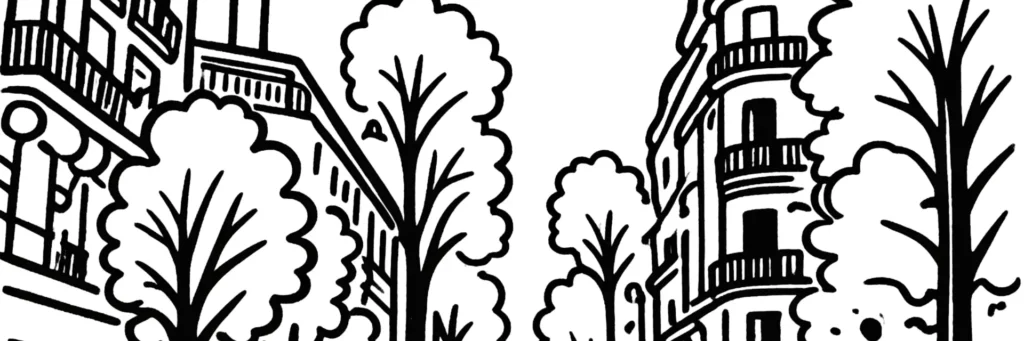
Line illustration of the Montrouge belfry and the 1930s buildings lining the square

Mood illustration of Montrouge, in the Hauts-de-Seine.

Property Prices in Montrouge

The 2026 figures· Indicative data
7 010€/m²

The average price recorded in Montrouge stands at 7 010 €/m². That average covers a stock made up almost entirely of flats, where apartments account for nearly all sales. The older 1930s building, around the belfry and the town hall, does not trade at the same level as the recent schemes that have come out of the development operations. The immediate closeness of the 14th arrondissement of Paris supports the northern sectors, while the southern fringe, towards Châtillon and the ring road, remains more affordable. The amounts come from the DVF database, which records the transactions actually registered before notaries, and not from the prices displayed in listings.

House : 11 506 €/m²

Apartment transactions / year
592
Median price per m²
7 160 €

Prices from the DVF file (Demandes de valeurs foncières, published by the DGFiP), transactions actually recorded at the notary at municipality level. Cross-referenced with the Notaires de France - INSEE indices. Learn more about our methodology.

Market trend in Montrouge

-13 % over 5 years
Change in the average price per m² in Montrouge, from 8 043 € in 2021 to 7 010 € in 2026. 8 400 € 7 800 € 7 200 € 6 600 € 8 043 € 8 025 € 7 529 € 6 983 € 6 992 € 7 010 € 2021 2022 2023 2024 2025 2026
Change in the average price per m² in Montrouge, 2021 to 2026. Source: DVF.

After 8 043 €/m² in 2021, the average price in Montrouge reaches 7 010 €/m² in 2026, roughly -13 % over the period.

Market trends and analysis for Montrouge

The Montrouge market is driven first of all by its position in the inner ring: the municipality touches the 14th arrondissement and works as a direct extension of Paris, at a lower price level. The office hub set up along boulevard Romain Rolland and on the Evergreen campus, where Crédit Agricole brings together several thousand employees, feeds continuous rental demand. That concentration of office jobs keeps the stock turning over, in a municipality where the majority of households are tenants according to INSEE.

The second driver is the transport offer. The extension of Line 4 has brought the centre and the south of the municipality closer to the heart of Paris, and the Châtillon-Montrouge station, on the municipal boundary, is among the stations of Line 15 South of the Grand Paris Express. On new housing, supply remains constrained by the size of the territory: schemes go through joint development zones, such as that of the Portes de Montrouge, which has produced some 420 dwellings, shops and offices. With available land limited, most transactions concern the older stock.

Montrouge in the south of the Hauts-de-Seine

average €/m²

Montrouge sits clearly below Paris levels, while remaining above municipalities in the south of the department such as Bourg-la-Reine or Sceaux. Its position as a municipality bordering Paris explains most of that gap.

MunicipalityTierPrice /m²Gap
Paris10 345 €+48 %
Montrouge7 010 €ref.
Sceaux6 043 €-14 %
Bourg-la-Reine5 266 €-25 %

The history of Montrouge

The name Montrouge comes from the Latin Rubeo monte, the red mountain, in reference to the reddish clay of the plateau. An agreement of 1194 already mentions this place name. In 1258, Guillemite monks founded a convent there which lasted until 1674. The territory long remained rural: pasture and cereal farming supplied Paris. In the 17th century, the marquis de Châteauneuf had the château de Montrouge enlarged around 1631 by the architect François Mansart; the building was demolished around 1815. At the end of the 18th century, the botanist Jacques Philippe Martin Cels set up a well-known nursery there, which gave the plain a lasting horticultural reputation.

The building of the Thiers wall, between 1841 and 1844, cut the municipality in two. The northern part took the name of Petit-Montrouge, the southern part that of Grand-Montrouge. The annexation law of 1860 attached Petit-Montrouge to the 14th arrondissement of Paris: the municipality then went from about 350 hectares to 105 hectares, a perimeter close to the present 2,07 km². It is that amputation which explains the compact shape of the town today, without any land reserve and built right up to its boundaries. The subsoil also keeps the trace of the working of coarse limestone until the 19th century.

The 20th century turned the municipality into a dense town. Industrialisation picked up from 1925, before Montrouge became a centre of resistance during the Second World War. The arrival of the metro then shaped the territory: Line 13 has stopped at Châtillon-Montrouge since 1976, Line 4 was extended to Mairie de Montrouge in March 2013, then the Barbara station opened in January 2022; the T6 tram has run since December 2014. Crédit Agricole set up its headquarters on avenue Jean Jaurès in 2010, on the Evergreen campus. The belfry, a 1930s building, was restored in 2012 and hosts local cultural life.
Who buys in Montrouge

Montrouge has 46 324 inhabitants over a little more than 2 km², one of the highest densities in the Hauts-de-Seine. According to INSEE, the French national statistics institute, the stock is almost entirely made up of flats: around 94 % of dwellings are apartments and nearly 92 % are main residences, which leaves little room for second homes and vacant dwellings. Again according to INSEE, a little under 40 % of households own their home, the majority being tenants. Buyers are therefore above all working households employed in Paris or in the local office hub, and first-time buyers looking for an alternative to the 14th arrondissement.

Frequently asked questions

The average price recorded in Montrouge is 7 010 €/m², all sales combined. That figure comes from the DVF database, which records the transfers actually registered before notaries, and not from online listings. It is a municipal average: depending on the street, the storey, the condition of the property and the distance to the metro, the gap between two apartments in Montrouge can be marked. A valuation address by address remains necessary before setting a sale price.

The municipality fits into a little more than 2 km², but values are not uniform there. The north, turned towards the porte d'Orléans, benefits from direct continuity with the 14th arrondissement. The centre, around the belfry, the town hall and the avenue de la République, concentrates the 1930s buildings and the shops. The south, towards Châtillon and the ring road, offers properties that are generally more affordable.

Two stations on Line 4 serve the municipality, Mairie de Montrouge since 2013 and Barbara since 2022. Line 13 and the T6 tram stop at Châtillon-Montrouge, on the southern edge of the territory. Several RATP bus lines complete the network, among them the 68, 126 and 128, and Vélib' stations are spread across the town. That service weighs directly on residential demand and on the price gaps between sectors.

The subsoil of Montrouge was worked for its coarse limestone until the 19th century. Voids left by former quarries affect nearly 40 % of the territory, and a sinkhole opened in rue du Poitou in 1959. The Inspection générale des carrières, the French quarry inspectorate, delivered a study in January 2017 grading the hazard in four levels, the basis of a risk prevention plan. A building or extension project may therefore be subject to foundation requirements, to be checked in the statement of risks attached to the sale.

It is possible, but rare. INSEE counts around 900 detached houses for more than 27 000 dwellings, and their number is falling as urban renewal schemes go on. The few house sales recorded come out at around 11 506 €/m², above the average for apartments, a gap that owes as much to the scarcity of the product as to the value of the land. For the great majority of projects, the search turns to the apartment.

Value your property in Montrouge

Free valuation in under 2 minutes

Value my property

This analysis is published by Immover, an independent observatory founded by . Data sourced from official sources (DVF, INSEE, Notaries of France).

Estimer mon bien