The average price per m² in Pacé is 3 420 €/m² for an apartment, based on actual notarised (DVF) sales. About 50 transactions are recorded each year.

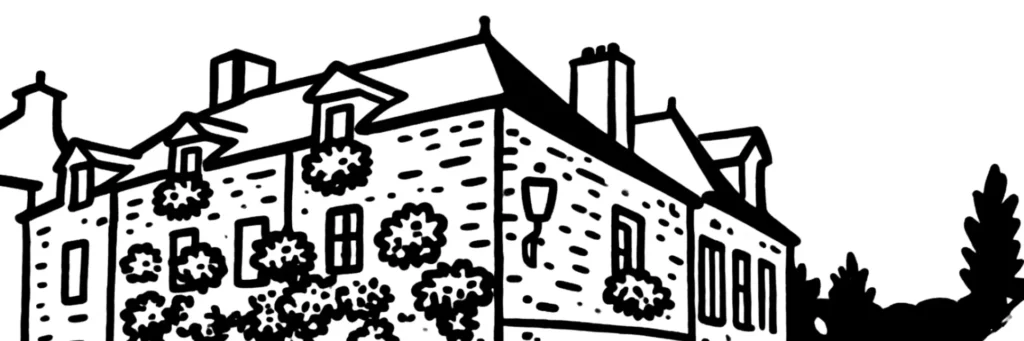
Atmospheric illustration of Pacé, a residential municipality north-west of Rennes, in Ille-et-Vilaine.
The average price recorded in Pacé stands at 3 420 €/m². This average covers a residential stock where the detached house dominates, inherited from the estates that accompanied the growth of the municipality since the 1970s. There are also more recent apartment buildings around the centre and new developments along the roads towards Rennes. Location, year of construction, the presence of a garden and energy performance explain most of the differences around this value. These figures come from the DVF database, which records transactions actually registered with notaries.
Prices from the DVF file (Demandes de valeurs foncières, published by the DGFiP), transactions actually recorded at the notary at municipality level. Cross-referenced with the Notaires de France - INSEE indices. Learn more about our methodology.
The Pacé market rests on its position as a residential municipality of the inner ring around Rennes, linked to the city by the RN12 trunk road. Demand comes above all from families in the conurbation looking for space and a garden without moving away from the employment area, and from working households drawn by the fast road link. The strong population growth of recent decades shows that appeal, with pressure bearing particularly on family houses and on building plots, which grow scarcer as the municipality becomes denser.
Supply renews itself through new build, along the main roads and near the centre, which sets Pacé apart from municipalities already fully built up. On the resale market, energy performance has become a marked point of negotiation, particularly on older estate houses whose assessment weighs in the price discussion. Belonging to Rennes Métropole and the closeness of employment areas support steady demand. For a seller, a correctly priced and well-located property stands out faster than one listed too high.
Linked to Rennes by the RN12 trunk road, Pacé sits just below the central city on price, while staying above municipalities in the west of the metropolitan area such as Le Rheu, in a register close to Saint-Jacques-de-la-Lande.
Pacé takes its name from the Latin Paciatus, derived from pacem, peace, and grew along the Flume, about five kilometres north-west of Rennes. The parish is old: the Saint-Melaine church keeps parts dating from the 15th and 16th centuries, and the Pacé bridge, medieval in origin, crosses the river at the heart of the village. The municipality also keeps the Glestière manor, built in 1655. Long geared to farming, Pacé had barely more than two thousand inhabitants at the start of the 20th century, on a territory of plain and hedged farmland typical of the Rennes area.
The history of the municipality was marked by the Revolution. On 17 March 1793, the fight at Pacé set the national guard against peasants hostile to military conscription, an episode that belongs to the unrest in western France at that time. In the 20th century, Pacé gradually shifted from rural village to residential town, driven by the closeness of Rennes and by the rise of its conurbation. The population has risen more than fivefold in a few decades, reaching 11 703 inhabitants, which today places the municipality among the most populated in Ille-et-Vilaine.
Joining Rennes Métropole, which brings together forty-three municipalities, sped up that transformation. Widening the RN12 trunk road to three lanes in each direction brought Pacé closer to the centre of Rennes and made daily journeys easier. The municipality gained amenities and a business and retail park north of the Rennes conurbation, on a scale beyond its own. This growth has produced a town in several layers: an old centre around the church, housing estates from recent decades, and more recent areas where apartment buildings take up more room, near the main roads.
Pacé has 11 703 inhabitants according to INSEE, the French national statistics institute. The housing stock is overwhelmingly made up of main residences, around 96 %, the sign of a residential rather than a tourist municipality. The detached house remains the dominant format, alongside apartment buildings that have grown more recently near the centre and the roads towards Rennes. The share of owner-occupiers is above 60 % according to INSEE, a common profile in inner-ring municipalities. Buyers are mainly families and working households from the Rennes conurbation, looking for space and a greener setting while staying connected to Rennes. First-time buyers tend to turn to apartments and town houses.
The average value recorded from notarised sales is 3 420 €/m². This figure brings together very different realities, from an apartment close to the centre to an estate house with a garden. The type of property, its location within the municipality, its year of construction and its energy performance explain most of the differences around this average. For a reliable valuation, it is better to rely on comparable sales than on the municipal average alone.
Two French municipalities bear the name Pacé. The one described here lies in Ille-et-Vilaine, in the north-western suburbs of Rennes. Another Pacé, far smaller, is in the Orne, in Normandy. The prices, the market and the urban setting presented on this page concern only the Breton Pacé, part of Rennes Métropole. Always check the department before comparing listings or valuations.
Pacé lies about five kilometres north-west of Rennes, linked to the central city by the RN12 trunk road, widened to three lanes in each direction. This fast road serves the north of the conurbation and reaches the Rennes ring road in a few minutes. Bus lines of the metropolitan network round out the service for daily journeys. This immediate closeness to Rennes is one of the drivers of the residential appeal of the municipality.
The detached house dominates the Pacé stock, inherited from the housing estates developed since the 1970s. It offers a garden and space, but the older buildings often need energy renovation work. Apartments, more concentrated near the centre and in recent developments, suit first-time buyers and those who value being close to shops and public transport. The choice depends above all on your budget and on your need for outdoor space.
The municipality reads in several layers. The old centre is organised around the Saint-Melaine church and the bridge over the Flume, with local shops. Housing estates take up a large part of the area and offer houses with gardens. The more recent areas, near the roads towards Rennes, give more room to apartment buildings and new developments. These different areas do not all sell at the same level.
This analysis is published by Immover, an independent observatory founded by Antony Barbier. Data sourced from official sources (DVF, INSEE, Notaries of France).