The immover observatory

Property Prices in Pantin2026 property valuation

Updated: January 2026 Sources: DVF · Notaires de France · INSEE · Immover January 2026 · DVF, Notaires de France, INSEE, Immover
In brief

The average price per m² in Pantin is 6 017 €/m² for an apartment, based on actual notarised (DVF) sales. For a house or villa, it is 8 956 €/m². About 467 transactions are recorded each year.

Line illustration of the banks of the canal de l'Ourcq in Pantin, a barge, converted warehouses and brick buildings

Mood illustration of the banks of the canal de l'Ourcq in Pantin.

Property Prices in Pantin

The 2026 figures· Indicative data
6 017€/m²

The average price in Pantin stands at 6 017 €/m², an average that covers very different realities from one sector to another. The stock is almost entirely made up of flats: 94,7 % of dwellings are apartments according to INSEE, the French national statistics institute, between the faubourg blocks of the Village, the post-war housing estates of the Courtillières and the recent developments on the banks of the canal de l'Ourcq. The lofts and new-build homes of the Hoche and Ourcq districts pull the average upwards, while the north of the municipality and the Quatre-Chemins stay clearly below. Houses, which are rare, come out at 8 956 €/m². These figures come from the DVF database, that is the transactions actually registered before notaries.

House : 8 956 €/m²

Apartment transactions / year
467
Median price per m²
5 933 €

Prices from the DVF file (Demandes de valeurs foncières, published by the DGFiP), transactions actually recorded at the notary at municipality level. Cross-referenced with the Notaires de France - INSEE indices. Learn more about our methodology.

Market trend in Pantin

-8 % over 5 years
Change in the average price per m² in Pantin, from 6 511 € in 2021 to 6 017 € in 2026. 6 800 € 6 400 € 6 000 € 5 600 € 6 511 € 6 355 € 6 174 € 5 805 € 6 002 € 6 017 € 2021 2022 2023 2024 2025 2026
Change in the average price per m² in Pantin, 2021 to 2026. Source: DVF.

After 6 511 €/m² in 2021, the average price in Pantin reaches 6 017 €/m² in 2026, roughly -8 % over the period.

Market trends and analysis for Pantin

Demography and jobs drive the market. Pantin has gained inhabitants without a break since the 1990s and today counts 61 929 of them, in a municipality of less than six square kilometres where the available land is limited to former industrial sites. The arrival of large service-sector employers, starting with BNP Paribas Securities Services at the Grands Moulins since 2009, has brought thousands of skilled jobs a few minutes from Paris. That pressure of demand, against a constrained new-build supply, supports prices in the best-served sectors.

The second driver is at once cultural and property-related. The conversion of the banks of the canal de l'Ourcq, from the Centre national de la danse in 2004 to the former warehouses turned into galleries, workshops of luxury houses and agency headquarters, has changed the image of the municipality and drawn working people from Paris. New developments are concentrated on those same sites, which widens the gap with the north of the town. Conversely, the tightening of credit conditions from 2023 onwards and the requirements tied to the energy performance certificate weigh on the least well-placed properties.

Pantin at the gates of Paris, in the west of the Seine-Saint-Denis

average €/m²

Pantin sits in the upper range of the northern inner suburbs, clearly above its immediate neighbour Aubervilliers and at a level comparable to that of Montreuil. The municipality remains well behind Paris, which is nonetheless only a few metro stops away.

MunicipalityTierPrice /m²Gap
Paris10 345 €+72 %
Montreuil6 025 €0 %
Pantin6 017 €ref.
Aubervilliers4 016 €-33 %

The history of Pantin

The name Pantin appears in the 11th century in the form Penthinum, in a deed granting the place to the priory of Saint-Martin-des-Champs. Other spellings followed, Pentinus in 1082, Pantinum in 1119, before the present form took hold around 1256. The parish, dedicated to saint Germain d'Auxerre, is probably of Merovingian origin. At the end of the 12th century, around 1197, the priory granted the inhabitants a charter of franchises that organised village life. Until the 18th century, Pantin remained an agricultural and wine-growing village at the gates of Paris, crossed by the road to Meaux and tested by the Hundred Years War.

The 19th century cut the territory up. The digging of the canal de l'Ourcq, begun in 1802 and brought into service from 1804, brought water and barges, and so industry. The Paris to Strasbourg railway line crossed the municipality from 1846 and the gare de Pantin opened in 1864. In 1886, Paris established here its cimetière parisien de Pantin, more than a hundred hectares that today make it the largest cemetery in France. Those three breaks, the canal, the railway lines and the cemetery, lastingly separated the Village, around the church, from the working-class district of the Quatre-Chemins, on the edge of Aubervilliers.

The interwar years brought in the big factories: Motobécane made its mopeds here from 1923, the year that also saw the rise of the Grands Moulins, a monumental flour mill on the canal side. The metro reached Église de Pantin in 1942, then the Quatre-Chemins in 1979. To house the post-war years, Émile Aillaud designed the Courtillières and its long serpentine building, delivered from 1959. Since the 2000s, the derelict sites have changed use: the brutalist administrative centre by Jacques Kalisz became the Centre national de la danse in 2004, the refurbished Grands Moulins took in BNP Paribas Securities Services in 2009, and the former warehouses along the canal now house galleries, luxury workshops and agencies.
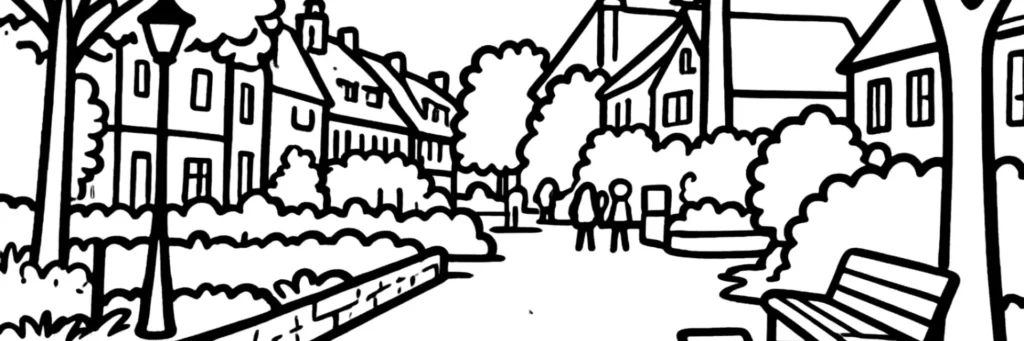
Who buys in Pantin

Pantin has 61 929 inhabitants and around 27 000 households. The market speaks first of all to apartment buyers: 94,7 % of dwellings are apartments and 93,2 % of the stock is occupied as a main residence according to INSEE, which leaves very little room for second homes. Tenants account for 70,4 % of households, and close to one third of main residences fall under social housing. Buyers are above all first-time buyers and working households leaving Paris for more floor space at the same budget, along with investors drawn by demand for studios and one-bedroom flats around the metro stations.

Frequently asked questions

The average price recorded in Pantin is 6 017 €/m² for an apartment, on the basis of DVF transactions registered before notaries. That average hides a wide gap between the north of the municipality and the sectors close to the canal and the town hall. Houses, a small minority of the stock, come out at 8 956 €/m². A precise valuation means taking account of the storey, the condition of the property and the distance to the metro.

The most sought-after sectors are the surroundings of the canal de l'Ourcq, around Hoche and the town hall, where the conversion of the warehouses has produced lofts and recent developments. The Village, around the church, remains valued for its faubourg fabric. Conversely, the Quatre-Chemins, on the edge of Aubervilliers, and the Courtillières, to the north, show clearly lower levels, with an older stock and a high share of social housing.

Pantin is served by Line 5 of the metro, which arrived in 1942, with the Église de Pantin and Hoche stations, and by Line 7 at the Quatre-Chemins since 1979. The gare de Pantin, opened in 1864, is today on the RER E and puts Haussmann-Saint-Lazare less than a quarter of an hour away. Several bus lines complete the network. That immediate closeness to Paris explains a large share of the value of properties.

Yes, but supply is very limited: houses account for around 3,6 % of dwellings according to INSEE, above all in the Petit-Pantin and the upper part of the municipality, on narrow plots inherited from pre-war suburban development. The average price recorded for these properties reaches 8 956 €/m², clearly above the apartment. Listings are rare and selling times often short when the property has a garden.

Close to one third of main residences fall under social housing according to INSEE, a share concentrated in the Courtillières and the Quatre-Chemins, two sectors engaged in urban renewal schemes. For a seller, that creates a two-speed market: the neighbouring blocks of flats within the renovated perimeters see their surroundings change over several years, with visible building sites that slow down viewings in the short term but improve the address afterwards.

Value your property in Pantin

Free valuation in under 2 minutes

Value my property

This analysis is published by Immover, an independent observatory founded by . Data sourced from official sources (DVF, INSEE, Notaries of France).

Estimer mon bien