The immover observatory

Property Prices in Quend2026 property valuation

Updated: January 2026 Sources: DVF · Notaires de France · INSEE · Immover January 2026 · DVF, Notaires de France, INSEE, Immover
In brief

The average price per m² in Quend is 4 001 €/m² for an apartment, based on actual notarised (DVF) sales. About 19 transactions are recorded each year.

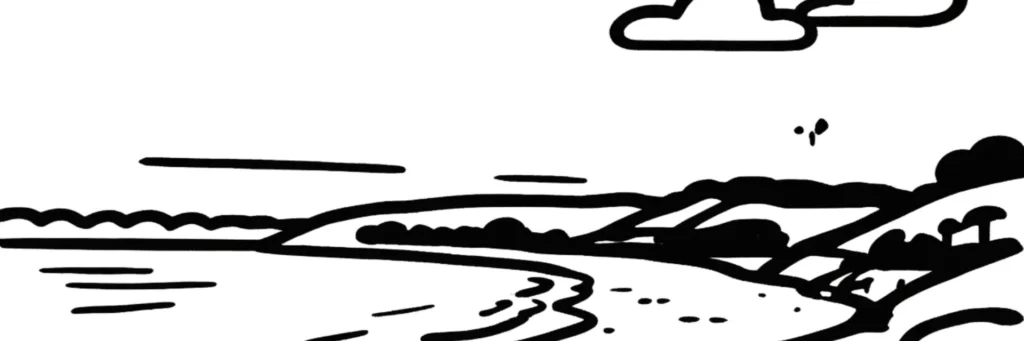
Line drawing of Quend: seaside villas, dunes and pines of Quend-Plage, sandy beach of the Côte picarde

Mood illustration of Quend, between the village of the Marquenterre and the resort of Quend-Plage, in the Somme.

Property Prices in Quend

The 2026 figures· Indicative data
4 001€/m²

The average price recorded in Quend stands at 4 001 €/m². That average covers a stock where the house is very largely dominant, close to 79 % of dwellings according to INSEE, the French national statistics institute, split between the rural village of the Marquenterre and the seaside resort of Quend-Plage, a few kilometres from the shore. Location, in particular closeness to the sea and to the dunes, the condition and the energy performance of the property open wide gaps. These figures come from the DVF database, which records the transactions actually registered before notaries, and not the prices shown in listings.

Apartment transactions / year
19
Median price per m²
3 914 €

Prices from the DVF file (Demandes de valeurs foncières, published by the DGFiP), transactions actually recorded at the notary at municipality level. Cross-referenced with the Notaires de France - INSEE indices. Learn more about our methodology.

Market trends and analysis for Quend

The Quend market rests on its twofold role as a village of the Marquenterre and a seaside resort. With on the order of about twenty sales a year, the municipality sees regular activity, but one largely governed by second-home demand, which accounts for about 80 % of dwellings according to INSEE. Buyers often come from the Île-de-France, from the Lille metropolitan area or from the Amiens area, drawn by the wide sandy beaches, the dunes and the closeness of the nature reserve of the Baie de Somme. Economic conditions and the tourist season therefore set the pace of transactions.

Prices in Quend sit in the middle range of the resorts of the Côte picarde, above a town such as Berck but below its immediate neighbour Fort-Mahon-Plage, and far behind Le Touquet-Paris-Plage, the most expensive resort in the area. The Coastal Act and the protection of natural areas sharply limit new supply, which supports the values of the existing stock. Energy performance and closeness to the seafront weigh more and more in negotiations, on a stock of villas and holiday houses that are sometimes old.

Quend, on the Côte picarde, between the baie d'Authie and the Marquenterre

average €/m²

On the coast of the Somme, Quend shows a price level above that of Berck, a little below its neighbour Fort-Mahon-Plage, and far behind Le Touquet-Paris-Plage.

MunicipalityTierPrice /m²Gap
Le Touquet-Paris-Plage8 804 €+120 %
Fort-Mahon-Plage4 662 €+17 %
Quend4 001 €ref.
Berck3 188 €-20 %

The history of Quend

The history of Quend goes back to Antiquity, as remains of Roman pottery and coins attest. In 858, the baie d'Authie served as a route for Viking raids, which left ruins behind them. In 1190, a charter of Count Guillaume III of Ponthieu created the municipality of the Marquenterre, of which Quend was part. This territory of low fields won from the sea was protected by new dykes in 1515, and Quend-le-Jeune served as the residence of the mayor of the Marquenterre in 1640. The present municipality was born in 1791, when the dissolution of the Marquenterre separated Quend and Saint-Quentin-en-Tourmont.

The seaside turn began at the end of the 19th century, when the fashion for sea bathing reached the Côte picarde. The parcelling of the Saint-Quentin dunes gave birth to a coastal resort, first called Saint-Quentin-Plage then Quend-Plage, built very close to the shore and developed without interruption until the Second World War. In 1923, part of the municipal territory was detached to create the neighbouring municipality of Fort-Mahon-Plage. That separation confirmed the rise of two distinct resorts on a single dune ridge, turned towards summer tourism.

The Second World War hit the municipality hard, largely destroyed between 1939 and 1945. An order of 19 May 1945 declared it a disaster area, opening a supervised reconstruction campaign: every new building had to be authorised, and the planner G. Lecompte was put in charge of the reconstruction plan in June 1945. The post-war years saw campsites and holiday accommodation develop. Today, Quend keeps that twofold identity, a farming village of the Marquenterre and a seaside resort backing onto the dunes and the neighbouring nature reserve.
Who buys in Quend

According to INSEE, Quend has 1 280 year-round inhabitants, but its housing stock far exceeds that number because of its tourist vocation. Second homes account for about 80 % of dwellings, against only 17 % of main residences: more than four dwellings in five are not occupied permanently. The house dominates, close to 79 % of the stock, the apartment being concentrated above all in Quend-Plage. Close to 80 % of occupants own their home according to INSEE. The market is largely aimed at second-home buyers, often coming from the Île-de-France, from Lille or from the Amiens area, looking for a foothold on the Picardy coast.

Frequently asked questions

The average price recorded is 4 001 €/m², calculated from the transactions registered before notaries and published in the DVF database. That average mixes the house of the Marquenterre village with the villa or the apartment of the Quend-Plage resort. Closeness to the sea and to the dunes, the location, the condition and the energy rating explain most of the gaps. A reliable valuation rests on recent comparable sales, not on the municipal average alone.

Quend is made up of two parts. The village, inland in the Marquenterre, keeps a rural character with its farms and its local shops. Quend-Plage, a few kilometres away, is the seaside resort born at the end of the 19th century in the dunes, turned towards tourism and holiday homes. Properties close to the shore and to the seafront are the most sought after there, which weighs markedly on values from one sector to the other.

Quend has no station: the nearest is that of Rue, on the line between Paris and Boulogne, a few kilometres away. The A16 motorway links the Côte picarde to Paris and to Lille, each about two hours away by road. That accessibility from the large conurbations of the north and of the Paris region partly explains the appeal of the municipality for second homes and the heavy summer traffic at Quend-Plage.

Quend is above all a seaside municipality of the Baie de Somme. According to INSEE, about 80 % of dwellings are second homes, a level typical of coastal resorts. That structure of the stock is explained by the tourist history of Quend-Plage, developed in the dunes since the end of the 19th century. The market is therefore largely driven by buyers of holiday homes, which makes demand sensitive to economic conditions and to the season.

The municipality comes under the Coastal Act, which strictly frames development near the shore, and lies in the area of the Baie de Somme and the Marquenterre, rich in protected spaces. The risks of marine flooding and of coastline erosion must be checked through the statement of risks before any purchase. Letting a furnished tourist rental requires a declaration at the town hall, and the taxation of second homes, in the majority here, is worth anticipating.

Value your property in Quend

Free valuation in under 2 minutes

Value my property

This analysis is published by Immover, an independent observatory founded by . Data sourced from official sources (DVF, INSEE, Notaries of France).

Estimer mon bien