The average price per m² in Saint-Jacques-de-la-Lande is 3 231 €/m² for an apartment, based on actual notarised (DVF) sales. About 155 transactions are recorded each year.

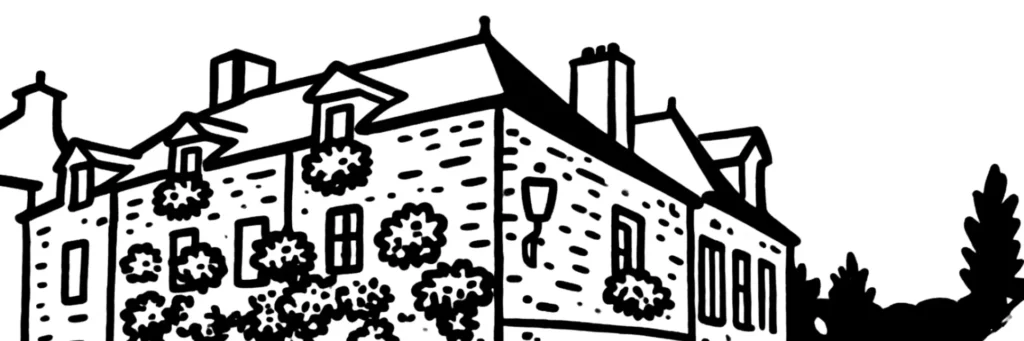
Atmospheric illustration of Saint-Jacques-de-la-Lande, in the south-western ring around Rennes.
The average price recorded in Saint-Jacques-de-la-Lande stands at 3 231 €/m². This average covers a stock made up overwhelmingly of apartments: according to INSEE, the French national statistics institute, apartments account for 74 % of the homes, against 25,8 % houses, with a heavy weight of new build and recent purchases around the metro and the La Courrouze eco-district. The references therefore run from a one-bedroom flat in a recent development to a town house in the estate areas, which explains part of the spread around the average. The figures come from the DVF database, which records transactions actually registered with notaries.
Prices from the DVF file (Demandes de valeurs foncières, published by the DGFiP), transactions actually recorded at the notary at municipality level. Cross-referenced with the Notaires de France - INSEE indices. Learn more about our methodology.
The local market is that of an inner-ring municipality of Rennes, driven by pressure from the conurbation. A few kilometres from the centre of Rennes and served by the metro since 2022, Saint-Jacques-de-la-Lande captures demand from first-time buyers and young working households who can no longer buy in the central city. That demand supports prices, while keeping them below those of Rennes. The population, rising steadily, feeds a need for homes that new supply is trying to absorb.
New supply here is more plentiful than in many comparable municipalities, thanks to the La Courrouze eco-district and the development schemes run with Rennes Métropole. This flow of recent developments shapes the structure of the market: a large share of transactions involves new or recent apartments, while the stock of houses remains scarce and sought after. Closeness to the metro, the energy performance of new homes and the movement of interest rates are the main factors that will steer prices in the short term.
An inner-ring municipality, Saint-Jacques-de-la-Lande sits a notch below Rennes, its immediate neighbour, and below Vannes, while staying clearly above a Breton prefecture such as Saint-Brieuc. Its market remains driven by the appeal of the Rennes conurbation.
The parish was founded in 1164 under the name Notre-Dame de la Forêt, on land cleared from the former forest that covered the south of Rennes, and took the name Saint-Jacques-de-la-Lande in 1208. The church then came under the Rennes abbey of Saint-Georges. The territory, long rural and crossed by the Vilaine and its tributaries such as the Blosne, remained a municipality of heath and crops until the Revolution. Saint-Jacques was made a municipality in 1790, then drawn into the Rennes conurbation as the city expanded through the 20th century.
The turning point for the municipality was aviation. The civil airfield of Rennes was laid out at Saint-Jacques from 1932 and the airport was inaugurated on 28 July 1933: still today, Rennes-Bretagne airport is commonly called Rennes Saint-Jacques and occupies a wide site in the south-west of the territory. Around that facility, business parks such as Airlande and later Mi-Voie grew from the 1990s, concentrating retail, logistics and industry. The municipality joined the district and later the metropolitan area of Rennes, of which it is one of the most populated municipalities.
Since the 2000s, Saint-Jacques-de-la-Lande has carried one of the major urban projects of Rennes Métropole: the La Courrouze eco-district, laid out on former military land straddling Rennes and Saint-Jacques, designed to house several thousand residents in time. The municipality also gained an architectural landmark with the church of the Anastasis, by the Portuguese architect Álvaro Siza, inaugurated on 11 February 2018. The arrival of line b of the Rennes metro, with the La Courrouze terminus and the Saint-Jacques-Gaîté station, finished tying the municipality into the conurbation transport network.
According to INSEE, the French national statistics institute, Saint-Jacques-de-la-Lande has around 13 800 inhabitants for 7 084 homes, of which 96 % are main residences: second homes (1,2 %) and vacant homes (2,8 %) are marginal, the sign of a municipality lived in all year round rather than a holiday market. Apartments make up 74 % of the stock and houses 25,8 %. Among households in main residences, 47,6 % are owners and 51,2 % tenants, of whom 17,9 % in social housing. The buyer profile follows that structure: many first-time buyers and young working households from the Rennes conurbation, drawn by prices below those of the central city and by the metro service, alongside families looking for a house in the estate areas.
The average price recorded is 3 231 €/m², calculated from transactions registered with notaries and published in the DVF database. It is a municipality-wide average, which mixes the one-bedroom flat in a recent development with the town house of the estate districts. Location, closeness to the metro, year of construction and energy performance explain most of the differences. A reliable valuation rests on recent comparable sales in the same area, not on the average alone.
The municipality is organised around several clearly distinct parts. The historic village centre holds the town hall, the shops and older buildings. To the north-west, the La Courrouze eco-district lines up recent developments served by the metro terminus. The estate areas, such as Le Pigeon Blanc, offer mainly houses, while the south-west is taken up by the airport and the Airlande and Mi-Voie business parks. These different housing patterns do not sell at the same level.
The municipality is directly linked to the centre of Rennes by line b of the automatic metro, opened in 2022, with the La Courrouze terminus and the Saint-Jacques-Gaîté station on municipal territory. Several bus lines of the STAR network round out the service, and the Rennes ring road borders the municipality. This accessibility, just a few kilometres from the heart of Rennes, is one of the drivers of local property demand.
Supply is mainly in apartment buildings. According to INSEE, houses account for only 25,8 % of the homes against 74 % apartments, and most recent construction involves apartment schemes, notably at La Courrouze. Houses are concentrated in the older estate areas, where sale references are fewer. The valuation of a house therefore depends heavily on its condition, its plot size and its area, more than on the municipal average.
Yes. The presence of Rennes-Bretagne airport translates into a noise exposure plan that governs building rights and sound insulation in the areas concerned: it is worth checking the zoning before a purchase or works. As everywhere, letting a furnished tourist property is subject to formalities at the town hall, and the tax treatment of the property is worth planning for. These points can be checked with the planning department of the municipality.
Free valuation in under 2 minutes
Value my propertyThis analysis is published by Immover, an independent observatory founded by Antony Barbier. Data sourced from official sources (DVF, INSEE, Notaries of France).