The immover observatory

Property Prices in Taverny2026 property valuation

Updated: January 2026 Sources: DVF · Notaires de France · INSEE · Immover January 2026 · DVF, Notaires de France, INSEE, Immover
In brief

The average price per m² in Taverny is 2 983 €/m² for an apartment, based on actual notarised (DVF) sales. For a house or villa, it is 4 329 €/m². About 133 transactions are recorded each year.

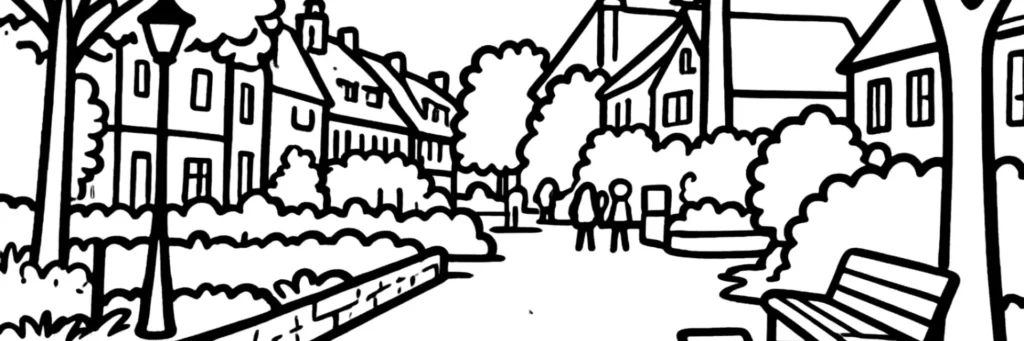
Line drawing of Taverny: the Gothic bell tower of the church of Notre-Dame

Ambience illustration of Taverny, between the vallée de Montmorency and the state forest, in the Val-d'Oise.

Property Prices in Taverny

The 2026 figures· Indicative data
2 983€/m²

In Taverny, the average price of an apartment stands at 2 983 €/m². That level covers a mixed stock, where the flats of the post-war housing estates built in the 1960s and 1970s sit alongside small developments clinging to the hillsides and a low-rise fabric inherited from the old village. The municipality is still marked by the detached house, more sought after than the average: it trades at around 4 329 €/m², a gap that reflects the appeal of the houses close to the forest and the schools. These figures come from the DVF database, which records the sales actually registered before notaries.

House : 4 329 €/m²

Apartment transactions / year
133
Median price per m²
2 922 €

Prices from the DVF file (Demandes de valeurs foncières, published by the DGFiP), transactions actually recorded at the notary at municipality level. Cross-referenced with the Notaires de France - INSEE indices. Learn more about our methodology.

Market trends and analysis for Taverny

The Taverny market rests on its double identity, between town and forest. The municipality captures a spill-over demand from Parisian households and from the inner suburbs, who are looking for more floor space or a garden without moving away from the centre of Paris, thanks to line H. The detached house, rarer and more sought after, pulls part of the values up, while the flats of the housing estates keep a more affordable supply. The population, which has risen markedly since the 1960s and continues to grow, keeps up a steady pressure on well-located family properties.

Supply remains constrained by geography: the state forest occupies a large part of the north of the municipality and limits urban extension, which concentrates transactions on the existing fabric. The closeness of more expensive municipalities of the vallée de Montmorency places Taverny in an intermediate band of the market, more affordable than its immediate neighbours. As elsewhere in the Paris region, the energy performance certificate has become a lever of negotiation, in particular on the stock built in the 1960s and 1970s.

Taverny, between the vallée de Montmorency and its forest

average €/m²

Backed onto the forêt de Montmorency and served by line H, Taverny sits in the lower part of its band of the valley: below the level of Franconville, its direct neighbour, and of Ermont and Montmorency, which gave its name to the area.

MunicipalityTierPrice /m²Gap
Montmorency3 724 €+25 %
Ermont3 691 €+24 %
Franconville3 072 €+3 %
Taverny2 983 €ref.

The history of Taverny

The name Taverny comes from the Latin tabernae, the huts or stalls, a memory of a site occupied for a very long time. The digs of the Haut-Tertre brought to light remains from the Bronze Age, and the place known as the Camp de César, on the wooded heights, preserves the trace of an old Gaulish entrenchment. A Gallo-Roman villa was set up in the valley, some twenty kilometres from Lutetia. In the 8th century, a text of Pépin le Bref already mentions the villa Taverny, granted to the estate of the abbey of Saint-Denis.

The most striking monument remains the church of Notre-Dame, a Gothic worksite launched around 1240 under Mathieu II de Montmorency. Its nave of four bays, its worked tracery and its flying buttresses make it one of the most carefully built religious edifices of the Val-d'Oise. The powerful Montmorency family, which gave its name to the valley and to the neighbouring forest, long held the lordship of the place, after the territory, first attached to Saint-Denis, was annexed to its estate in the 11th century.

Taverny remained a large village until the 20th century: it had around 1 200 inhabitants at the end of the 18th century. The building of the 1960s turned this hillside town into a town of more than 27 000 inhabitants, with its low-rise districts, its housing estates and its facilities. The composer Benjamin Godard and the harpsichordist Wanda Landowska are buried there, two musical figures that recall the long-standing appeal of this forest fringe for Parisians.
Who buys in Taverny

Taverny has 27 593 inhabitants, spread across a municipality cut in two: the southern half, largely built up, occupies the vallée de Montmorency, while the north climbs towards the state forest on a relief of hillsides. The housing stock is composite. It holds blocks of flats from the building wave of the 1960s and 1970s, smaller developments on the heights and a large share of detached houses, a legacy of the original village and of the low-rise estates. Buyers are mainly Paris-region families looking for a house with a garden or an apartment larger than they would have in Paris, along with first-time buyers drawn by prices more affordable than those of the inner suburbs of Paris, on a direct link with the capital.

Frequently asked questions

The apartment market sits at an average of around 2 983 €/m², based on the sales published in the DVF database of the notaries. That average covers very different situations: a studio in a housing estate of the 1970s and a recent apartment near the centre do not sell at the same price. The storey, the aspect, the closeness to the station and to the forest, and the energy rating weigh heavily in the gap. For a reliable valuation, it is better to rely on comparable sales than on the municipal average alone.

The two markets coexist, at distinct levels. The detached house, very present in the low-rise fabric, trades at around 4 329 €/m² and attracts families looking for a garden near the forêt de Montmorency. The apartment offers a more affordable entry ticket, useful for a first purchase or a contained budget. The choice depends above all on your life plan and on how close you want to be to the station and the schools.

The Taverny station is served by line H of the Transilien, on the Paris-Nord axis towards Persan-Beaumont via Saint-Leu-la-Forêt. The journey to Paris Gare du Nord takes about thirty minutes, with a train roughly every half hour during the day. That direct link explains a good part of the residential appeal of the municipality. The road remains an option for reaching the employment hubs of the Val-d'Oise, but the train is the fastest link with the centre of Paris.

The municipality reads according to two broad logics tied to its relief. The lower part, in the valley, concentrates the centre, the station and the most built-up districts, with a large share of flats. Climbing north, you find the low-rise hillsides and then the edge of the state forest, where the greener setting supports demand for houses. Between these two worlds, prices and atmospheres vary markedly from one neighbourhood to another.

As everywhere in the Paris region, the energy performance of a property has become a criterion of negotiation, in particular on older blocks and houses. Since part of the territory is wooded and hilly, it is useful to check the planning documents and the statement of risks before signing. Finally, letting a furnished tourist rental is regulated and requires a declaration at the town hall. These points are checked upstream, depending on the nature of your project.

Value your property in Taverny

Free valuation in under 2 minutes

Value my property

This analysis is published by Immover, an independent observatory founded by . Data sourced from official sources (DVF, INSEE, Notaries of France).

Estimer mon bien