The average price per m² in Triel-sur-Seine is 3 196 €/m² for an apartment, based on actual notarised (DVF) sales. About 48 transactions are recorded each year.

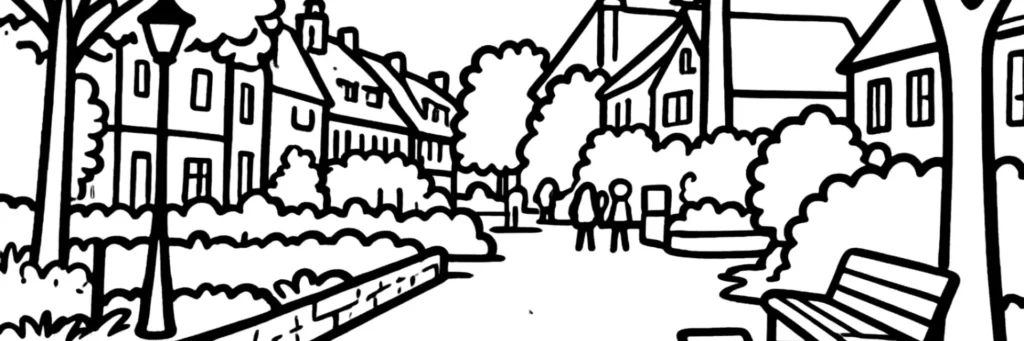
Ambience illustration of Triel-sur-Seine, in the loop of the Seine, in the Yvelines.
The average price of apartments in Triel-sur-Seine stands at 3 196 €/m², based on the DVF transactions actually registered before notaries. Stretched along the left bank of the Seine, between Poissy and Meulan, the municipality combines a dense old village beside the river, low-rise detached housing estates on the slopes of the Hautil and a few recent schemes near the station. The stock remains largely dominated by the detached house. Demand comes above all from households working towards Poissy, Cergy or Paris and looking for a riverside setting within reach of the RER. The position relative to the station, the aspect on the hillside and the presence of a garden make the value of a property vary markedly.
Prices from the DVF file (Demandes de valeurs foncières, published by the DGFiP), transactions actually recorded at the notary at municipality level. Cross-referenced with the Notaires de France - INSEE indices. Learn more about our methodology.
The Triel-sur-Seine market rests on its position in the loop of the Seine, at the hinge between the western edge of Paris and the Cergy-Pontoise conurbation. The municipality has more than twelve thousand inhabitants and attracts families looking for a house with a garden at a more measured price level than in the municipalities closest to Paris. The scarcity of building land on the slopes and the attachment to the riverside setting support the value of well-placed detached houses, while the apartments of the old village and of recent schemes address first-time buyers and working households.
Several factors shape the appeal of the municipality. The rail service towards Paris-Saint-Lazare and the closeness of the large employers of the loop of the Seine keep demand steady. The valley landscape, the wooded slopes of the Hautil and the presence of the river make for a quality of life that is appreciated. Conversely, dependence on the car for part of the journeys and the topography, which limits urban sprawl on the slopes, contain supply and maintain pressure on the most sought-after properties.
Triel-sur-Seine sits at the level of the neighbouring municipalities of the loop of the Seine such as Verneuil-sur-Seine and Andrésy, and behind Poissy, the larger employment and services hub of the sector.
Triel-sur-Seine is an old riverside town whose history merges with that of its church of Saint-Martin. Built from the 13th century onwards and altered up to the Renaissance, it has the rare feature of straddling the old street that runs along the Seine: the chancel passes above the road through a vaulted passage, an arrangement found in only a handful of churches in France. That monument, long the landmark of the boatmen who came up the river, testifies to the age and the wealth of the parish.
The life of the municipality was long turned towards the Seine and towards its slopes. Navigation, the passage of a ferry and then of a bridge, and river trade kept the town alive, while the slopes of the Hautil filled with vines, orchards and market gardens that supplied the Paris region. The gypsum in the subsoil was also worked in quarries, feeding the plaster works, an activity that left galleries in the hill and marked the landscape of the heights.
The arrival of the railway and the closeness of the large employment hubs of the loop of the Seine, in particular the Poissy car plant, turned Triel into a residential municipality in the 20th century. The orchards and market gardens gradually gave way to housing estates, and the population grew strongly. The town nonetheless keeps the trace of its two faces, the old village drawn tight around its church at the water's edge and the more recent low-rise districts clinging to the hillside.
Triel-sur-Seine has around 12 200 inhabitants. Its housing stock is clearly dominated by the detached house, a legacy of the estates built on the slopes since the 1960s, with a smaller share of apartments concentrated in the old village and around the station. Main residences make up the bulk of the stock and the proportion of owner-occupiers is high, a profile typical of a residential municipality in the outer suburbs of Paris. Buyers are above all families and working people employed in the loop of the Seine, at Poissy, Cergy or Saint-Germain-en-Laye, along with households looking for a riverside setting more affordable than the municipalities closest to Paris.
The average price of apartments in Triel-sur-Seine is 3 196 €/m², based on the DVF transactions actually completed before notaries. That average covers noticeable gaps depending on the location, between the old village beside the Seine, the low-rise slopes of the Hautil and the blocks close to the station. The condition of the property, the storey, the aspect and the presence of outside space make the value vary within the municipality.
The Triel-sur-Seine stock is dominated by the detached house, very present on the slopes and in the estates, while apartments are concentrated in the old village and around the station. The benchmark price of 3 196 €/m² applies to apartments. Families most often turn to detached houses with a garden, while apartments attract first-time buyers and working people looking for immediate closeness to the train.
The station of Triel-sur-Seine is served by the Transilien towards Paris-Saint-Lazare, by way of Conflans-Sainte-Honorine and the loop of the Seine. The employment hubs of Poissy, Cergy and Saint-Germain-en-Laye are close by car or by train. That rail service, without being as fast as a direct RER, is a decisive criterion for many buyers, which adds value to the properties within walking distance of the station.
The old village is arranged around the church of Saint-Martin, beside the Seine, with tightly packed housing and older buildings. The slopes of the Hautil, overhead, are occupied by more recent low-rise districts, often sought after for their views over the valley and for their plots. These two wholes do not trade at the same level: the aspect, the view and the size of the plot count for a great deal on the heights.
Triel-sur-Seine is above all a residential municipality: its property demand is carried by the neighbouring employment areas more than by local activity. The closeness of the Poissy car plant, of the business zones of Cergy-Pontoise and of the western edge of Paris feeds a steady flow of working buyers. That dependence on the surrounding hubs makes the market sensitive to accessibility, by road as by rail, more than to the jobs present in the municipality itself.
This analysis is published by Immover, an independent observatory founded by Antony Barbier. Data sourced from official sources (DVF, INSEE, Notaries of France).