Furnished tourist rentals in Aix-en-Provence in 2026: the rules
Airbnb and furnished tourist rentals in Aix-en-Provence in 2026: a temporary change-of-use permit (3 years, renewable), no compensation but a protected heritage area that all but blocks the centre, a main-home ceiling of 90 days, a registration number and the taxation of the Le Meur act.
Par Antony Barbier
Analyses · Publié le 17 août 2026 · 10 min de lecture
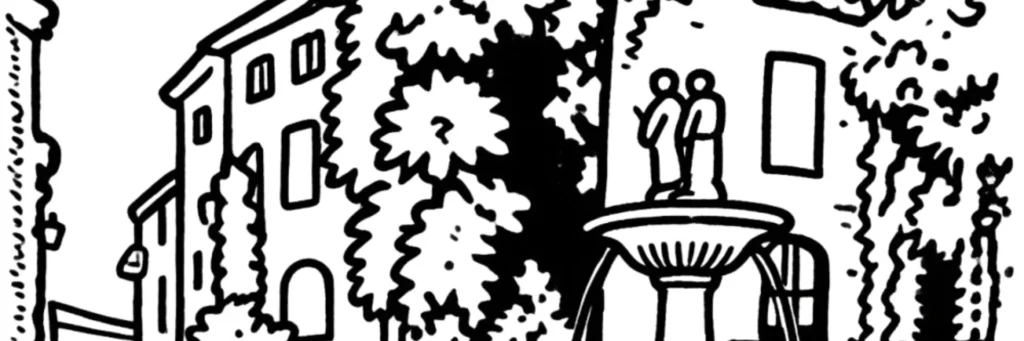
Illustration : Furnished tourist rentals in Aix-en-Provence in 2026: the rules.
Letting a furnished tourist rental in Aix-en-Provence, in 2026, means dealing with a locked-down historic centre. The town of Cézanne and the Cours Mirabeau, a cultural capital paced by its opera festival, Aix is also a major student city, home to Aix-Marseille University. That double pressure, from tourism and from higher education, weighs heavily on housing. Unlike neighbouring Marseille, Aix does not require any compensation to turn a home into a furnished tourist rental: its lock lies elsewhere, in the protected heritage area of old Aix, where the change-of-use permit is examined case by case and most often refused. Here is the full picture, source by source.
Key points
Turning a home into a furnished tourist rental in Aix requires a change-of-use permit, temporary (3 years), personal and renewable up to five times (so fifteen years at most).
Aix requires no compensation (unlike Marseille), but within the protected heritage area of the historic centre, applications are examined case by case and the likelihood of refusal is high.
A main home may be let on a short-term basis for up to 90 days a year, Aix having used the option to lower that ceiling opened by the Le Meur act.
A registration number is compulsory, and it will have to appear on every listing throughout France by 20 May 2026 at the latest.
1. Furnished tourist rentals in Aix-en-Provence in 2026: what has changed
Quick answer
Aix-en-Provence regulates furnished tourist rentals through a change-of-use permit regime, particularly strict in the listed historic centre. The town combines heavy tourist traffic with a large student population, which puts strong pressure on the housing market and justifies, in the eyes of the municipality, the regulation of short-term letting.
Aix-en-Provence is one of the southern towns where pressure on housing is sharpest. Tourist traffic, carried by heritage, culture and the reach of the opera festival, combines with the presence of Aix-Marseille University, one of the largest in France, whose students struggle to find housing each autumn. The growth of furnished tourist rentals, concentrated in the heart of the town, has reduced by as much the supply of homes for residents.
It is against that background that the town applies, like other municipalities in areas under housing pressure, a prior permit regime for changing the use of a residential property into a furnished tourist rental. Aix has also activated the levers opened by the Le Meur act of 19 November 2024, in particular the lowering of the letting ceiling for main homes.
Reading note
The rules on furnished tourist rentals change fast: local council decisions, zoning adjustments, the national timetable of the Le Meur act. Before taking any step, check the exact state of the scheme and the arrangements in force with the town of Aix-en-Provence and the registration platform.
2. Registration, 90 days and change of use
Quick answer
Every furnished tourist rental must be declared and obtain a registration number, compulsory throughout the country by 20 May 2026 at the latest. In Aix, a main home may be let for up to 90 days a year with no change of use; beyond that, as for any second home, a change-of-use permit is required.
The first step is the declaration. Any short-term letting of a furnished home to passing guests must be the subject of a prior declaration to the municipality, which issues a registration number (local online registration service). Act no. 2024-1039 of 19 November 2024, known as the Le Meur act, extends that obligation to the whole of France: the 13-digit number will have to appear on every listing by 20 May 2026 at the latest, failing which the listing is withdrawn.
Then comes the question of the threshold. Aix has used the option, opened by the Le Meur act, of lowering the letting ceiling for a main home from 120 to 90 days a year. Beyond that threshold, as for a second home, the change-of-use permit becomes compulsory.
Obligation
Main home
Second home
Declaration and registration number
Yes
Yes
Ceiling of nights with no permit
90 days/year
No letting without a permit
Change of use
Beyond 90 days
From the first night
Minimum energy rating required
Class A to E
Class A to E
To those obligations the Le Meur act has added an energy performance condition: the home must be rated A to E on the DPE, the French energy performance certificate (then A to D from 1 January 2034). The rules of the building's co-ownership may also ban furnished tourist rentals: that check is essential before taking any step.
3. The temporary permit: 3 years, with no compensation
Quick answer
In Aix, the change-of-use permit is temporary: it is issued for 3 years, renewable up to five times, so a maximum duration of fifteen years. Unlike Marseille, Aix does not require compensation, that is, the obligation to convert an equivalent floor area into housing elsewhere in the town.
This is the heart of the Aix regime. Where Paris or Marseille impose compensation, a heavy mechanism that means giving housing back in order to take some away, Aix has chosen a different logic: a temporary permit, valid for 3 years and renewable five times, for a maximum duration of fifteen years in total. The permit is personal: it does not pass automatically with the property.
The absence of compensation makes entry into the scheme, on paper, more accessible than in Marseille. But that flexibility is deceptive: it applies above all outside the historic centre. Within the protected heritage area, case-by-case examination and the likelihood of refusal change the picture entirely (see section 4).
A change-of-use permit never removes the need to check the rules of the building's co-ownership: those rules may ban furnished tourist rentals, and both conditions apply together.
4. The protected heritage area: the lock of the historic centre
Quick answer
The historic heart of Aix, from the Cours Mirabeau to the Saint-Sauveur cathedral, is a protected heritage area where the concentration of furnished tourist rentals is judged excessive by the municipality. Change-of-use applications there are examined case by case, with a high likelihood of refusal. That, more than any compensation, is where the real brake in Aix lies.
This is what sets Aix apart from most large towns. The scheme rests neither on numerical quotas by zone, as in Annecy, nor on compensation, as in Marseille or Paris. It rests on a case-by-case assessment, particularly strict within the heritage perimeter of old Aix, where the density of furnished tourist rentals is highest and the pressure on housing sharpest.
In practice, an owner who buys a flat in the old centre in order to let it on a short-term basis runs the risk of a refusal, even though there is neither compensation to provide nor a numerical quota to respect. Conversely, outside that perimeter, obtaining the temporary permit is in principle more open. The precise location of the property is therefore the first criterion to check before any project.
Letting without a change-of-use permit when one is required carries heavy penalties: the civil fine can reach 50 000 € per home, and the absence of a registration number up to 5 000 €. Transparency and prior checking are the only safe route.
5. Main home or second home
Quick answer
The distinction governs everything. A main home may be let for up to 90 days a year in Aix with no change of use. A second home requires a permit from the very first night: it is the most exposed to the scheme, above all in the historic centre.
A main home is the property you occupy for at least eight months a year. Short-term letting remains possible for up to 90 days in total, subject to the declaration and the registration number. Beyond that, it moves into the second-home regime and requires a change-of-use permit.
The second home is at the heart of the Aix scheme: it is what feeds most of the pressure on the housing stock, concentrated in the old tourist centre. An owner who buys a property in that area to devote it to seasonal letting must factor in a real risk: that of not obtaining the permit, or of not being able to renew it in due course.
6. The taxation of furnished rentals since the Le Meur act
Quick answer
The Le Meur act lowers the flat-rate allowance under the micro-BIC regime to 50 % for a graded furnished rental (ceiling 77 700 €) and to 30 % for a non-graded one (ceiling 15 000 €). It requires an energy rating of A to E in order to let, and brings depreciation claimed under the non-professional furnished landlord regime back into the calculation of the capital gain on resale.
The income from a furnished tourist rental falls under industrial and commercial profits (BIC), with a choice between the micro-BIC regime and the actual-expenses regime. The Le Meur act, applicable to income received from 2025 onwards, has reduced the flat-rate allowances of the micro-BIC regime and their ceilings.
Type of letting
Former allowance
Le Meur act allowance
Income ceiling
Graded furnished rental / bed and breakfast
71 %
50 %
77 700 €
Non-graded furnished tourist rental
50 %
30 %
15 000 €
Unfurnished long-term letting
30 %
30 %
15 000 €
For a non-graded furnished rental, the micro-BIC allowance falls to the level of unfurnished letting: the tax advantage that often justified short-term letting is markedly reduced. The actual-expenses regime, which allows costs and depreciation to be deducted, becomes worth studying again. Since 1 January 2025, depreciation deducted under the non-professional furnished landlord regime is also brought back into the calculation of the capital gain on resale, which increases the tax due on exit.
In Aix, the combination of less favourable taxation and the risk of not obtaining a permit in the centre changes the equation of a short-term letting investment. Grading the furnished rental, which keeps the allowance at 50 %, becomes a lever worth considering again.
7. Let, wait or sell: how to decide
Quick answer
Three scenarios are open to an owner in Aix depending on the location of the property: let on a short-term basis if a permit is within reach (outside the protected heritage area), switch to student or year-round furnished letting, much in demand in Aix, or sell in a market that remains expensive (around 5 038 €/m² for an apartment in 2026).
The first scenario, letting on a short-term basis, requires obtaining a change-of-use permit. Outside the historic centre, the temporary permit is in principle more accessible; within the protected heritage area, it is better to check feasibility before any purchase intended for that use.
The second, switching to conventional letting, long-term or furnished for the year, draws on a strength of Aix: structurally strong rental demand, carried by the students of Aix-Marseille University and by working people. That choice falls outside the change-of-use regime and secures a regular income.
The third, selling, is still supported by a market among the most expensive in France outside Paris, the French Riviera and the large cities. Whatever your decision, it starts with a reliable market value, calibrated on the actual transactions of your district. You can obtain a free estimate below.
Sources and references
Town of Aix-en-Provence and Aix-Marseille-Provence metropolitan authority, rules on the change of use of residential property into furnished tourist rentals (temporary 3-year renewable permit, protected heritage area)Official source
Act no. 2024-1039 of 19 November 2024, known as the Le Meur act (Légifrance, the French official legal database): registration, main-home ceiling, energy rating, micro-BIC, non-professional furnished landlord regimeLegislation
service-public.fr and economie.gouv.fr, furnished tourist rentals, change of use, micro-BIC, energy rating, non-professional furnished landlord regimeOfficial source
Articles L.631-7 and following of the French construction and housing code (change of use in areas under housing pressure)Regulations
DVF (demandes de valeurs foncières, the French notarised sales database), price per m² in Aix-en-Provence - Immover single source, 2026 (data.gouv.fr)Public data
L'auteur
Antony Barbier
Founder of Immover
A consultant specialising in real estate data, Antony Barbier follows the market of the Bouches-du-Rhône and Provence, along with property taxation and regulation. He publishes sourced analyses to help owners decide between letting, waiting and selling.
Frequently asked questions
Yes, but subject to conditions. A main home may be let on a short-term basis for up to 90 days a year, with a declaration and a registration number. For a second home, or a main home let beyond 90 days, a change-of-use permit is required. That permit is temporary (3 years, renewable), accessible outside the historic centre, but examined case by case and often refused within the protected heritage area of old Aix.
No. Unlike neighbouring Marseille or Paris, Aix-en-Provence does not require compensation, that is, the obligation to convert an equivalent floor area into housing elsewhere in the town. The brake in Aix is not compensation but the protected heritage area: within the heritage perimeter of the historic centre, the change-of-use application is assessed case by case, with a high likelihood of refusal.
Aix-en-Provence has used the option opened by the Le Meur act of lowering the letting ceiling for a main home to 90 days a year, against 120 days at national level. Beyond that threshold, a change-of-use permit becomes necessary, as for a second home. Check the ceiling in force at the time of your project with the town and when you register.
In Aix-en-Provence, the change-of-use permit is temporary: it is issued for 3 years, renewable up to five times, so a maximum duration of fifteen years. It is personal and does not pass automatically with the property. Obtaining it depends on the location: more open outside the centre, difficult within the protected heritage area.
Yes. The old heart of Aix, from the Cours Mirabeau to the Saint-Sauveur cathedral, is a protected heritage area where the concentration of furnished tourist rentals is judged excessive. Change-of-use applications there are examined case by case and most often refused. That is the main brake on a short-term letting project in the centre of Aix.
Yes. Any short-term letting of a furnished tourist rental must be declared to the municipality, which issues a registration number. The Le Meur act extends that obligation to the whole of France: the 13-digit number will have to appear on every listing by 20 May 2026 at the latest, failing which the listing is withdrawn. The absence of a number carries a fine of up to 5 000 €.
The Le Meur act, applicable to income received since 2025, has reduced the allowances of the micro-BIC regime: 50 % for a graded furnished rental (ceiling 77 700 €) and 30 % for a non-graded one (ceiling 15 000 €), the same level as unfurnished letting. It also requires an energy rating of A to E in order to let, and brings depreciation claimed under the non-professional furnished landlord regime back into the calculation of the capital gain on resale. The actual-expenses regime and the grading of the rental become levers worth studying again.
It depends on the location and on your objectives. If a short-term permit is out of reach (protected heritage area), student or year-round furnished letting is a solid alternative: rental demand is strong in Aix, carried by Aix-Marseille University and by working people. Selling is still supported by an expensive market, at around 5 038 €/m² for an apartment in 2026. In every case, start with a reliable valuation of your property.
Immover utilise des cookies pour mesurer l'audience et améliorer votre expérience. Vous pouvez accepter ou refuser leur utilisation.
Fonctionnel
Toujours activé
L’accès ou le stockage technique est strictement nécessaire dans la finalité d’intérêt légitime de permettre l’utilisation d’un service spécifique explicitement demandé par l’abonné ou l’utilisateur, ou dans le seul but d’effectuer la transmission d’une communication sur un réseau de communications électroniques.
Préférences
L’accès ou le stockage technique est nécessaire dans la finalité d’intérêt légitime de stocker des préférences qui ne sont pas demandées par l’abonné ou l’internaute.
Statistiques
Le stockage ou l’accès technique qui est utilisé exclusivement à des fins statistiques.Le stockage ou l’accès technique qui est utilisé exclusivement dans des finalités statistiques anonymes. En l’absence d’une assignation à comparaître, d’une conformité volontaire de la part de votre fournisseur d’accès à internet ou d’enregistrements supplémentaires provenant d’une tierce partie, les informations stockées ou extraites à cette seule fin ne peuvent généralement pas être utilisées pour vous identifier.
Marketing
L’accès ou le stockage technique est nécessaire pour créer des profils d’internautes afin d’envoyer des publicités, ou pour suivre l’utilisateur sur un site web ou sur plusieurs sites web ayant des finalités marketing similaires.