The average price per m² in Castres is 1 691 €/m² for an apartment, within a range of 1,4 to 2,0 k€ per m², based on actual notarised (DVF) sales. Over the period, the market rose 10 % over 5 years and rose 4,1 % over the last 12 months, with about 134 transactions per year.

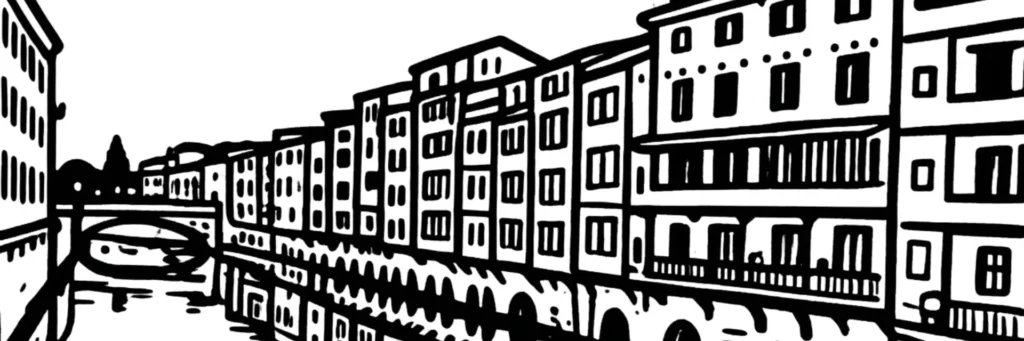
Illustration of Castres, from the houses on the Agout to the jardin de l'Évêché.
Apartments in Castres sell at an average price of around 1 691 €/m², based on prices actually recorded (DVF data, the French notarised sales database). A sub-prefecture of the Tarn set on the river Agout, at the foot of the Montagne Noire, the town shows contained gaps from one district to the next. Prices run from around 1 483 €/m² in Drouot, to the south, to 1 870 €/m² in Le Gazel, to the north-west. The town centre, which accounts for a quarter of all sales, sits at 1 667 €/m². Unusually, houses, at around 1 603 €/m², trade slightly below apartments.
Prices from the DVF file (Demandes de valeurs foncières, published by the DGFiP), transactions actually recorded at the notary at municipality level. Cross-referenced with the Notaires de France - INSEE indices. Learn more about our methodology.
After 1 542 €/m² in 2021, the average price in Castres reaches 1 691 €/m² in 2026, around +10 % over the period.
Change in the average price per m² over twelve months, district by district, based on the most recent DVF sales.
The average price per m² for an apartment in each district of Castres covered by Immover, ranked from the most expensive to the most affordable.
The Castres market is that of an industrial sub-prefecture, backed by a stable employment basin and far from the pressure of the Toulouse conurbation. With an average price of around 1 691 €/m² for an apartment, Castres sits below the Occitanie average and well below Toulouse. Houses, at around 1 603 €/m², trade 5 % below apartments: the town is one of the rare places where the usual order is reversed, an effect of its plentiful stock of suburban family houses.
The gap between districts is small: 26 % between the most expensive and the most affordable, where many towns of this size exceed 50 %. The residential north-west and south-west hold the top of the market, the old centre and the east form the base, and the south brings up the rear. Volume, on the other hand, is the point to watch: 134 apartment sales a year across the whole town. Only the town centre, Le Gazel, Drouot and Péraudel rest on a comfortable sample; the four other districts, with between 7 and 11 sales a year, give orders of magnitude only.
With an average price of around 1 691 €/m², Castres sits well below the major French cities and below Toulouse, its reference conurbation 72 kilometres away. Its industrial basin, driven by the Pierre Fabre laboratories, and its heritage make it a mid-sized town with a stable and accessible market.
Castres was built on the river Agout. The houses standing over the water, former homes of tanners and dyers with their colourful facades and wooden balconies, are the image of the town: they are a reminder that textiles kept it alive for centuries. The pont Vieux links them to the old centre, where the town hall, a former bishop's palace, houses the musée Goya and its collection of Spanish painting.
The jardin de l'Évêché, laid out by André Le Nôtre, and the Saint-Benoît cathedral complete this historic core, around the place Soult. The name recalls Marshal Soult, born in nearby Saint-Amans-Soult. In the twentieth century the town changed engine: the Pierre Fabre laboratories, founded in Castres, made it a leading pharmaceutical hub and the third industrial basin of the former Midi-Pyrénées region.
The geography of prices follows that shift. The residential areas of the north-west and south-west, from Le Gazel to Laden, form the top of the market between 1 810 and 1 870 €/m². The old centre and the east sit between 1 600 and 1 670 €/m². The south, around Drouot, brings up the rear at 1 483 €/m². The widest gap between districts is 26 %, which is very narrow.
The Castres market is above all a local one: first-time buyers, families moving from renting to owning, and staff from the Pierre Fabre laboratories and the industrial basin. Demand focuses mainly on houses, very plentiful on the outskirts, and on apartments in the centre and in recent developments. The hospital, the sub-prefecture and the industrial fabric support steady rental demand.
The average price in Castres is 1 691 €/m² for an apartment (actual DVF transactions, notarised sales), within a range of 1 423 to 1 983 €/m² depending on the district. Property portals show asking prices, 10 to 20 % above the prices actually recorded.
No, but the gaps are narrow. Le Gazel, to the north-west, has the highest average price, around 1 870 €/m², while Drouot, to the south, sits at around 1 483 €/m², some 26 % lower. Between the two, the town centre, Péraudel and Aillot sit between 1 600 and 1 670 €/m².
Castres combines a historic centre with real character, with its houses on the Agout and its garden designed by Le Nôtre, a solid industrial employment basin around the Pierre Fabre laboratories, and prices well below those of Toulouse, 72 kilometres away. The Montagne Noire and the Sidobre are right on the doorstep, and the town bus network has been free since 2008.
It is a rare case, but it rests on actual sales: 1 603 €/m² for houses against 1 691 €/m² for apartments, over 522 house sales in two years. Castres has a plentiful and inexpensive stock of suburban family houses, while its apartment stock is smaller and more recent. Online valuation tools, which model standard properties rather than signed deeds, often give the opposite order.
The town-wide average price is not enough: you have to start from the price in your own district, then adjust for the age of the building, its condition, its energy performance, the presence of outdoor space and, for properties in the centre, the view over the Agout. As the volume of apartment sales is modest, the Immover valuation tool draws on the actual sales closest to your address rather than on a district average.
This analysis is published by Immover, an independent observatory founded by Antony Barbier. Data sourced from official sources (DVF, INSEE, Notaries of France).