The average price per m² in Manosque is 1 919 €/m² for an apartment, within a range of 1,4 to 2,3 k€ per m², based on actual notarised (DVF) sales. Over the period, the market rose 10 % over 5 years and rose 3,3 % over the last 12 months, with about 194 transactions per year.

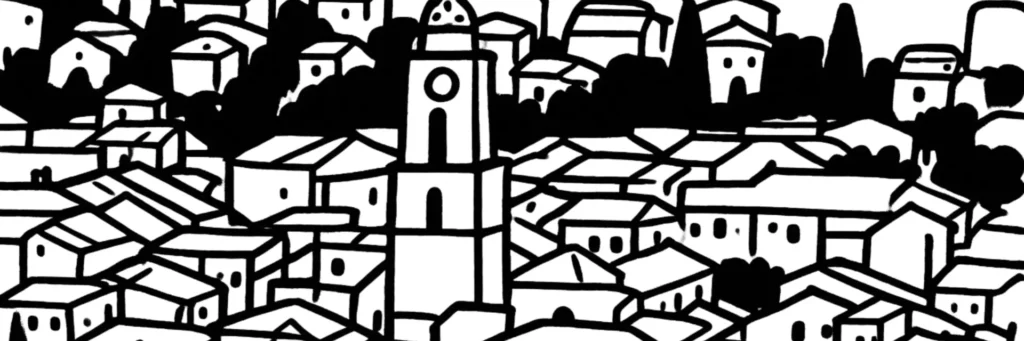
Illustration of Manosque, between its old town and the hills of Haute-Provence.
Apartments in Manosque sell at an average price of around 1 919 €/m², based on transactions actually recorded (DVF data, the French notarised sales database). Prices run from around 1 310 €/m² in Les Ponches to 2 422 €/m² in Mont d'Or, a gap of 85 %. Houses, at 2 921 €/m², trade 52 % above apartments: houses and villas are found on the hills. With 194 apartment sales a year, it is the most active market in the department.
Prices from the DVF file (Demandes de valeurs foncières, published by the DGFiP), transactions actually recorded at the notary at municipality level. Cross-referenced with the Notaires de France - INSEE indices. Learn more about our methodology.
After 1 739 €/m² in 2021, the average price in Manosque reaches 1 919 €/m² in 2026, around +10 % over the period.
Change in the average price per m² over twelve months, district by district, based on the most recent DVF sales.
The average price per m² for an apartment in each district of Manosque covered by Immover, ranked from the most expensive to the most affordable.
The Manosque market is rising. The average apartment price went from 1 739 €/m² in 2021 to 1 919 in 2026, around 10 % over the period, with a rise of 3,3 % over the last twelve months. With 194 apartment sales a year, it is the most active market in the department, and the trend there is readable.
All the published districts have risen over five years. The strongest increases are in Le Colombier, 29 %, Mont d'Or, 24 %, and Les Ponches, 23 %, which start from the lowest price in the town. Saint-Lazare, the largest market, is rising more slowly, by 8 %. The ranking between the hills and the lower town therefore holds, while the most affordable areas are making up part of their lag. For a seller, this means the market supports prices, provided the property is in good condition. For a buyer, it means the choice of district, between hill and lower town, weighs far more than in a town where the gaps are narrow.
Manosque compared with the major French cities, on the average price per m² for an apartment.
Manosque is the largest town in the Alpes-de-Haute-Provence department, ahead of the prefecture town, Digne-les-Bains, on the right bank of the Durance. Its old centre has kept the layout of the medieval town, whose walls were built between 1366 and 1383. Two gates survive: the porte de la Saunerie, to the south, completed in 1382, and the porte du Soubeyran, to the north.
It is the town of Jean Giono, born in Manosque on 30 March 1895 and died on 9 October 1970. In 1930, the writer bought the Paraïs, his house on the southern slope of Mont d'Or, at the top of the climb that now carries the name of his essay, Les Vraies Richesses.
The twentieth century turned it into a town of employment. The CEA Cadarache research centre, set up in 1959 some fifteen kilometres away in the neighbouring municipality of Saint-Paul-lez-Durance, then the choice of the site for the ITER reactor in 2005, brought in families of researchers and engineers. L'Occitane en Provence is also based here.
The town grew in two movements: the post-war housing estates to the south-west, at Les Plantiers and Les Aliziers, now undergoing urban regeneration, and the houses and villas on the hills. 20,9 % of homes were built between 2006 and 2020.
Manosque sells at 1 919 €/m² for an apartment, in a municipality that remains the largest town in the department and its main employment centre, with Cadarache some fifteen kilometres away. The buyer profile is broad: first-time buyers and families looking for moderate prices, staff of the CEA and ITER, and retirees drawn to Haute-Provence. Three points are worth knowing before buying. The first is the ranking of the districts, which runs the opposite way to many towns: the hills are expensive, Mont d'Or at 2 422 €/m² and Le Colombier at 2 224, while the medieval old centre sits 14 % below the average. The second is the gap between houses and apartments, 52 %: the house is a hillside product, in demand, and the choice between the two changes the budget completely. The third is the trend: every district has risen over five years, by 8 to 29 %, and the municipality gains 10 %. For an older property in the centre, the condition of the building and its energy performance account for most of the value.
The average price in Manosque is 1 919 €/m² for an apartment (actual DVF transactions, notarised sales), within a range of 1 356 to 2 278 €/m² depending on the district. Property portals show asking prices, 10 to 20 % above the prices actually recorded.
Mont d'Or, at 2 422 €/m², 26 % above the municipal average. It is the hill to the north of the town, where Jean Giono had his house, the Paraïs, together with the neighbouring hills, where housing is more spread out. Le Colombier follows at 2 224 €/m².
At 1 650 €/m², it is 14 % below the municipal average. The medieval building stock, with narrow buildings, floors without lifts and frequent renovation needs, is less sought after than the residential blocks and houses of the hills. The district has nevertheless risen by 11 % over five years.
No. The CEA Cadarache research centre and the ITER reactor site are located in the municipality of Saint-Paul-lez-Durance, in the Bouches-du-Rhône department, some fifteen kilometres away. Manosque is, on the other hand, the main town where the site's staff live.
Yes: the average apartment price went from 1 739 €/m² in 2021 to 1 919 in 2026, around 10 %, with a rise of 3,3 % over twelve months. All the published districts have risen over five years, from 8 % in Saint-Lazare to 29 % in Le Colombier.
It is large: houses trade at 2 921 €/m², 52 % more than apartments at 1 919 €/m². Houses and villas are found mainly on the hills, where prices are highest, while apartments are numerous in the centre and in the housing estates of the lower town.
This analysis is published by Immover, an independent observatory founded by Antony Barbier. Data sourced from official sources (DVF, INSEE, Notaries of France).