The average price per m² in Dreux is 1 586 €/m² for an apartment, within a range of 1,1 to 1,9 k€ per m², based on actual notarised (DVF) sales. Over the period, the market rose 6 % over 5 years and rose 1,7 % over the last 12 months, with about 157 transactions per year.

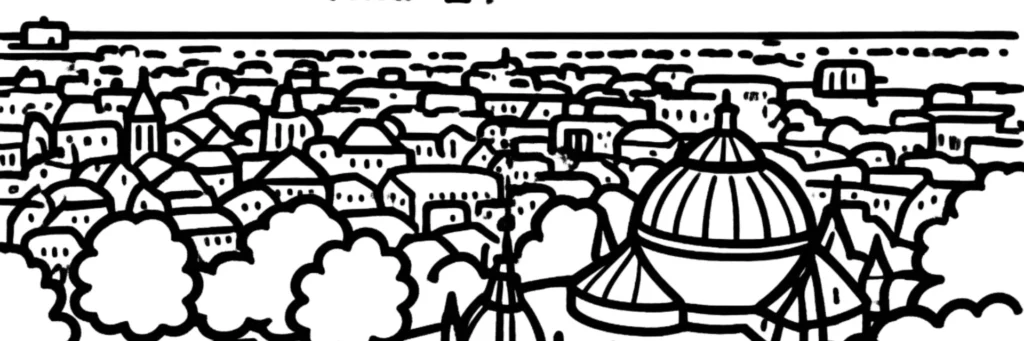
Illustration of Dreux, from the belfry to the royal chapel.
Apartments in Dreux sell at an average price of around 1 586 €/m², based on the prices actually recorded (DVF data, the French notarised sales database). A sub-prefecture of the Eure-et-Loir set 80 km from Paris, the town shows very sharp gaps from one district to the next. Prices run from around 1 126 €/m² in Les Sablonnières to 1 960 €/m² in the Gare district, a gap of 74 %. Houses trade at around 1 965 €/m², 24 % above apartments.
Prices from the DVF file (Demandes de valeurs foncières, published by the DGFiP), transactions actually recorded at the notary at municipality level. Cross-referenced with the Notaires de France - INSEE indices. Learn more about our methodology.
After 1 491 €/m² in 2021, the average price in Dreux reaches 1 586 €/m² in 2026, roughly +6 % over the period.
Change in the average price per m² over twelve months, district by district, based on the most recent DVF sales.
The average price per m² for an apartment in each district of Dreux covered by Immover, ranked from the most expensive to the most affordable.
The Dreux market is that of a sub-prefecture under Paris-region influence. With an average price of around 1 586 €/m² for an apartment and 157 sales a year, Dreux sits well below the neighbouring Yvelines, while remaining above most sub-prefectures of its size. The price gains 6 % over five years and 1,7 % over twelve months: slow growth, with no surge.
The striking fact is the gap between districts, which reaches 74 %. It reflects a town cut in two: on one side La Gare and the historic centre, between 1 800 and 1 960 €/m², carried by demand from the Paris region; on the other Les Sablonnières and Les Rochelles, the two large-estate districts, below 1 250 €/m². Two published districts remain under ten apartment sales a year, Les Bâtes and Les Rochelles. Their annual movements, -20,9 % and +22,4 % respectively, are statistical noise rather than trends: on those two pages, take the average of the last two years rather than the latest one.
Dreux compared with the largest French cities, on the average price per m² for an apartment.
Dreux settled on the river Blaise, on the border between the old duchy of Normandy and the royal domain, a position that made it a contested town throughout the Middle Ages. The county of Dreux was long an appanage principality, held by a junior branch of the Capetians.
Two monuments remain from it and shape the outline of the town: the belfry, the former town hall raised in the sixteenth century and listed as a historic monument, and the royal chapel of Saint-Louis, built in the nineteenth century on the castle hill to serve as the burial place of the House of Orléans. The railway and industry then stretched the town northwards and westwards, with the large housing estates of Les Sablonnières and Les Bâtes in the 1960s, and the closeness of Paris later turned it into a commuter town.
The geography of prices follows that pattern exactly. La Gare and the town centre hold the top of the market, between 1 800 and 1 960 €/m². Les Bâtes follow at 1 687. Falaise closes the upper half at 1 419. Les Rochelles and Les Sablonnières, the two large-estate districts, bring up the rear at 1 208 and 1 126. From first to last, the gap reaches 74 %.
The Dreux market is above all a Paris commuter market. The station puts Paris-Montparnasse a little over an hour away via Versailles, and the price gap with the Île-de-France region attracts households that can no longer buy in the neighbouring Yvelines. Added to that is a local market carried by the industry of the Dreux area, in particular pharmaceuticals and cosmetics. The result is a market clearly running at two speeds: the areas close to the station and the historic centre, pulled up by buyers from the Paris region, and the large-estate districts, still on a local market at low prices. Houses, at 1 965 €/m², trade 24 % above apartments.
The average price in Dreux is 1 586 €/m² for an apartment (actual DVF transactions, notarised sales), within a band of 1 128 to 1 939 €/m² depending on the district. Property portals display asking prices, 10 to 20 % above the prices actually recorded.
No, and the gap is wide: 74 % between the most expensive district and the most affordable. The Gare district shows the highest average price, around 1 960 €/m², while Les Sablonnières sit at around 1 126 €/m². In between, the town centre stands at 1 800 €/m² and Falaise at 1 419 €/m². In Dreux, the address weighs heavily on the value of a property.
The town combines a station that puts Paris-Montparnasse a little over an hour away via Versailles, genuine heritage with the Renaissance belfry and the royal chapel of Saint-Louis, and prices far below those of the neighbouring Yvelines. It is the first affordable market on the line running south-west out of Paris.
Over five years, the average price rises by around 6 %, a moderate increase. Over the last twelve months, the town gains 1,7 %. The movement is very uneven from one district to the next: Les Sablonnières rise by 15,8 % over one year while Falaise falls by 5,5 %.
In this town, the district is the first factor, with a 74 % gap between the top and the bottom of the market. Start from the price of your area, then adjust for the year of construction, the condition, the energy rating, the floor level and the presence of a lift or parking. The Immover valuation tool draws on the sales actually recorded closest to your address.
This analysis is published by Immover, an independent observatory founded by Antony Barbier. Data sourced from official sources (DVF, INSEE, Notaries of France).